Bedminster
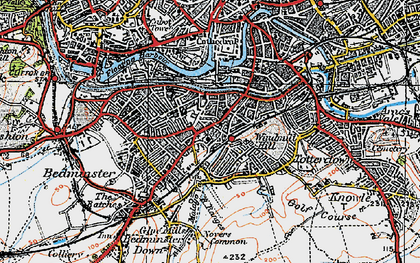
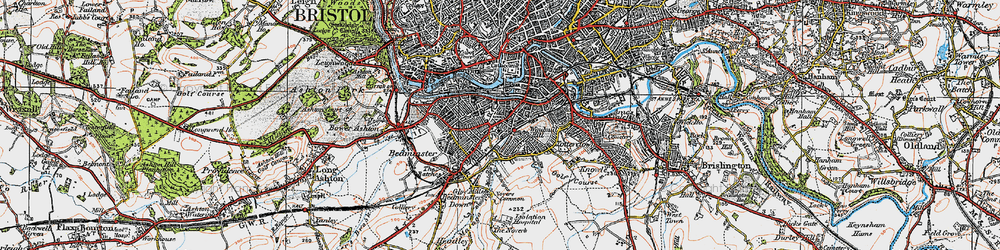
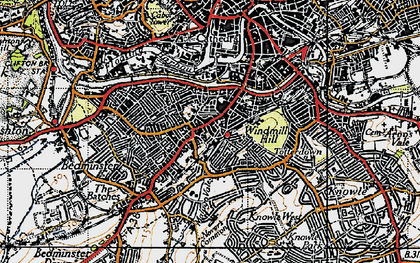
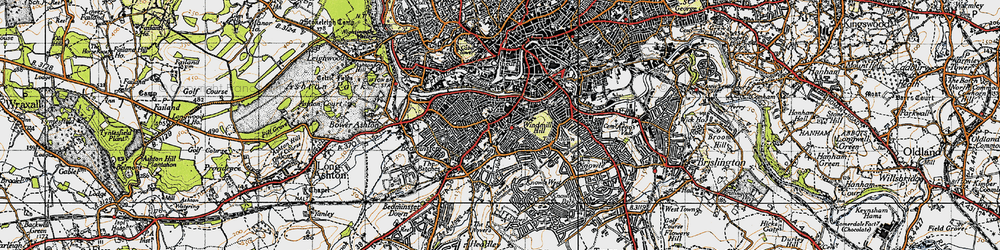
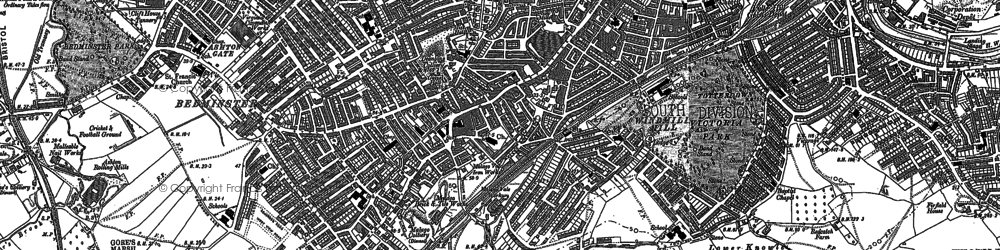
Bedminster maps
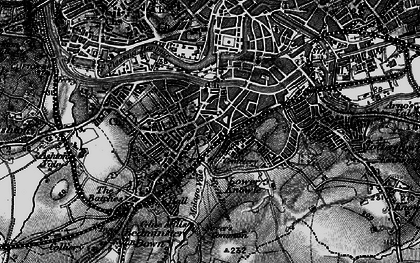
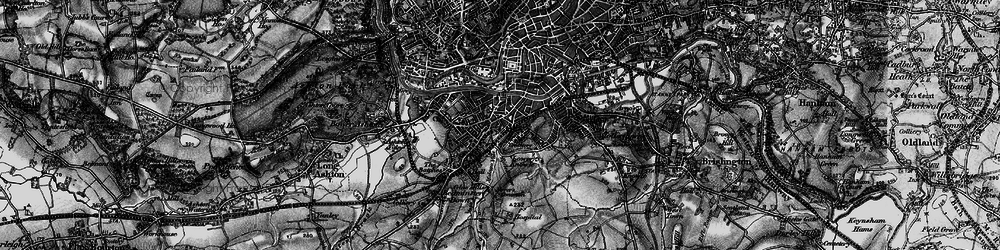
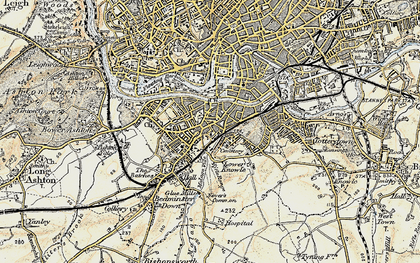
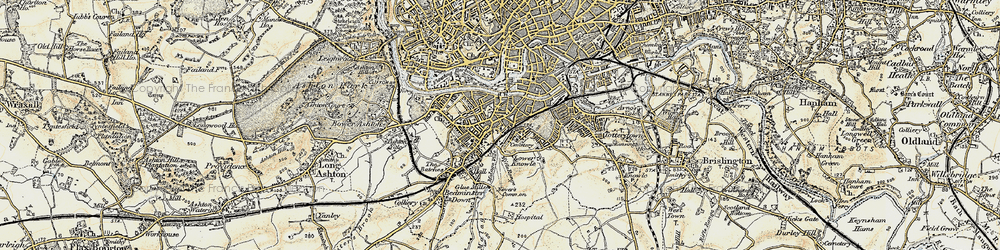
Historic maps of Bedminster and the local area, hand-drawn by Ordnance Survey and Samuel Lewis. View all Bedminster maps
Bedminster photos
We have no photos of Bedminster, although we do have photos of these nearby places:
Clifton| Bristol| Dundry| Westbury-On-Trym| Pill| Shirehampton| Henbury| Keynsham| Filton| Chew Magna| Felton| Farleigh| Frenchay| Pensford| Stanton Drew| Wraxall| Bitton| Avonmouth| Backwell| Saltford
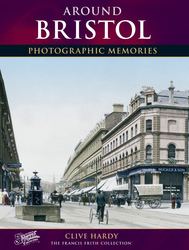
Bedminster area books
Displaying 1 of 6 books about Bedminster and the local area. View all books for this area
You can read extracts and browse photos from these books.
Memories of Bedminster
No memories of Bedminster have been shared yet - be the first!
Add your memory of Bedminster
or of a photo of Bedminster.
Avon memories
Happy Days in Hotwells
I was born at 5 Rosemount Terrace, Hotwells, no longer there. I remember Harry Eavans, the paper shop, all the shops. The oub, the spring gardens, the flying fox. Oh happy days. Clifton National School, that was many years ago. I am 82 years old. My name was Pat Smith, now Pat Blake. I wish I could find a DVD of old Bristol.
Wedding
i married gordon blake dec.2nd 1944.we are still together after 63years
School Days
I never thought that I would see this building, then an office for the civil service, returned to be residential! I believe the family who once ran this hotel now live in Exeter. If they read this I would love to hear their stories.
Pictures of The Suspension Bridge And Clifton College
I was recently given a copy of your delightful book - 'Around Bristol'. I was born just outside Bristol - my parents and brothers survived being bombed in their house in Clifton (I have some pictures) - and lived in Clifton from 1946 to 1969. A couple of pieces of additional information about pictures in the book. Page 69 - Clifton suspension bridge. Buses and commercial vehicles were not allowed over the bridge due to weight restrictions. However, Clifton College had a special dispensation to take specially lightened school buses over the bridge to go to their playing fields at Beggars Bush. I believe that the bus shown was a pre-war (192?) Thorneycroft which was withdrawn from service in the late 1950s - very uncomfortable as the springs had come through the horsehair upholstery! Page 75 - Clifton College. The difference between the 2 pictures - 1887 and 1901 - is the appearance of the square tower between the end of the library and the... Read more
Salmon Street
Salmon Street was where I was born, and Kingsdown was where my family lived for at least 140 years. Salmon Street Walk Ler Street never changed that is until the Second World War when we were well and truly bombed. There is so much to say about Kingsdown, too much to put in this small space.
Met my Wife Laura Tilzey at A Dance
I was stationed at RAF Fairford in February 1955. I went to a dance and saw my wife Laura dancing. I knew then and there I had to meet her, so asked her for a dance and from that moment on we became a couple, and a month later I asked her to marry me and she said yes. We were married at the Bristol Registry Office on June 4th, 1955. I was in the US Air Force and after we married we found a place in Cirencester and during my tour of duty at RAF Fairford our family became 4 of us as our 2 eldest sons were born. We left to go back to the States in 1958, but I was back on two more tours of duty in 1959 at Greenham Common, near Newbury, Berks and in 1968 at Alconbury, near Peterborough. We celebrated our 56th anniversary this past June 2011. We lost our 2 eldest sons to heart problems... Read more
Memories of Bristol Docks
The large vessel in the foreground is a pleasure steamer belonging to Campbells, the 'Empress Queen', and was the first screw steamer owned by the company. The vessel on the opposite bank was a William Sloan steamer, registered at Leith, although her name, partly obscured, was not one of their regulars and may have been on charter whilst either the 'Annan' or 'Findhorn' was in dry dock. They operated from Glasgow on a weekly run from that port to Dublin and Bristol. The company became part of Coast Lines in 1958 and their colours disappeared around 1968. Behind the cranes, which were dismantled around 1980, lie the massive tobacco bonds which were dynamited in the 1980s in what was described at the time as the biggest explosion anywhere in the country since the Second World War.
(Added by the Frith Memory Archivist from a letter supplied by Mr S J Woodley)