The Francis Frith Collection.
You are here:

Bury

Bury photos

Displaying the first of 69 old photos of Bury.   View all Bury photos

69
View all 69 photos of Bury

Bury maps

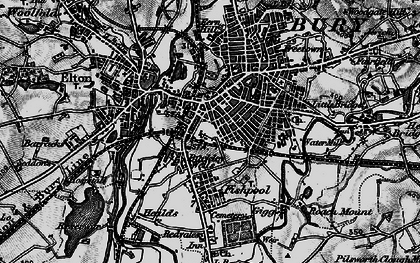
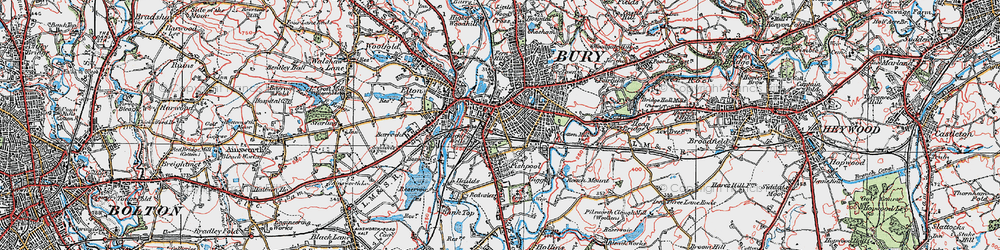
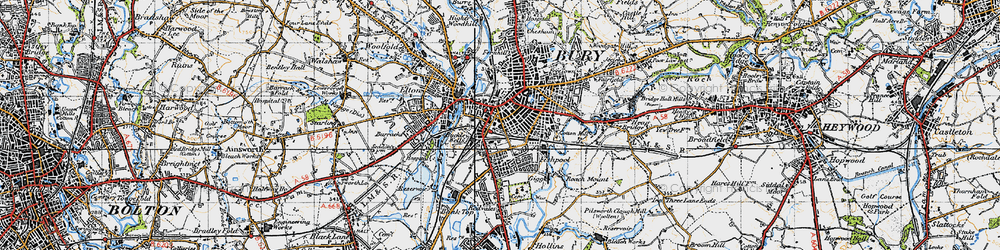
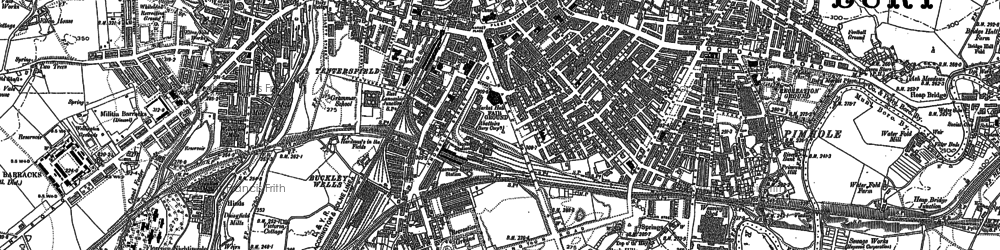
Historic maps of Bury and the local area, hand-drawn by Ordnance Survey and Samuel Lewis.   View all Bury maps

Bury area books

Displaying 1 of 4 books about Bury and the local area.   View all books for this area

Memories of Bury

Bury memories
Read and share Bury memories

Displaying a selection of personal memories of Bury. There are 10 shared memories to read.
Add your memory of Bury or of a photo of Bury.


After School Job,

I used to work on the market on Saturday morning when I was not playing football for the school team (St Gabriels. I used to go around the stalls with jugs of tea and sandwiches for the stallholders. I remember the black pudding man was a great tipper, he always said thanks and gave me a tanner (sixpence) and it was well received. and the black puddings were great as well. I also had a job on Wednesday evenings loading a van with overcoats for a Jewish man who was a trader, I cannot remember his name but he used to give me five shillings.

Choir

St John's Church Interior 1895
Enlarge photo |  More about this photo

I was a choir boy at St John's church in 1948.
I couldn't sing but it was one way of getting out on Thurs for choir practice and Sunday
for service.

Architect

Textile Hall 1895
Enlarge photo |  More about this photo

My great-grandfather, David Arthur Hardman, was the architect for the Textile Hall in Bury. His son, my grandfather, William Percy Hardman, was also an architect, who emigrated to Boston, then New York in 1911.

Education And Health

Grammar School 1895
Enlarge photo |  More about this photo

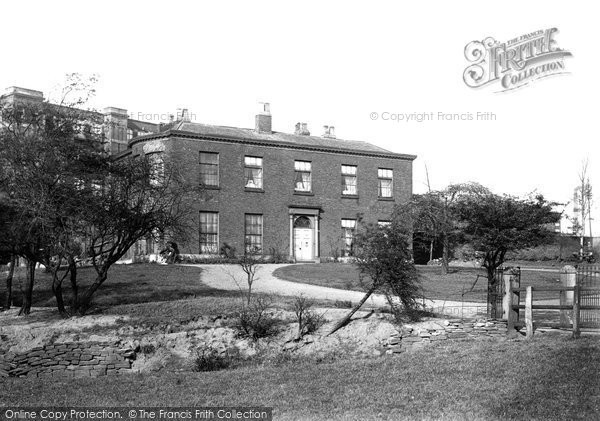
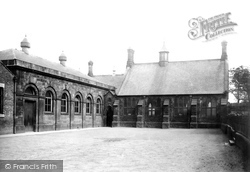
By the 1940s the Grammar School had been rebuilt in Tenterden Street. The building in the photograph became The Wylde Clinic which was the centre for mothers and babies and of course housed the 'dreaded' school dentist. My younger brother went to the Wylde Clinic for 'sunray treatment' where all the children had to wear goggles to protect their eyes.
The Wylde Clinic was still operating in the 1960s for mothers and babies, ante-natal care and school health referrals.

The Rock in The 1950s

The awnings on the left of this picture show the location of Woolworths, whilst Marks and Spencers was a little further up on the right hand side. The building immediately before Woolworths was a bank and over the top was Joseph, Thompson and Marsdens Acountants.

A Focal Point

Kay Gardens c1955
Enlarge photo |  More about this photo

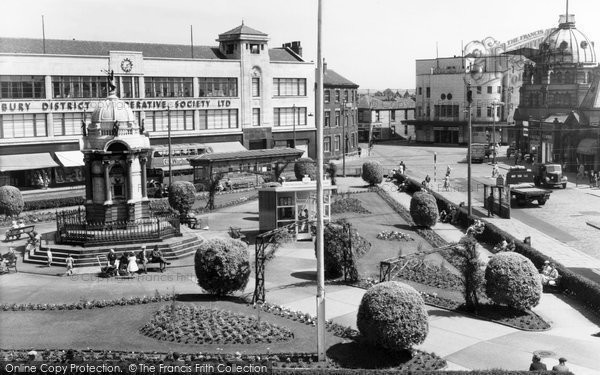
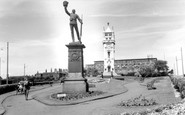
Kay Gardens was the terminus for all bus services from surrounding districts and towns. On this photograph, the large building at the back of the picture was the Co-op, which was at that time a department store, but also housed a restaurant on the first floor, widely used by office workers at lunch times, and of course for funeral parties. At the far right of the picture is the dome for the old indoor market. Kay Gardens was a popular place for local workers to sit at lunchtime to eat packed lunches.

Childhood

Walmersley Road Recreation Ground 1895
Enlarge photo |  More about this photo

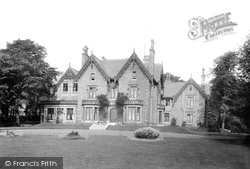
Walmersley Road Recreation ground was later renamed Clarence Park. This is the bandstand where on summer Sunday afternoons there would be a band concert and deck chairs (strictly for the older generation of course). The house in the distance was the park keeper's residence, and woe betide any child who was caught walking on the flower beds. There was a large rock near the park entrance which carried a metal plaque. The plaque said that the rock had been carried down by glaciers from the ice age. Was that true? As children, we used the rock as a miniature slide. The park was our playground throughout the 1940s and 50s.

The Best Market in Lancashire

Bury market was famous and its modern version, though not as interesting, still is. We used to go to the market and buy one of Thompson's black puddings, piping hot in a grease-proof paper, The man would split it and put plenty of mustard on. There was the roast potato man, vegetable stalls, fish stalls and the famous Cheap Jack. He used to gather crowds round his stall with his patter and his household goods at 'knockdown prices'. He must have done well - he retired to St. Annes on Sea - a sure mark of success. In the late sixties a fire destroyed the old market hall and the market was relocated. Everyone agreed that the atmosphere was never the same, but the new market today still brings people in from miles around.

© Copyright 1998-2012 Frith Content Inc. All rights reserved.