early schooldays.
2 comments have been shared below in response to "early schooldays."
Get involved and post your comments using the comment form below.
Year: 1954
early schooldays.
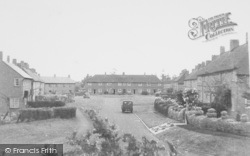
My memories of Byfield, where I lived on the brand new council estate, in Lovett Road, are idyllic. I was there from age 6 to 10, then we moved to York.
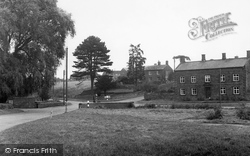
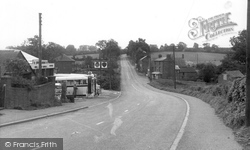
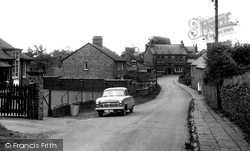
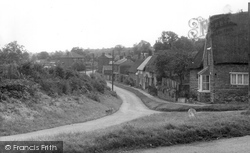
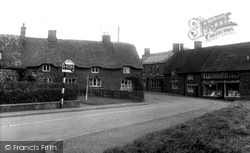
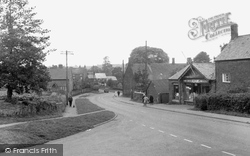
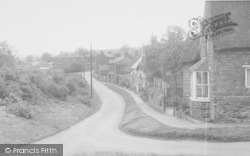
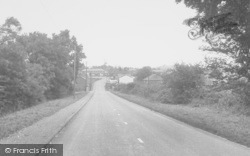
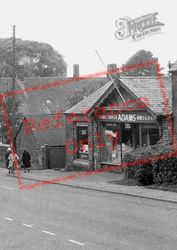
We children had to walk what seemed like miles, in all weathers, to the village school which was on the opposite side of the village. Passing the sweet shop on Dolls Hill, where halfpenny chews, sherbert dips and gobstoppers were the treat of the week, we would race down the hill to the stream at the bottom,over the bridge, then through the centre of the old village which had an Inn on either side of the road. One of these, The Rose & Crown(?) used to be the meeting place for the Hunt, an incredibly exciting and glamorous event...I was lucky enough to get "blooded" one year, much to the horror of my Mother.
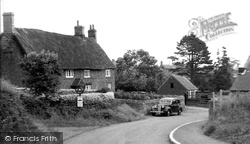
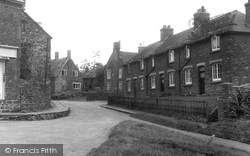
The smell of fresh bread coming from Mr. Smith's used to slow us down, and we used to peer through the door at the very round, pink and flour- covered baker. He had no time for us, so we continued on our way passing ancient stone houses, some thatched cottages, high stone walls covered in moss and stonecrop.
The village school must have had only about 50 children, if that. It had only two classes; the elder children were taught by Mr Jackson the headmaster and we younger ones by "Miss." Mr. Jackson used to sit on a very high lectern-like wooden desk, so could see everything that was going on. He terrified me. So did arithmetic, which he taught. In every annual report he commented that "Rosemarie must learn to overcome her fear of arithmetic". I never have.
We children had plenty of activities to keep us entertained.There was the wonderful playing fields below the church, where I spent hours on the swings and took many a tumble from the slide onto the gravel. There was no supervision, scabby knees were the norm, we simply cried then started again. My friend John Dunkley and I loved to go to the stream where we used to collect frog spawn and watch the tadpoles develop, catch minnows and sticklebacks, caterpillars, butterflies and ladybirds. I shudder to think how many of these creatures we destroyed in our attempts to understand how their anatomy worked.
The ballet class I was enrolled into was intended to transform me from a tom-boy into a young lady, but soon showed I was no budding Fonteyn. Tap dancing was my preference, because I got to wear red shoes and it made a lot of noise. Mother made my tu-tu, as did all the other Mums, for the big performance at the annual fete on the Vicarage lawn.
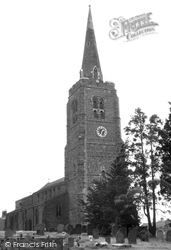
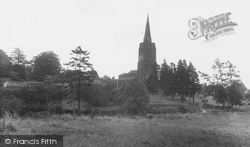
Church was a big part of village life. The church was certainly impressive, with a steeple reaching forever, but this was lost on me at the time; more important was playing under the yew trees and a morbid fascination for gravestones. Sunday school was obligatory for me, but I enjoyed it, though I did play truant one day when the attraction of the nearby playing field was too much of a temptation. I was found out and it never happened again.
I have lived in a tiny rural village in Cyprus for the last 15 years, trying to capture the country life of yesteryear. I have never had the opportunity to visit Byfield and often wonder about my friends, Edna Dunkley, Penny Lucas, Rosamund Pereira, Delia Peasnall.
Byfield is still very much in my heart .
Shared on 01 April 2007
Comments
Year: 1953
RE: early schooldays.
Byfield School still looks the same. In those days it was girls and infants in the back playground, boys in the front. The teachers with Mr Jackson were Mrs Stevens and Miss Johnson who became Mrs Wood when she married. There were three classes; the Infants' had an open fire, Lower Junior room was stepped, Upper Juniors had the technology for School's Wireless. We listened to Singing Together, Rhythm and Melody, People Places and Things, it was as exciting as web access is today. My family lived next door to the school, at the bottom of the hill. In those days Byfield had three grocers, two butchers, a bakery, drapery, two sweet shops, a bicycle repair shop, radio repair shop, a general clothing/toy/knitting wool shop, four pubs, a garage, a church and three chapels. We also had the KW bus to Northampton and the railway from Woodford Halse. I think there were only about 700 people in the village, but our needs were well met. Jean Furburrow's ballet and tap classes danced at the summer fete, at village concerts and at the Arts and Crafts Festival in Banbury. We rehearsed in the Tithe Barn, where again there was an open fire in the winter, but I remember the room as invariably full of smoke and rather chill. Mrs Hassell played the piano for us.
Byfield has changed dramatically - lots of new houses and new people but many of the families, with whom we grew up, are still there and I still enjoy going back, seeing them again and remembering Byfield as it was.
Shared on 21 July 2007
Year: Unknown
RE: early schooldays.
Amazing, Penny. I still have a photo of the ballet classes on the Vicarage lawn. You and your sister Sally are in it.
I didn't realise that Byfield was so large and had so many facilities. Living at the new estate, we kept ourselves very much up there, so really never got to know too much about the main village, but still I was only there for 4 years in total.
Any idea what happened to the others in our class? You were lucky living next door to the school. I had to have school lunches. They were always delicious, but we were expected to eat everything up and the portions seemed enormous. After a massive helping of shepherds pie, one was expected to follow that with a slab of coconut sponge and custard. Better than a bag of crisps and a can of Coke.
It was really great to hear your memories.
Shared on 22 July 2007