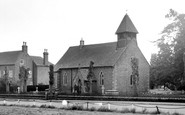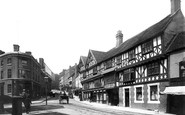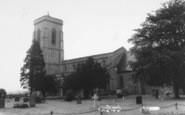
Forton, Hampshire
Forton photos
Displaying 2 of 2 old photos of Forton. View all Forton photos
Forton maps
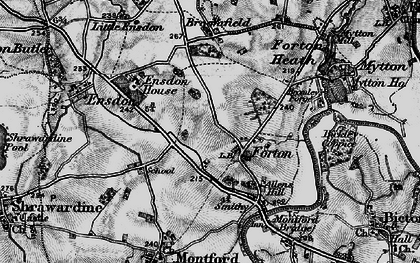
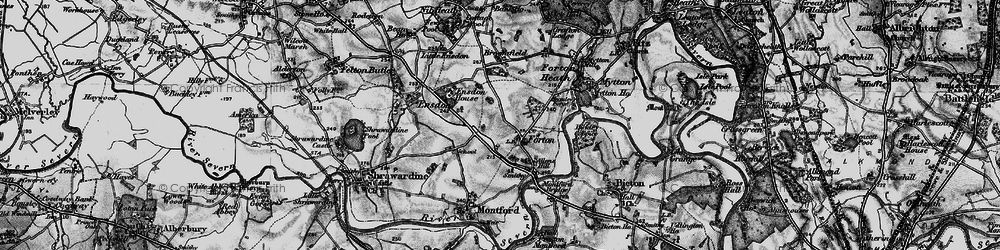
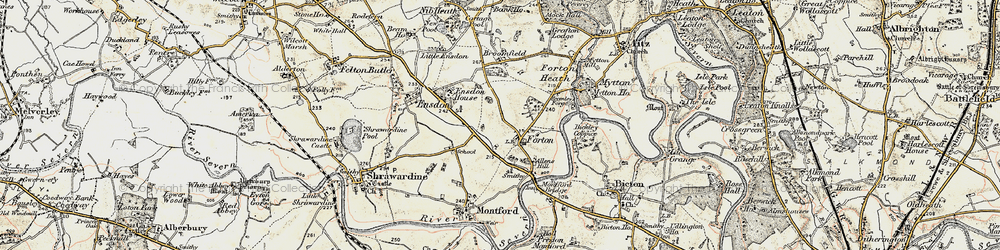
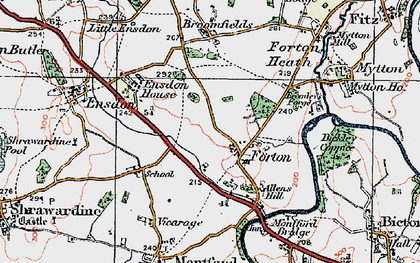
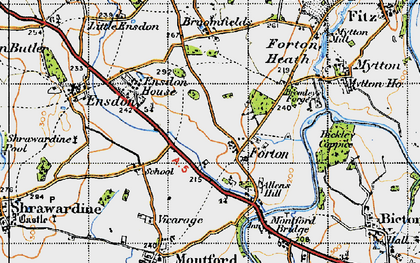
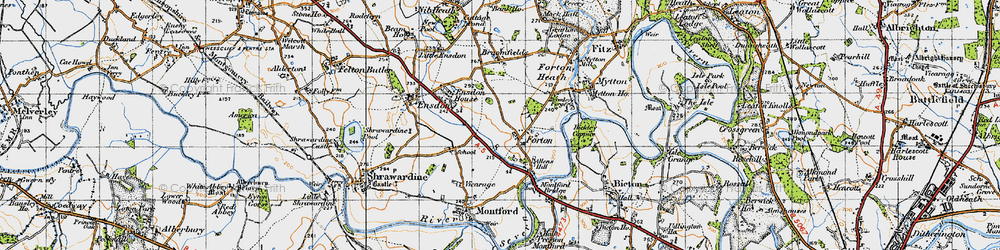
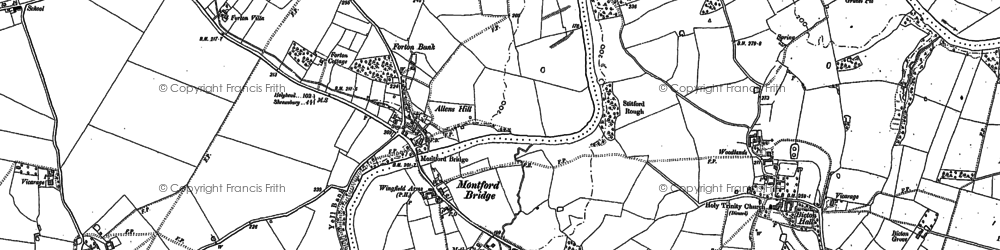
Historic maps of Forton and the local area, hand-drawn by Ordnance Survey and Samuel Lewis. View all Forton maps
Forton books
Displaying 2 of 4 books about Forton and the local area. View all Forton books
Around Eastleigh including Chandler's Ford, Bishopstoke and Botley Living Memories
Paperback
rrp £11.99
£3.60
You can read extracts and browse photos from these books.
Memories of Forton
No memories of Forton have been shared yet - be the first!
Add your memory of Forton
or of a photo of Forton.
Hampshire memories
I lived at Church Farm, Longparish in the late fifties & early sixties. The farm was then a working farm and my father was dairyman. I went to the primary school just after it was rebuilt, the teachers were Miss Munday & Miss Tari. The school playing field was rough grass, it was then relaid with no fence by the river yet we never came to any harm. At Church Farm there was a big old barn next to the granary. In the barn was an old covered wagon like Wagon Train. I played for hours in there. The granary had owls in, we used to spend hours looking out of our bedroom windows watching the owls come and go. The farm foreman was Mr Reg Ball, he used to ride a bike and deliver all the wage packets on a Friday to the workers who were scattered far and wide, you would not do that today! The dinner ladies were Mrs Plummer, Mrs Dobson, & Mrs Smart - she used to make chocolate crunch, lovely! The railway line was not used but the track was still laid with old trucks stored on it. One day they took them away and the army blew up the bridge over the A303 at midnight one saturday. When I lived at Longparish it had two coalmen, two shops, a cafe, a post office, a taxi, two pubs & an off licence. We used to have jumble sales in the village hall opened by Muriel Young who lived at Forton. I remember when Cliff Richard opened the fete, I payed 6d for his autograph. My mother used to make butter for Mr Wills at Middleton House, wish I had some now. Sadly when Mr Wills died the milking cows were sold and we moved on, I don't think I have lived anywhere so nice since.
Shared on 22 March 2008
I remember doing my 6 weeks basic training at 7 Training Battalion REME Barton Stacey. It was rough, I was only 18 and never been away from home before, and the discipline came as a bit of a shock to us all. Some of the NCO's were particularly cruel to some of the soldiers, especially the ones who didn't respond quick enough to an order. They could be quite degrading at times.
I never got to go into Barton Stacey, but did get a couple of afternoons out in Winchester and Andover. I have often wondered what it is like now where the camp used to be. Is there anything left, I don't suppose there is, after all it was 55 years ago.
Shared on 11 January 2009
March 1954. I had been in the RE's 10 months when I first set eyes on the transit camp in Barton Stacey better known as Barton Stalag. I was sent there on transit for Korea along with another half a troop ship load of squadies. I remember a Sergeant Major who lived there and had a wooden bungalow with what seemed umpteen kids and was in charge of our draft. For some unknown reason we would parade each morning on the concrete paths around our huts and in front of his bungalow and not on that huge square for some unknown reason. He would carry a large stick this a big knob on the end which he used to demonstrate a point when telling us some of the type of women we might encounter on our travels.
I remember many guard duties there walking round the camp thorughout the night in the rain or standing in that little sentry-box outside the guardroom.
I was at Barton Stacey Four times in all during my three and a half years service. I went back August 1956 being recalled for the Suez crisis the same Sergeant Major was still there trying to turn Teddy-Boys back into soldiers.
When I go by that area now I swear I hear that Sergeant major shouting even now.
Shared on 23 January 2008
this street is the scene of many a frantic cycle to the sweet shop (aka village shop) at the bottom of the hill, eager to hand over our week's pocket money to Mr Knight who ran the shop.
This view is roughly from the pub on the corner (the red lion?), that was run by a landlord that strangely became rather irate when his triumph stag was pelted with mud balls from a strategically positioned hedge. happy days...
Shared on 01 June 2006
Extracts From Forton & Hampshire books
Displaying a selection of extracts from Frith books about Forton, inspired by Frith photos.
Petersfield - A History & Celebration
The cenotaph in the High Street commemorates those who died in battle but whose remains lie elsewhere. It is of unusual and classic appearance; it was designed by the architect Harry Inigo Triggs, who had travelled and studied in Italy. The detailing is borrowed from the eight blank panels in the Medici chapel in Florence; on these panels are carved the names of the town’s dead of the First World War. (Plaques were added after the Second World War commemorating the 54 young men who died on duty away from home during that conflict). After much deliberation over an appropriate location for the town’s memorial, it was erected by the mason Andrew Perryman of Dragon Street in its present position early in 1922 - a position in the Square was discounted. In the wake of the war, under the auspices of the Housing Act of 1919, the country set about building ‘homes fit for heroes’. The first of these were built in Noreuil Road, which was named after a little village of some 100 inhabitants near Arras in France. Petersfield had adopted the village to help with its reconstruction, and a letter thanking the town for gifts of parcels of clothing and coloured wall maps to brighten the schoolroom was signed by J Nicholai, the schoolmistress at Noreuil. The Electricity Supply Act of 1919 gave rise to an application by Dr R J Cross, Mr T A Crawter and Mr C W Seaward, who wanted to form a company to supply electric light to Petersfield. The plan was for a generator on land located to the rear of the Volunteer Arms (now Meon Close), with a frontage on Frenchmans Road. (Note that the company was only to supply electric light, not power). With houses having only 40-watt lamps, it is unlikely that a supply greater than 20 kilowatts would be required. Tom Crawter’s house, Clare Cross, was the first house in Petersfield to be lighted by electricity. Nevertheless, there was enough power to supply the Electric Theatre with the town’s first film shows. The first cinema stood at the corner between Chapel Street and Swan Street - in fact, the demolition of the Swan public house made way for the Electric Theatre. That first cinema was replaced by the Savoy Cinema in 1935, and is now a nightclub.
Read more and see photos from this book.
Petersfield - A History & Celebration
And now to the greatest mystery: who were the people who raised the tumuli or burial mounds on Petersfield Heath during the Bronze Age some 1,000 years after the Stone Age? Today, Petersfield is home to one of the most numerous collections of Bronze Age burial mounds in England. Unfortunately, the planting of conifers on the mounds in Victorian times and the mixed tree growth of the last 50 years has successfully camouflaged the outline of the tumuli and largely hidden them from the casual view (see page 11). To create mounds like this would have required the labour of many people, and they appear to have been built over many years, if not centuries. So where did these people live? Why have they left us no clues to tell us where they came from? Did they come from miles around to bury the ashes of their dead princes here? Were they nomads carrying the remains from a fair distance to a sacred spot or a clearing in the forest? Or is it possible that someone may yet find their habitation site here within the town itself? In all probability we shall never ever know the answer, and the mystery will remain for all time.
Read more and see photos from this book.
Petersfield - A History & Celebration
MOST OF this first chapter has to be supposition, for the facts are few and far between, but certainly two requirements were just as important in the past as they are now in the 21st century: firstly, the lie of the land was and is still critical to a successful place to camp for the night; and secondly, man’s intelligence was and is needed to make the right decisions on where to camp.
Read more and see photos from this book.