Hookwood
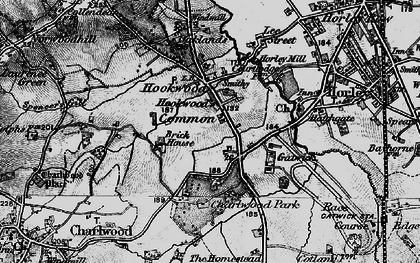
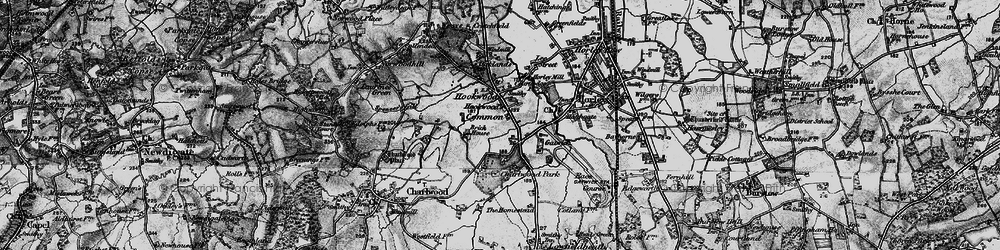
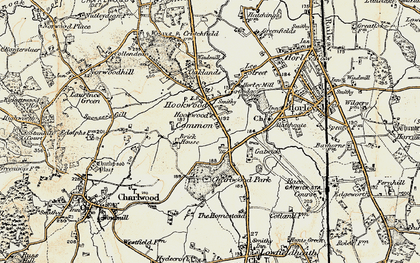
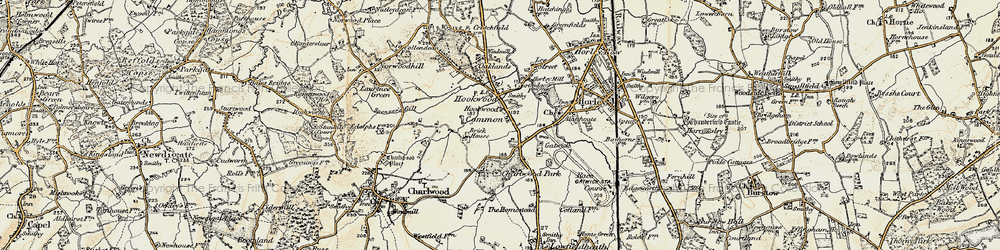
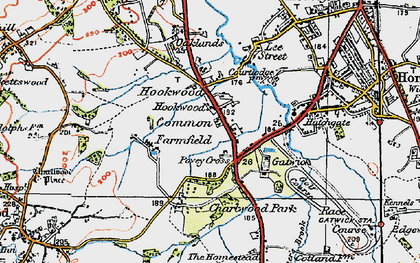
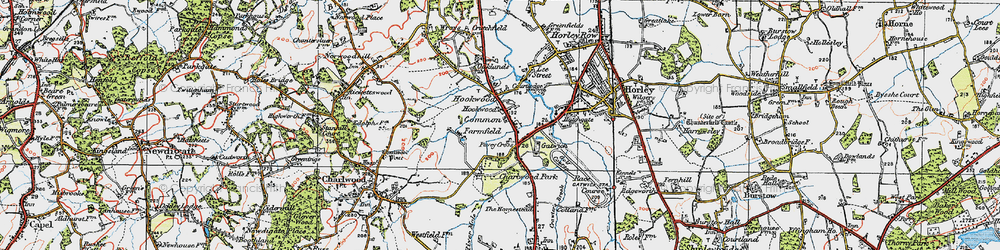
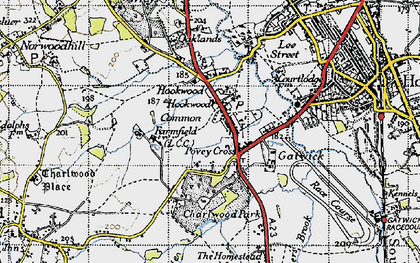
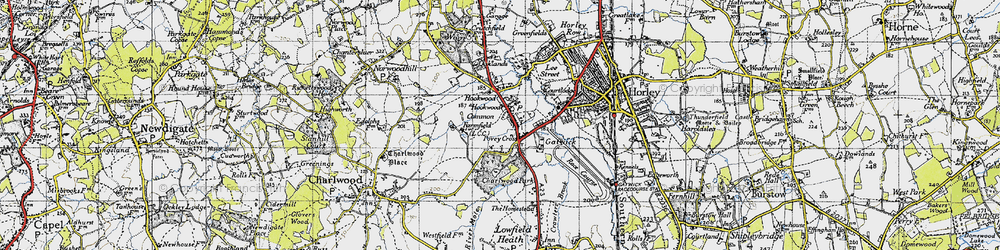
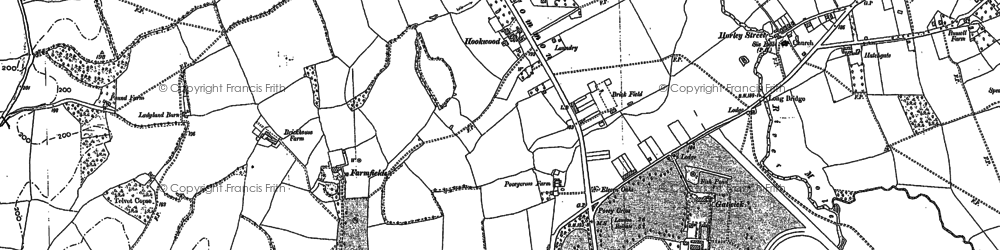
Hookwood maps
Historic maps of Hookwood and the local area, hand-drawn by Ordnance Survey and Samuel Lewis. View all Hookwood maps
Hookwood photos
We have no photos of Hookwood, although we do have photos of these nearby places:
Horley| Gatwick| Oakwood Hill| Charlwood| Lowfield Heath| Sidlow| Salfords| Shipley Bridge| Three Bridges| Smallfield| Burstow| Leigh| Copthorne Bank| Outwood| South Park| Crawley| Meadvale| Earlswood| Newdigate| Copthorne| Ifield| Worth| Redhill| South Nutfield| Reigate| Rusper| Strood Green| Nutfield| Betchworth| Beare Green
Hookwood area books
Displaying 1 of 18 books about Hookwood and the local area. View all books for this area
You can read extracts and browse photos from these books.
Memories of Hookwood
No memories of Hookwood have been shared yet - be the first!
Add your memory of Hookwood
or of a photo of Hookwood.
Surrey memories
The Constitutional Club
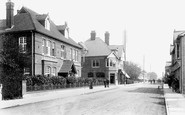
This view looks back along High Street. The two buildings either side of the turning into Albert Road have long gone, to be replaced by new offices. The building on the left was the Constitutional Club; it was built in a Bedford Park Domestic Revival style around 1890 with steep tiled roofs and much use of brick banding.
Station Road
The railway is now behind the photographer, who is looking down High Street at the height of its Victorian expansion with the street dominated by tall telegraph poles. Thorley’s, the cattle feed merchants, has gone, to be replaced by 1970s shops and offices, while all the old shop fronts have been replaced on the other terraces. Most of these buildings date from the 1860s to 1880s.
Horley, Station Road
Horley is on the old main London to Brighton road before it was diverted around the area of new Gatwick airport. Single and two-horse traps wait by the roadside. Corn and coal merchants sell proprietary animal feeds. We can also see London House, a draper’s, Branch’s shop, a dairy and a game and poultry shop. A line of very tall telegraph poles are topped with pointed finials. A gas street lamp is at the kerbside outside a shop with advertising boards on the pavement. Sunblinds are extended on the side of the street facing the sunlight.
The Chequers Pond
Further north was the hamlet of Horley Row, with the Chequers Inn at its east end. This is now a busy road junction of the A23 and B2036 Balcombe road. The pond has long been filled in, and the pub is now the Chequers Thistle Hotel, much used by Gatwick airport business travellers. The buildings survive, but they were Tudorised and given leaded light windows and applied timber-framing: you could be forgiven for driving past and thinking it a 1920s period-style road house pub.
The Chequers
The left-hand elm survives as a 15ft stump draped in creeper, but the right-hand one has gone. Here the architectural revolution can be seen: the older inn buildings are to the right with early 19th-century sash windows, and the taller gabled rear wings of the 1860s are behind at the left. The portico at the right with the girl leaning on the column is now a Tudor-style oriel window.
The Six Bells
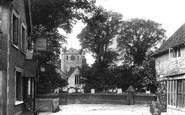
Virtually unchanged since this view was taken, apart from the loss of the central chimney stacks, the Six Bells is in the old village of Horley near the parish church of St Bartholomew, whose churchyard wall can be seen on the left. The pub is 15th-century with later additions, and has a Horsham stone roof. The church suffered Victorian restoration and correction of ‘incorrect’ window tracery at the hands of Arthur Blomfield in 1881, but fortunately the 14th-century timber-framed and shingled tower and belfry escaped.
On The River Mole
The River Mole forms the county boundary here, south-west of the church, so the right bank in the view is in Sussex. This is Long Bridge, seen from Church Meadow, now a more manicured space. The bridge carried the London to Brighton road for many years; it was rebuilt in the 1970s.