Kingsley, Hampshire
Kingsley photos
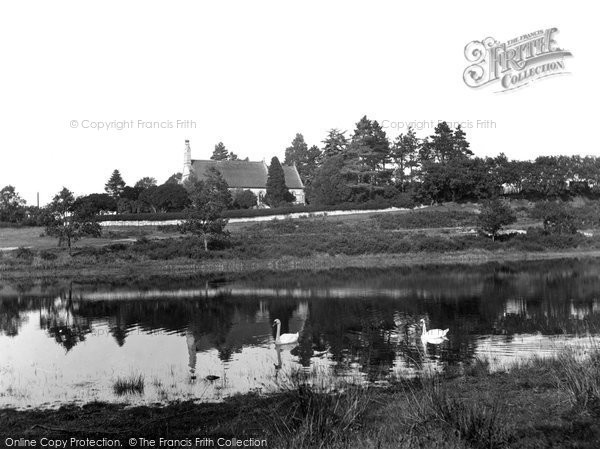
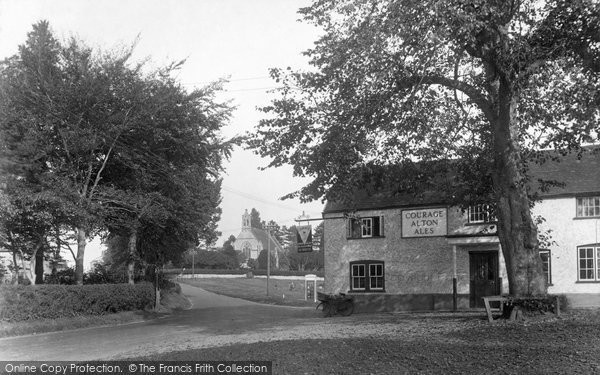
Displaying 2 of 2 old photos of Kingsley. View all Kingsley photos
Kingsley maps
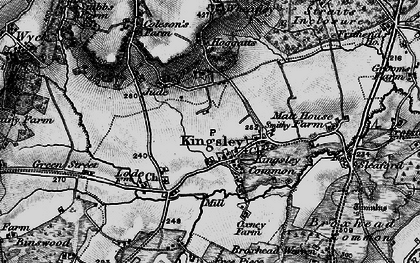
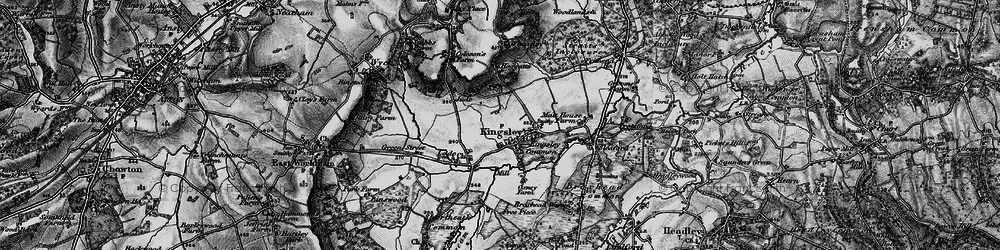
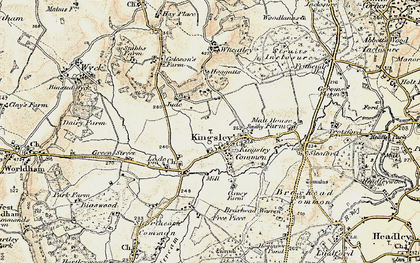
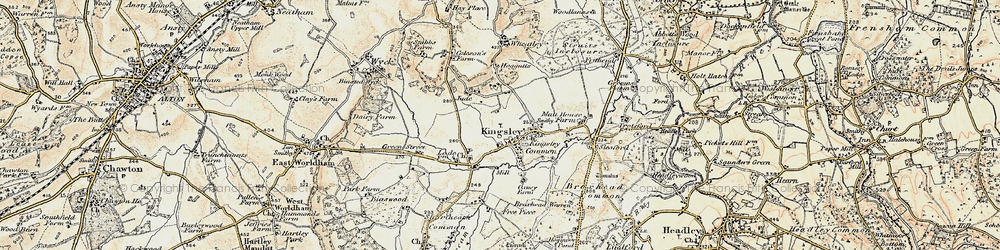
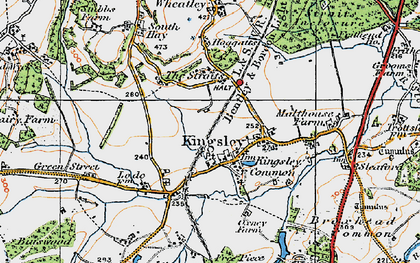
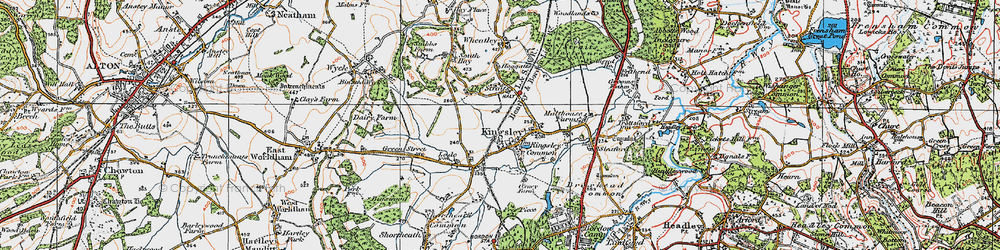
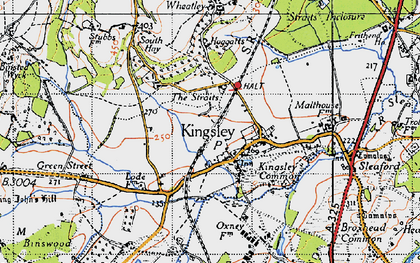
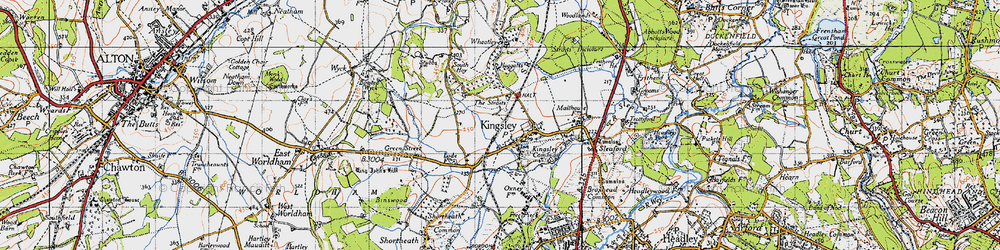
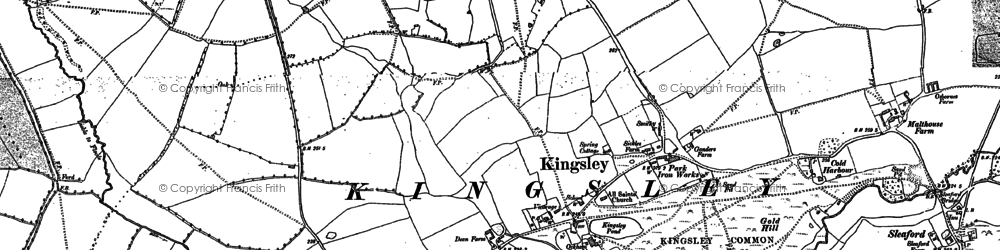
Historic maps of Kingsley and the local area, hand-drawn by Ordnance Survey and Samuel Lewis. View all Kingsley maps
Kingsley books
Displaying 2 of 4 books about Kingsley and the local area. View all Kingsley books
Around Eastleigh including Chandler's Ford, Bishopstoke and Botley Living Memories
Paperback
rrp £11.99
£3.60
You can read extracts and browse photos from these books.
Memories of Kingsley
No memories of Kingsley have been shared yet - be the first!
Add your memory of Kingsley
or of a photo of Kingsley.
Hampshire memories
This was a lovely quiet village when I first came here. Unfortunately, it is becoming run down and untidy. Pity, really. We seem to be having all the throw outs from other places. When the army goes (if they go), this will be a dumping ground for all types of undesireables.
Shared on 04 March 2008
My mum used to take us all (seven of us) to the mill to paddle. It was always freezing, some would even be brave enough to swim. There was always a strong smell of pond weed, but we had great fun. When it was warm enough we used to pack a picnic and walk to Frensham pond which was a great treat. That was about 40 years ago now but I remember it like it was yesterday.
Shared on 07 August 2007
This photo is of the temporary classrooms and main building of Weyford Junior School where I was a pupil from 1964 to 1969.
Shared on 15 March 2007
Binsted when I was a child 1950/60s
SUMMER IN BINSTED
I remember summer!
It was more than one week in May
I remember it lasted six whole weeks
I remember summer!
It started with a train journey -
I remember great clouds of steam!
Haymaking, harvesting
Mice running for their lives!
Corn stooks, threshing
Juddering and jarring
Playing cricket non-stop
Stalks scratching little legs
Mr Bunce’s horse and cart
Secrets in the village shop
Long walks and church bells
Visiting the cousins
Rooks cawing, cows milking
Farm sights and country smells
The river where I learnt to swim
The little general shouting
He may have ruled a battlefield
But not my life and limb!
Hop picking, green fingers
Great fires, drying rooms
Swinging over slatted floors -
And still the smell lingers!
I remember summer
It ended with a train journey -
I remember great clouds of smokey steam!
Shared on 15 June 2009
Extracts From Kingsley & Hampshire books
Displaying a selection of extracts from Frith books about Kingsley, inspired by Frith photos.
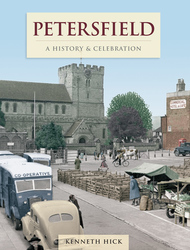
Petersfield - A History & Celebration
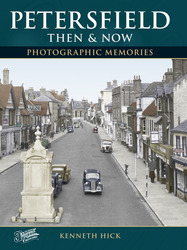
The cenotaph in the High Street commemorates those who died in battle but whose remains lie elsewhere. It is of unusual and classic appearance; it was designed by the architect Harry Inigo Triggs, who had travelled and studied in Italy. The detailing is borrowed from the eight blank panels in the Medici chapel in Florence; on these panels are carved the names of the town’s dead of the First World War. (Plaques were added after the Second World War commemorating the 54 young men who died on duty away from home during that conflict). After much deliberation over an appropriate location for the town’s memorial, it was erected by the mason Andrew Perryman of Dragon Street in its present position early in 1922 - a position in the Square was discounted. In the wake of the war, under the auspices of the Housing Act of 1919, the country set about building ‘homes fit for heroes’. The first of these were built in Noreuil Road, which was named after a little village of some 100 inhabitants near Arras in France. Petersfield had adopted the village to help with its reconstruction, and a letter thanking the town for gifts of parcels of clothing and coloured wall maps to brighten the schoolroom was signed by J Nicholai, the schoolmistress at Noreuil. The Electricity Supply Act of 1919 gave rise to an application by Dr R J Cross, Mr T A Crawter and Mr C W Seaward, who wanted to form a company to supply electric light to Petersfield. The plan was for a generator on land located to the rear of the Volunteer Arms (now Meon Close), with a frontage on Frenchmans Road. (Note that the company was only to supply electric light, not power). With houses having only 40-watt lamps, it is unlikely that a supply greater than 20 kilowatts would be required. Tom Crawter’s house, Clare Cross, was the first house in Petersfield to be lighted by electricity. Nevertheless, there was enough power to supply the Electric Theatre with the town’s first film shows. The first cinema stood at the corner between Chapel Street and Swan Street - in fact, the demolition of the Swan public house made way for the Electric Theatre. That first cinema was replaced by the Savoy Cinema in 1935, and is now a nightclub.
Read more and see photos from this book.
Petersfield - A History & Celebration
And now to the greatest mystery: who were the people who raised the tumuli or burial mounds on Petersfield Heath during the Bronze Age some 1,000 years after the Stone Age? Today, Petersfield is home to one of the most numerous collections of Bronze Age burial mounds in England. Unfortunately, the planting of conifers on the mounds in Victorian times and the mixed tree growth of the last 50 years has successfully camouflaged the outline of the tumuli and largely hidden them from the casual view (see page 11). To create mounds like this would have required the labour of many people, and they appear to have been built over many years, if not centuries. So where did these people live? Why have they left us no clues to tell us where they came from? Did they come from miles around to bury the ashes of their dead princes here? Were they nomads carrying the remains from a fair distance to a sacred spot or a clearing in the forest? Or is it possible that someone may yet find their habitation site here within the town itself? In all probability we shall never ever know the answer, and the mystery will remain for all time.
Read more and see photos from this book.
Petersfield - A History & Celebration
MOST OF this first chapter has to be supposition, for the facts are few and far between, but certainly two requirements were just as important in the past as they are now in the 21st century: firstly, the lie of the land was and is still critical to a successful place to camp for the night; and secondly, man’s intelligence was and is needed to make the right decisions on where to camp.
Read more and see photos from this book.