Milton Street
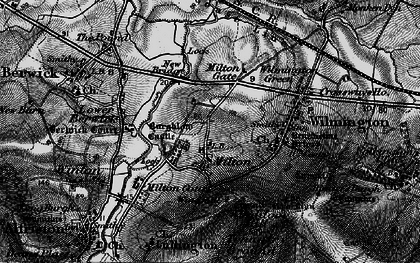
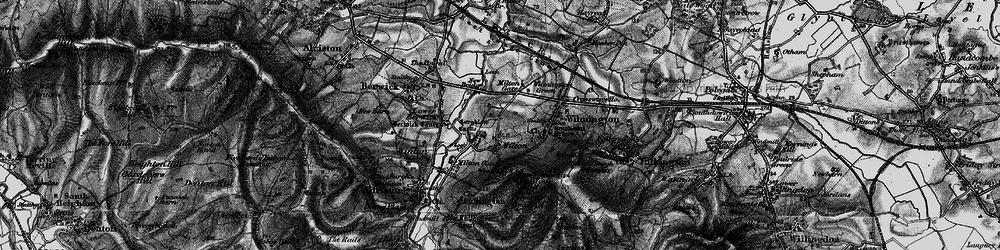
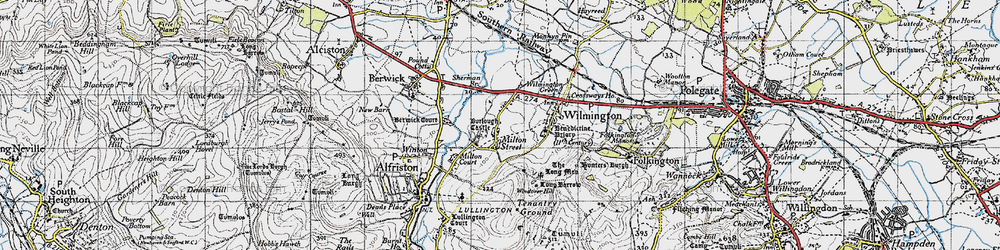
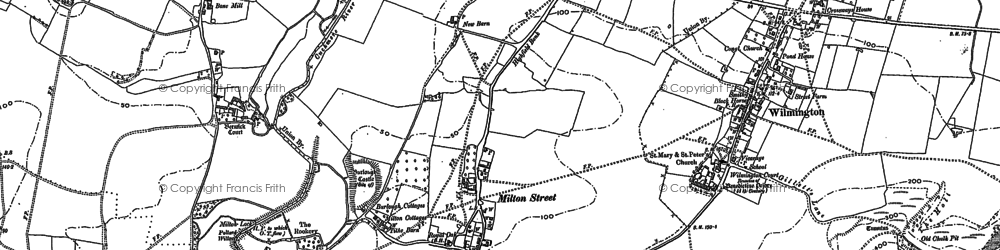
Milton Street maps
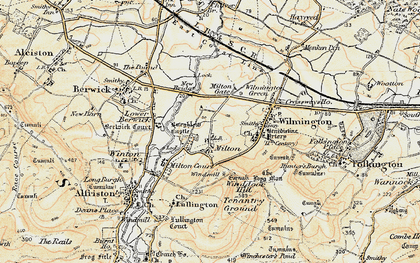
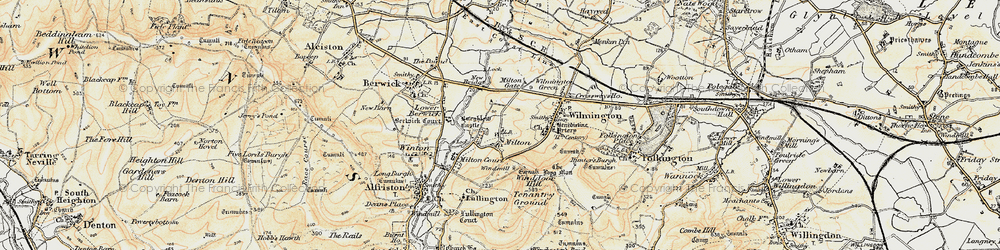
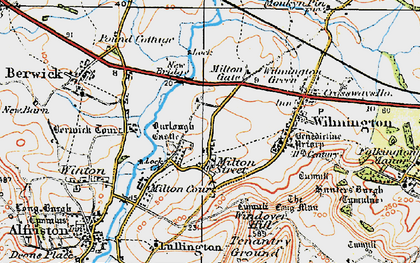
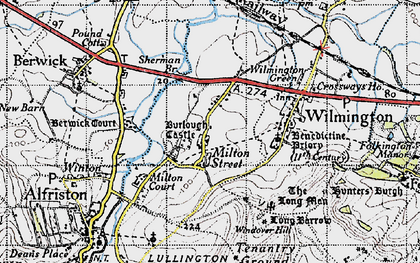
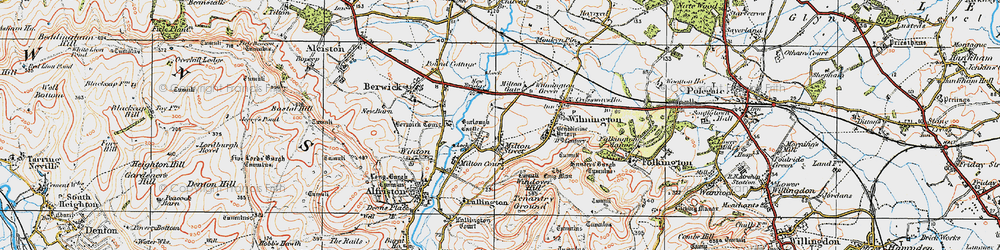
Historic maps of Milton Street and the local area, hand-drawn by Ordnance Survey and Samuel Lewis. View all Milton Street maps
Milton Street photos
We have no photos of Milton Street, although we do have photos of these nearby places:
Lullington| Alfriston| Wilmington| Litlington| Berwick| Arlington| Jevington| Westdean| Wannock| Polegate| Willingdon| Michelham Priory| Friston| Upper Dicker| Seaford| East Blatchington| East Dean| Cuckmere Haven| Firle| Bishopstone| Hailsham| Eastbourne| Glynde| Newhaven| Beachy Head| Piddinghoe| Glyndebourne| Magham Down| Ringmer
Milton Street area books
Displaying 1 of 24 books about Milton Street and the local area. View all books for this area
You can read extracts and browse photos from these books.
Memories of Milton Street
No memories of Milton Street have been shared yet - be the first!
Add your memory of Milton Street
or of a photo of Milton Street.
East Sussex memories
My Memories of Burnt House Farm Alfriston Circa 1938
I remember being taken down to Alfriston in the 1930s before the Second World War. My great-aunt and great-uncle, Polly and Arthur Newell, had a smallholding on the downs, about half a mile from the village, where they kept chickens and ducks, and a few sheep. My mother told me that Aunty Polly helped a cousin, Jack Butland, to buy the farm, where he lived for many years with his wife, and children - but more details I cannot recall, as I was very young, and not long after, the Second World War started. Aunty Polly and Uncle Arthur had their property 'taken over' by the War Office and I understand Canadian soldiers were billeted there. After the war the property was an absolute ruin, and my uncle and aunt went to live in Eastbourne, in a Victorian house in Ceylon Place.
Many memories stay with me of our visits to Alfriston, where my young brother and I spent many many happy hours.
Life in The Village
I was lucky enough to grow up in Litlington and also worked in the village shop/post office for Jack Keeble. I can trace my mothers family(Reed) back to the early 1800's they were from nearby Alfriston, so I have a very strong connection with Cuckmere valley. I had a very happy childhood, firstly in Lullington 1961 to 1966 and then Litlington 1966 to 1980. Village life, it takes some beating.
Some Berwick Memories
I was a Dutch student of English and spent my summer holidays at a farm at Berwick in the years 1959-61. The farm was run by John and Chris Buckland, their phone number was RIPE 393. I can't remember the name of the farm (if it had one) or the name of the road, but I do remember the road led to the railway station. Also, if memory serves me, when one went from the farm to the station one could enter a lane on the right at the end of which was a small, beautiful but dark and cold house which was owned by an elderly lady who slept outside, year round, and still rode side-saddle. We had tea there once or twice but I have forgotten her name. I had wonderful times and loved the countryside.
Scraps of History
Never had any direct connection with Alciston but have known it since my teens in the early 1960s and have visited many times over the years. What caught my interest is that the village has stayed relatively unchanged in the 20th and 21st centuries because it is just off the main road and has no through traffic.
A few things I have learned about Alciston:
In mediaeval times the village was 'owned' by the monks of Battle Abbey who operated as Lords of the Manor. The 'big house' Alciston Court was designed like a church building with pointed arches, some of which were retained when the house was converted to a farmhouse in the 18th/19th century. The Great Barn, once used to store the Lord's produce still exists and is still in use as a farm building. It is said to be the largest Sussex Barn still in existence.
The original road to Alciston ran just south of the village immediately below the downs.... Read more
The Windmill
The windmill shown in the Willingdon photos was always known to me as the Polegate windmill. I remember it when it was in working order and watching the mill stones grinding the grain. This was in the 1950s when the Council houses were starting to be built there. Later the mill closed and went into decline for some years until it was decided to restore it. I knew the gentleman who was given the job of cleaning out the resident pigeon population and so secured quite a few very plump pigeons which were delicious, they having been so well fed on the grain that had been left stored in the mill.
Polegate, like Willingdon, has grown considerably since those early days as when I used to walk to Polegate from Lower Willingdon there were few house between the two villages, whereas now they are practically continuous.
Also, I was very familiar with Wannock Tea Gardens as I used to walk through them on my way to The Glen... Read more
Wannock Tea Gardens in The 1950,S & Early 60,S.
I remember catching the charabanc from Brighton seafront on a Sunday afternoon with my Nanna and invarably choosing the Wannock Tea Gardens coach outing. I used to love going there, it was a real treat for me as a youngster. We came for a good few years in the 50's and early 60's. Being a pensioner myself now, I have the privilege of living in Polegate. but sad that the Wannock Tea Gardens are no more.
Willingdon Childhood
I was born and raised in Willingdon and lived two doors away from the previous correspondent Ian Friend. I also attended the school referred to as Willingdon Church Hall before a new school was built in Rapsons(?) Road, Lower Willingdon. I have very fond memories of my childhood days there and spent many hours playing and exploring the Downs nearby. The Chalk Pit above Willingdon was a favourite area where I explored for fossils and iron pyrites. One of the unique features of the Downs (I think) was the dew ponds. These were round concave excavations created at appropriate positions at or near the bottom of long slopes. These ponds were created for sheep to drink and accumulated water from dew that condensed when cold air moved down the slopes at night and formed droplets when it drifted over these ponding areas which had retained warmth from the daytime sun. These seemed a very effective idea with no running costs and I used to catch newts and tadpoles in these... Read more