The Francis Frith Collection.
You are here: Explore your past > South Ealing

South Ealing, Greater London

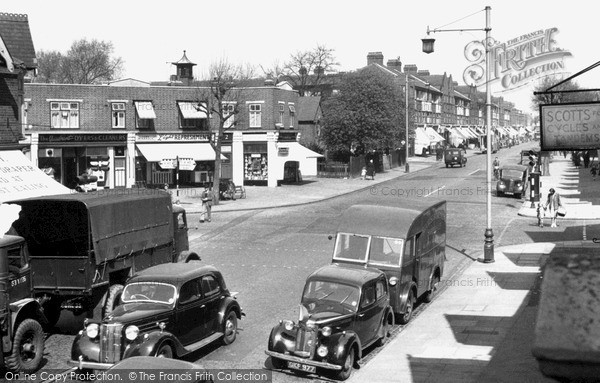
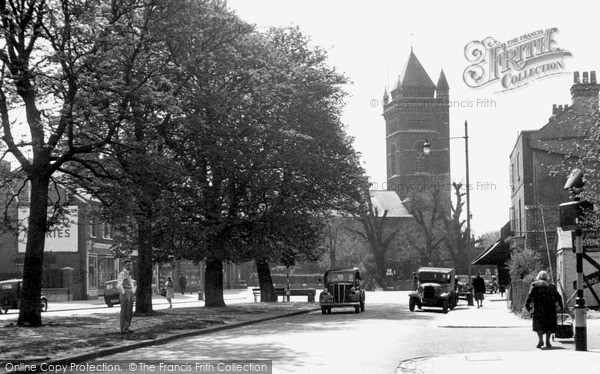
South Ealing photos

Displaying 1 of 3 old photos of South Ealing.   View all South Ealing photos

3
View all 3 photos of South Ealing

South Ealing maps

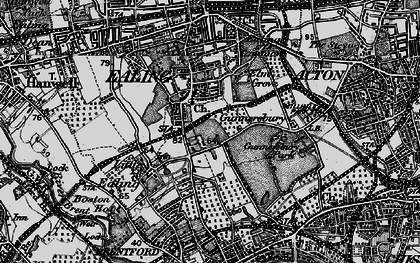
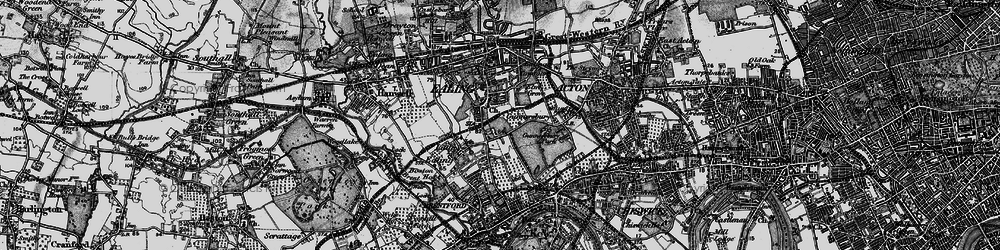
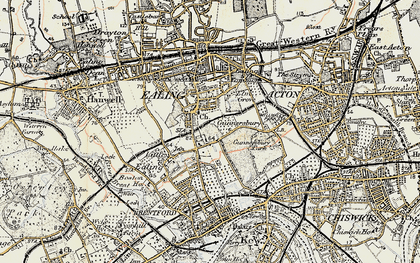
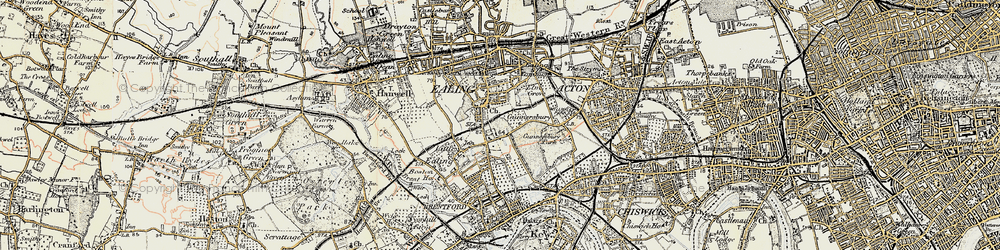
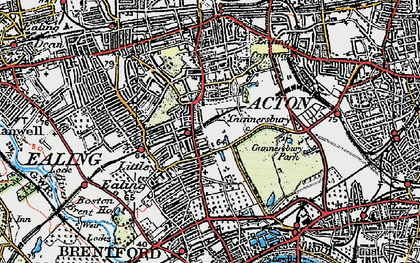
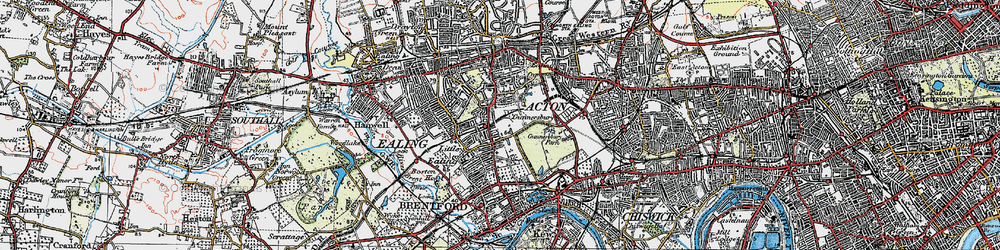
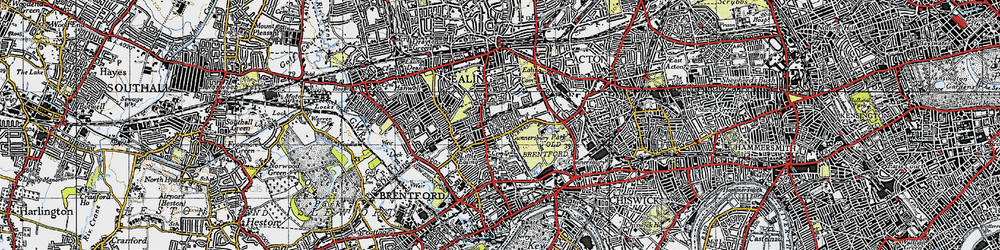
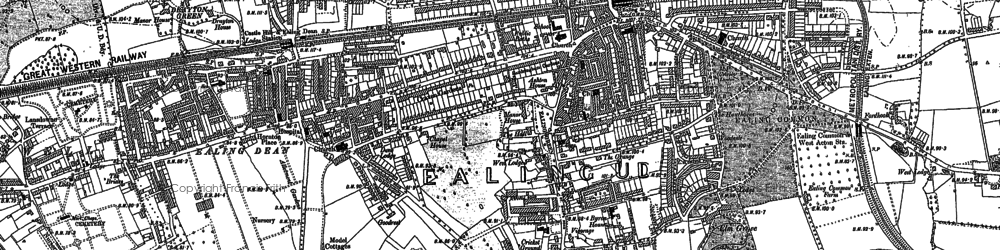
Historic maps of South Ealing and the local area, hand-drawn by Ordnance Survey and Samuel Lewis.   View all South Ealing maps

South Ealing map

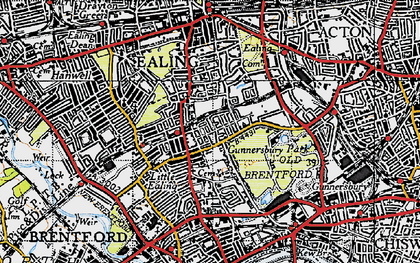
Historic map of South Ealing

Greater London map

Illustrated Victorian map of Greater London

South Ealing map

Historic Map of any South Ealing postcode

South Ealing maps
View all South Ealing maps

South Ealing books

Displaying 3 of 9 books about South Ealing and the local area.   View all South Ealing books
London Photographic Memories
Paperback
£14

South East London Photographic Memories
Paperback
£13

Central London Photographic Memories
Paperback
£14

South Ealing books
View all 9 South Ealing and Greater London books

Memories of South Ealing

South Ealing memories
Read and share South Ealing memories

Displaying a selection of personal memories of South Ealing . There are 5 shared memories to read.
Add your memory of South Ealing or of a photo of South Ealing.


Re: Tony Bros ice cream

I remember Tony Bros ice cream parlour off Acton High Street. On some Sundays my father would take me for a treat for a cornet or wafer scooped out of the big drum on the counter, it was always after giving our dog Sally a run either in Acton Park or on the scrubbs next to the prison. We lived in... [more]

Shared on 22 January 2009 by Frank Morrison.

Gills memories of Ealing

I went to Little Ealing Junior School which was at the bottom of my road.  I remember on my first day running home to my gran, crying because they were using pencils and I had come from a school in Hounslow where we had got pens and inkwells, I thought the school was so backward. It was quite hard to integrate... [more]

Shared on 08 January 2009 by Andrew Cooper.

St Mary's church

We lived in an upstairs flat in South Ealing. The tube railway line ran behind our flat, and beyond that, allotments. We also had a good view of St. Mary's church. It was wonderful to hear the bells ring on Sunday mornings. I wonder if they still ring as a lot of churches have had their bells stollen. There is a... [more]

Shared on 28 October 2008 by Averil Branson.

Mouse goes to school

When I was about 11 years old I secretly bought a pet mouse on impulse, but quickly realised that it was a silly thing to do as I knew my Dad would not let me keep it. I couldn't afford a cage for it. I hadn't thought it through at all. Frightened to leave it at home I took him to... [more]

Shared on 21 October 2008 by Averil Branson.

Extracts From South Ealing & Greater London books

Displaying a selection of extracts from Frith books about South Ealing, inspired by Frith photos.

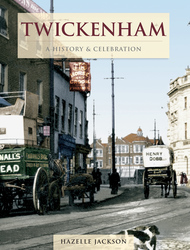
Twickenham - A History & Celebration

The Earl of Cornwall built stew (fish) ponds on the western boundary of his estate, and fish was an important part of the medieval diet. Fish weirs were used to trap fish in rivers, and were an important and often hotly disputed resource up to the 18th century. They were supposed to be licensed, but illegal weirs flourished and were a hazard to river traffic. There was at least one... [more]

This is an extract from Twickenham - A History & Celebration.
Read more and see photos from this book.

Twickenham - A History & Celebration

The local population in the Middle Ages made a living from agriculture, fishing, boat-building, and ferrying traffic up and down the river. There was even a local vineyard, which produced 'two tuns and one pipe' in 1297. This seems to have been planted with cherry-trees later. There is little detailed evidence on the number of people living at Twickenham during the Middle Ages but the manor of Isleworth, including Twickenham, seems... [more]

This is an extract from Twickenham - A History & Celebration.
Read more and see photos from this book.

Twickenham - A History & Celebration

The Earl of Cornwall built stew (fish) ponds on the western boundary of his estate, and fish was an important part of the medieval diet. Fish weirs were used to trap fish in rivers, and were an important and often hotly disputed resource up to the 18th century. They were supposed to be licensed, but illegal weirs flourished and were a hazard to river traffic. There was at least one... [more]

This is an extract from Twickenham - A History & Celebration.
Read more and see photos from this book.

© Copyright 1998-2009 Frith Content Inc. All rights reserved.