The Francis Frith Collection.
You are here:

South Stoke

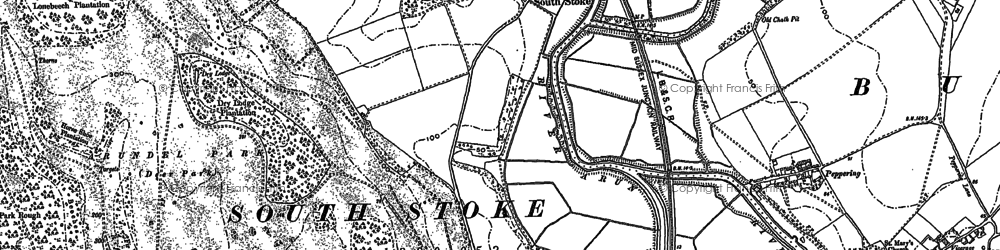
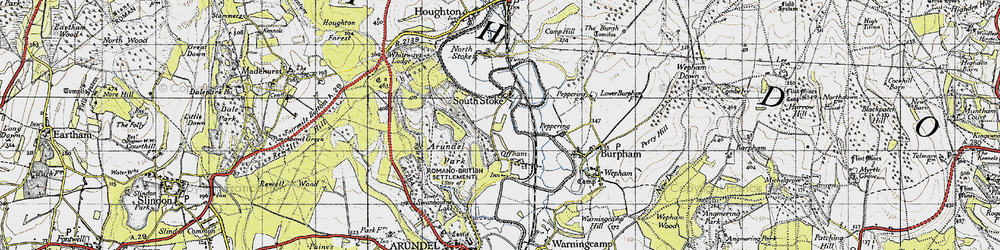
South Stoke maps

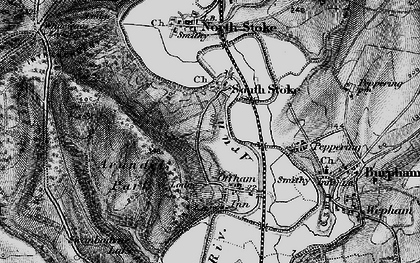
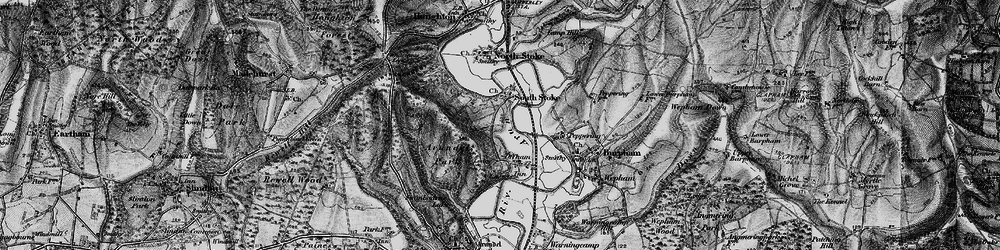
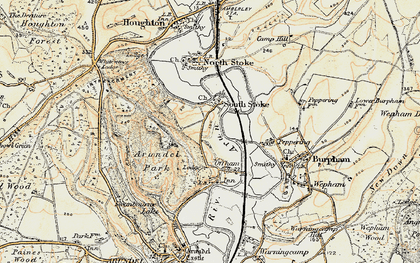
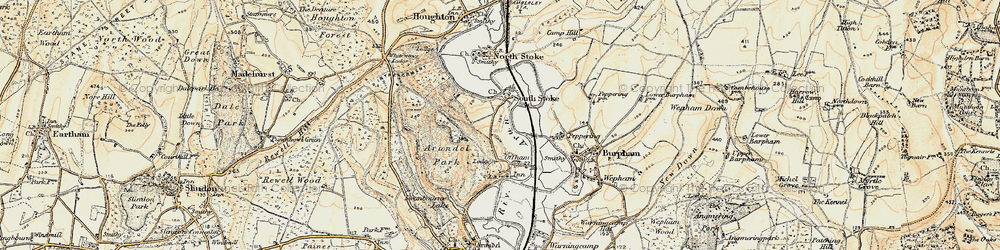
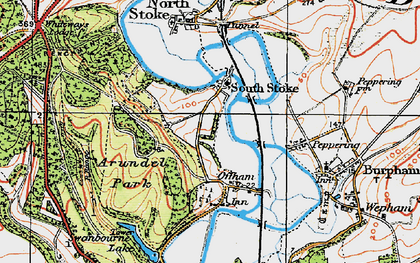
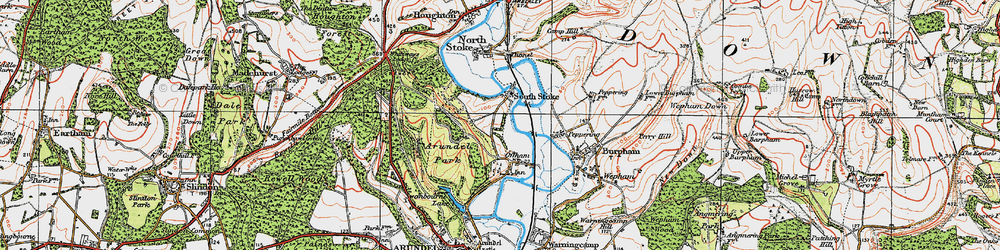
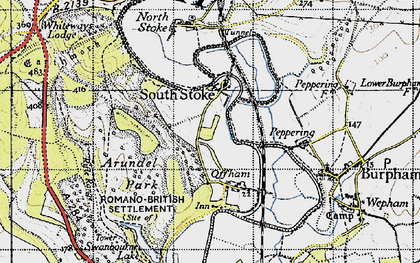
Historic maps of South Stoke and the local area, hand-drawn by Ordnance Survey and Samuel Lewis.   View all South Stoke maps

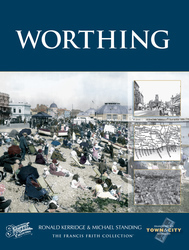
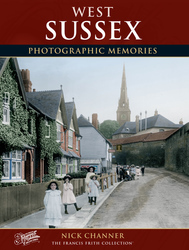
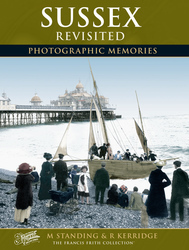
South Stoke area books

Displaying 1 of 24 books about South Stoke and the local area.   View all books for this area
Memories of South Stoke

No memories of South Stoke have been shared yet - be the first!
Add your memory of South Stoke or of a photo of South Stoke.

West Sussex memories

The Ayling House

Thatched Cottage c1965
Enlarge photo |  More about this photo

I know this house is where my great-great-grandfather Harvey Ayling was born (in 1834). The Aylings were in this house for many generations. I have a picture of this same house from the late 1800s with 2 horse wagons parked out front. Still, even today, the same house has the same Ayling family decendents living there. I even have a record of my g-g-g-g-grandpa John Ayling being a resident in Houghton dated from 1778. It could go back even more years than that.

My Grandfather

Park Avenue 1908
Enlarge photo |  More about this photo

This is my Grandfather Joseph Smith and my two Great Aunts, Kathleen and Josephine. He was about 12 in this picture. They lived yards from where this was taken in the lodge at Arundel Park gates. My great Grandfather, William, was a groom to the then Duke of Norfolk (Henry) and Great Granmother, Kate, was a domestic. I have spent many happy times in Arundel and continue to visit.

The Hole Family

If anyone wants to share any memories or info about the family that would be great.
All I know is Charlie and Mabel Hole lived in Poling. Charlie farmed turkeys!

Charlie Hole

My Father Ted Pelling lived next door to the Holes at Yarmer Cottages in Poling and he told me that Charlie Hole worked on Ingrams Farm.

Davies Family

My family moved to Angmering on Sea when I was 14. We lived in the Dolphins with a garden directly onto the beach. I have tried to find friends from that time without success, in particular the Carty famly (of Irish origin, they came to Anmering for their summer holidays) or it could have been spelt differently. There was John, Jimmy, Ursula, Richard and an older sister who at a later date ran the Spotted Cow in Angmering village. I did meet John years later when my son was a year old, so that was in 1975. I now in France with my family but would love to have news of this family or a girl called Ann Shephard. Looking forward to some news Dawn Bernadis, nee Davies

Bury Church And Ferry

Church From The River 1898
Enlarge photo |  More about this photo

On this picture you can see the steps used by the ferry man from the 1920s to the 1940s.  He used a pole to steer the punt from the Bury bank to the Amberley bank.  The punt was attached to a chain which stretched across the river lying on the bottom.  The fare in the late 1940s was a theepenny piece.  The ferry man was my 'Uncle' Bob Dudden, who took up the duties of ferryman when he left the Navy after the first World War.  Bob was not really my uncle, but he and my grandfather ran away to join the navy together in about 1912.  Sadly, my grandfather was severely wounded in the war, but Uncle Bob came through, having had the job on board of barber!
Uncle Bob also took care of the grassy area behind the steps.  
He and his wife 'Aunt Min' lived in the house you can see on the left of the picture.  Aunt Min was quite eccentric, she kept hens, which... Read more

My Father Worked at This Shop

Village Stores c1955
Enlarge photo |  More about this photo

My father Ron Burchell worked at the shop seen in this photograph.  The Burchell family had lived in the village for generations.  The owner of the shop was Edward Grinstead and his wife Millie who was my godmother.  We lived at the thatched Old Cottage behind the hedge on the left.  My dad had been a shop boy here before he joined the RAF in the 1920s.  When he left the RAF in 1946 he worked there again. The stores sold a wide range of food and hardware, and was also a Post Office.  Sugar and rice etc would be weighed out and wrapped up in 'sugar paper' often in a deep pink or purple colour.  Just after the war we had to take our coupons to the shop and the amount needed were cut out of our ration book with a big pair of scissors kept on a string by the till and the fearsome bacon slicer.
The shop was the hub of the various social groups of the... Read more

© Copyright 1998-2012 Frith Content Inc. All rights reserved.