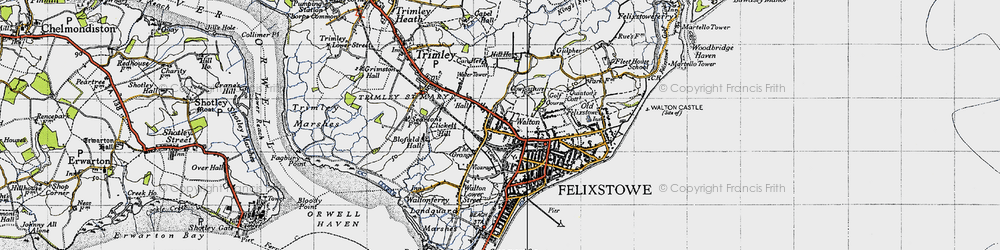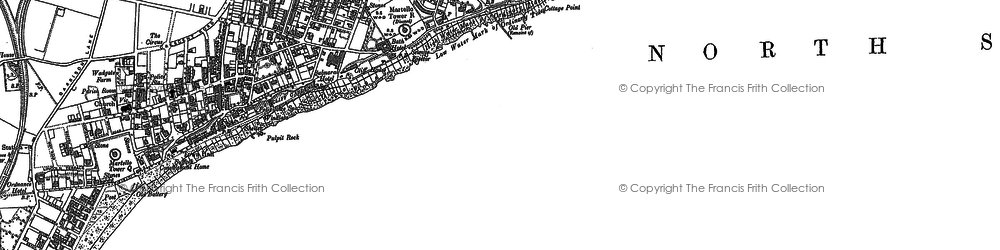
Walton, Suffolk
Walton photos
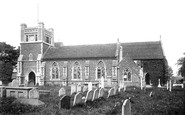
Displaying 3 of 5 old photos of Walton. View all Walton photos
Walton maps
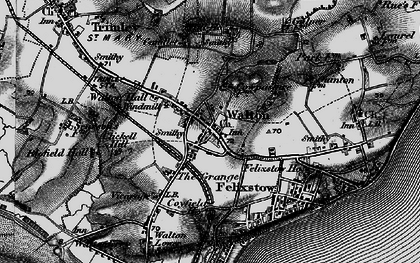
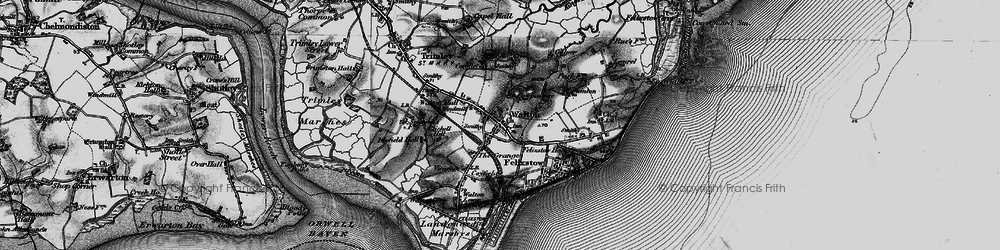
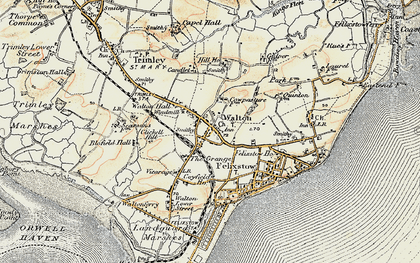
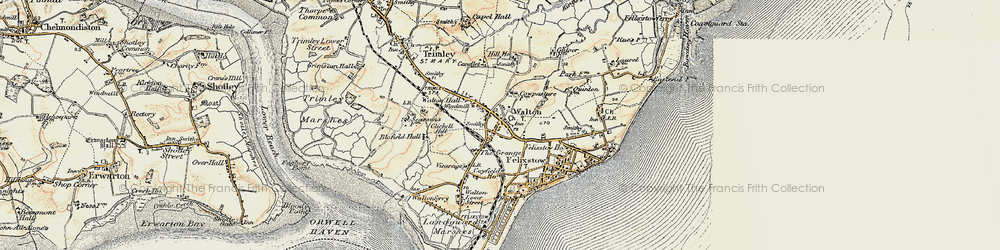
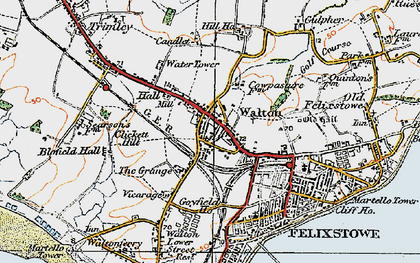
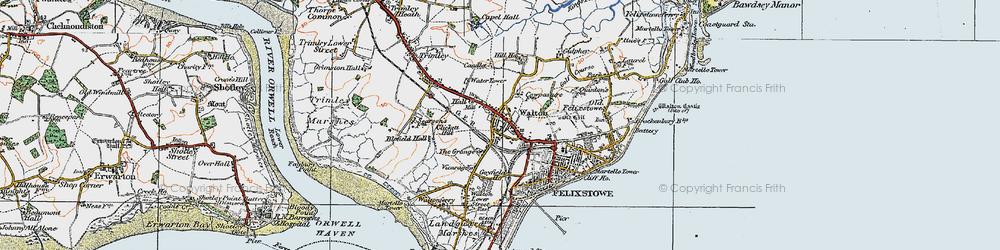
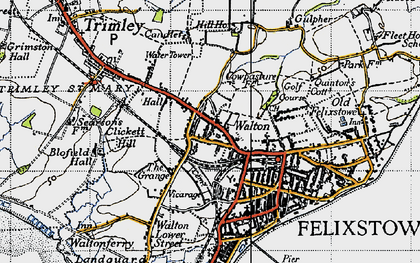
Historic maps of Walton and the local area, hand-drawn by Ordnance Survey and Samuel Lewis. View all Walton maps
Walton books
Displaying 2 of 6 books about Walton and the local area. View all Walton books
You can read extracts and browse photos from these books.
Memories of Walton
No memories of Walton have been shared yet - be the first!
Add your memory of Walton
or of a photo of Walton.
Suffolk memories
My greatgreatgrandfather, Chenery Elliot, was the Innkeeper here in 1969.
Shared on 01 January 2007
My great grandparents David Moore and Rachel Elliot were married here on 11/11/1869 by Rev T Palmer.
Shared on 01 January 2007
Childhood in Helions Bumpstead
My family moved to Helions Bumpstead in around 1964. My parents renovated an old farmhouse which they named "Roslyns" because my Mum went to the Chelmsford Records Office and discovered that the place had been called Roskins Meadow in the 17th century. The first thing I remember is the smell of the house (dusty and musty) and the fact that my sister and I caught ringworm from some old toys left in a cupboard. The main thing, though, was the garden. We had nearly three acres of scrubby garden, meadow and a run down orchard. There was also a brick privy (the house had no indoor plumbing when we moved in) which Dad knocked down and then built a greenhouse on the site. When we first moved there, the garden seemed so big that we didn't dare go round the edge without Mum, but we soon got braver and built dens, camps, treehouses, etc. Our favourite trick was to sit in the old tree at the farthest corner of the land, overlooking the road, and drop water bombs on passing cars. A local farmer we called "Ticky Tickner" driving a Jaguar was our favourite target! The house had a cellar which we children turned into yet another den - it was lovely and warm because Dad installed a central heating boiler down there and piped the stream which used to flow through it in wet weather. There was a footbridge across a drainage ditch across the road from the house, and a footpath ran up the side of some new houses to the Rec (reation Ground) at the top of the hill opposite. One of our favourite pastimes was to travel along the drainage ditches, wearing wellies, all the way around the village and even to Steeple Bumpstead two miles away, without ever putting our heads above ground level. The object was not to be seen by any adults. The ditches were piped in places, but we were small enough to stoop and walk through the pipes, hoping that no spiders would drop on our heads as we passed. We were allowed to light bonfires in our field, but never given any matches to do so. So I used to go round to Mrs Craig, a retired schoolmistress, who lived in the cottage next door and ask to "borrow some matches". She always obliged, but always said "You may have some matches, but you may not borrow them as I do not want the spent ones back!". Mrs Craig also gave me recorder and piano lessons and let me watch her making lace on a real lace pillow with beautifully carved bobbins. Her house always reeked of paraffin from her only form of heating, and boiled fish with which she fed her numerous cats. My Dad built a garden shed in the orchard which I used as a wendy house. Sometimes it was just a home for my dolls, but on other occasions it became a natural history museum, filled with large bones we dug up in the field, and "devils toenail" fossils and fossilised oyster shells which turned up everywhere in the flower beds my Mum created. Later on the shed became home to my rabbit which I bought for five shillings from a little girl at the top end of the village, smuggling it home through the hedge so my parents wouldn't see (but my Dad had an instinct for that kind of thing, and knew perfectly well what we were up to!). When we were really bored, we used to sit on the big conrete gatepost at the front of the house and watch the cars go by. If we saw a Ford Anglia (or Angular, as we called them), we used to roar with laughter - for some reason we found them, and the people who drove them, very funny. If we had been good we were given some pocket money and allowed to go up to the village shop. This sold all kinds of things, but we were really only interested in sweets. When there we nearly always bumped into Mrs Peck, who lived in one of the bungalows round the corner and used to visit the shop several times a day, sometimes just to buy one egg! We went to school in Steeple Bumpstead on the school bus every day, which we caught at the cross roads in the middle of the village. My favourite teachers were Mrs Humphrey and Miss Wheatley. I was seriously impressed one year when we went to the Haverhill Show and I saw Miss Wheatley riding a lovely horse in the show jumping class. We had various friends in the village: the Dobson girls, Claire and Helen, who lived at Boblow Farm on the far edge of the village, the Humphreys children and to begin with, the Hall children, but they moved away when I was about 9. There were some children who for some reason were our enemies, but I really can't remember why now! A touch of the sinister was added by the haunted Red House Farm which stood empty almost all the while we lived in Helions, and by the Toffee Apple Man who lived alone in a tumble down cottage near the pub and who came to us to pick nettles to make into soup and sometimes to sell toffee apples which were delicious. Unfortunately he was very religious and used to give us rather odd tracts to read and take home - our parents were not impressed, and we delighted in being terrified of him. My overwhelming memory is of total freedom, to roam, explore and play uninterrupted for hours, only having to return at the end of the day in time for tea.
Shared on 06 May 2009
The only school in Haverhill was The Cangle. The new secondary modern, now known as Castle Manor, had not yet been finished. We arrived at school very bewildered being the first of the Londoners and feeling like aliens. I made a new friend in the short while I had been in Haverhill. His name was Michael Geagon, I didn't know at the time but his family was Irish, not that that meant anything. I was shown to my classroom and it turned out to be the same classroom as my older sister, they had got it wrong, I found out later that day. That upset me because now I was really on my own. First day in the playground Michael had told everybody I was from London and that I could beat anybody up, that was news to me, so he started picking fights with the locals for me to hit them. I had never hit anybody in my short life so far but I did just the once. I don't even know who he was, fortunately I got away with that but never did it again, it scared me senseless.
On the way to school we passed the local bakery, you could smell it miles away, the one and only Ellis's, serving lovely rolls, one roll would cost you one old penny and it was buttered with real butter.
I don't think I have many bad memories of my early days in Haverhill. When I think of any more I will tell all.
p.s. Does anybody remember me from those days? Just to let anybody know who may read this memory of mine that Ellis the baker shut their doors for good in December 2008 (sad day).
Shared on 26 January 2008
Extracts From Walton & Suffolk books
Displaying a selection of extracts from Frith books about Walton, inspired by Frith photos.
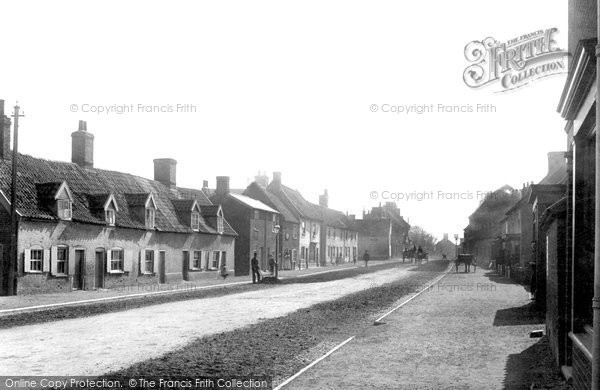
A workman pauses from his digging - most likely connected with the gas street-lamp - while the photographer captures this street scene on the outskirts of Felixstowe.
Read more and see photos from this book.
East Anglia Photographic Memories
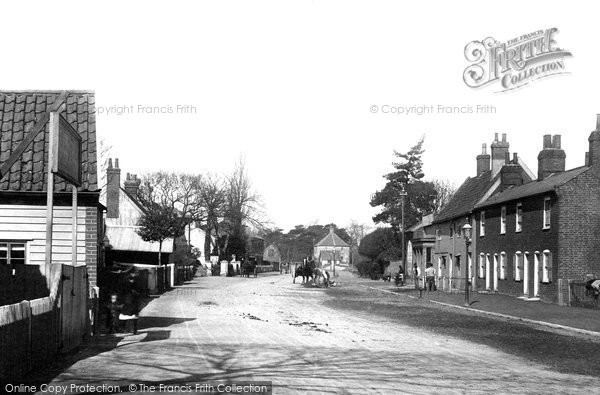
Here, in Walton High Street, only the occasional pony and trap disturbs the peace, although neighbouring Felixstowe was enjoying popularity as a seaside resort. However, the dream of eccentric local landowner Colonel Tomline to transform the town into a major port had not yet materialised - that was to take another fifty years!
Read more and see photos from this book.
At this time, Felixstowe enjoyed popularity as a seaside resort, but the dream of eccentric local landowner Colonel Tomline to transform the town into a major port had not yet materialised - that was to take another fifty years! Here, in Walton High Street, the occasional pony and trap seems to be the only contribution to heavy traffic.
Read more and see photos from this book.