Barking, Essex
Barking photos
Displaying 3 of 19 old photos of Barking. View all Barking photos
Barking maps
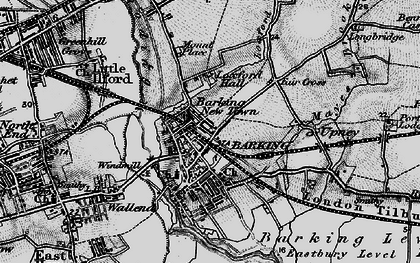
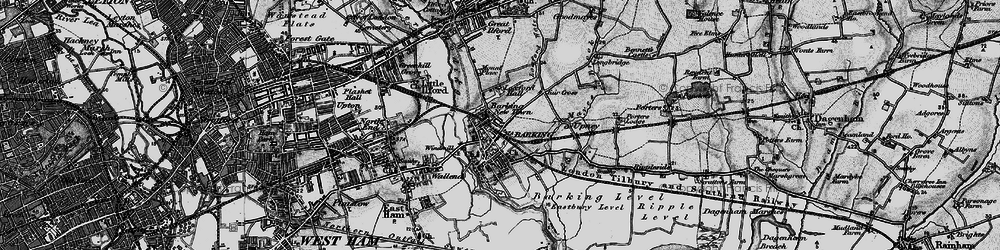
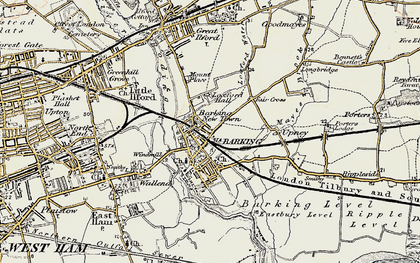
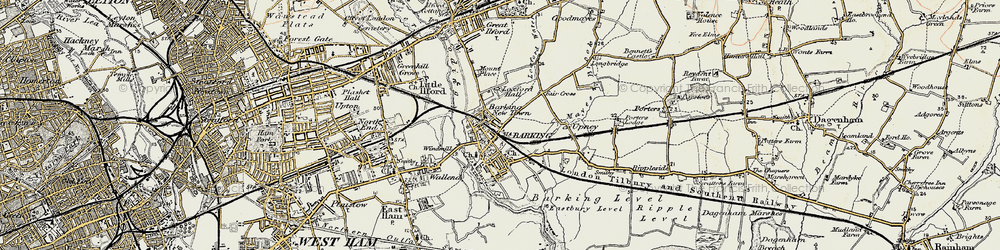
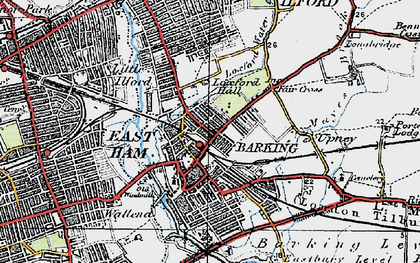
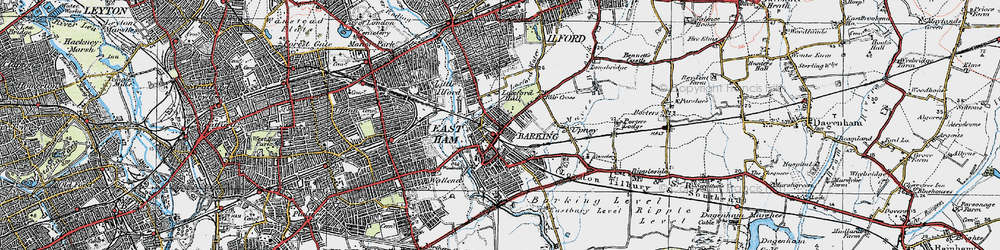
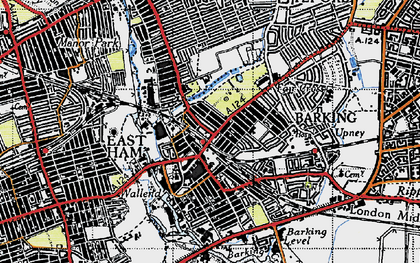
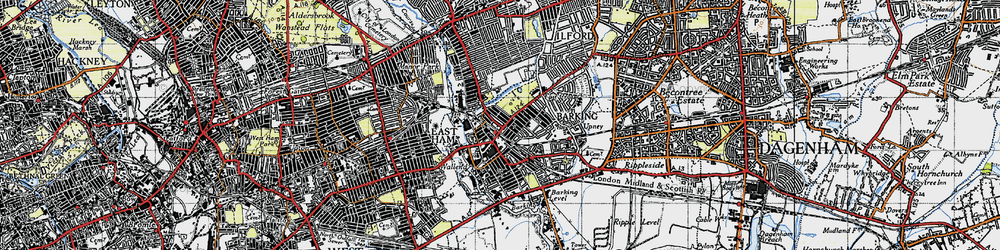
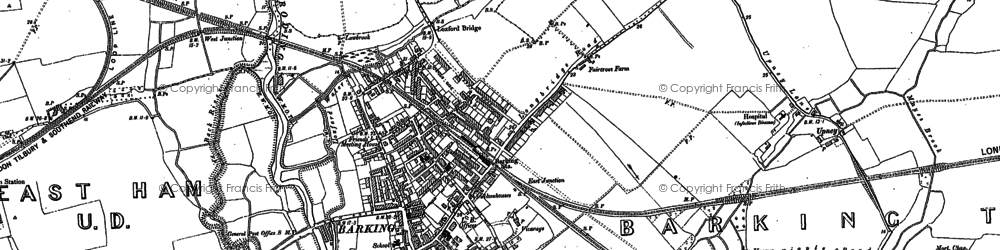
Historic maps of Barking and the local area, hand-drawn by Ordnance Survey and Samuel Lewis. View all Barking maps
Barking books
Displaying 2 of 5 books about Barking and the local area. View all Barking books
Around Cheam, including Sutton, Ewell, Banstead and Epsom Photographic Memories
Hardback
rrp £16
£4.80
You can read extracts and browse photos from these books.
Memories of Barking
Displaying a selection of personal
memories of Barking
.
There are 11 shared memories to read.
Add your memory of Barking
or of a photo of Barking.
I remember being taken to the Capitol by my sister to watch the Disney film Bambi. We sat through it three times, I was taken ill the next day and my sister got the blame. The Capitol had a ventilation fan under a hole in the roof, when it rained the fan sprayed water onto a big circle of seats below. We sat in the middle of the circle to keep dry! I went to Ripple Road school near the level crossing and lived near the Harrow. I remember the sweet shop by the Westbury Arms was run by Pat and John Renn, they sold records there, I still have the first on I bought.
I'm told that when I was a baby my mother left me in a pram outside Sainsbury's in East Street and went home with the shopping.
Shared on 07 May 2009
In the early sixties I was a member of the St John's Ambulance Brigade and often on a Saturday morning I would don my uniform and present myself (as instructed by my leader) to do my duty at the Odeon.
Often there would be 2 or 3 willing volunteers and we would always pray that no-one would get sick or ill so we could enjoy the movie as well. Great days.
In those days the Odeon was massive with a balcony and lower stalls, it was huge and most times everybody behaved themselves - it would only show one film maybe with a cartoon or something unlike todays Odeons.
Shared on 04 June 2007
I was born in 1947, so anyone that reads this of that era can relate to the great shopping and Barking people. You could never walk through the shops without seeing a friend or neighbour and through a child's eyes everything was 'right with the world'. My mum and I would have a cuppa and egg and cress roll in Woolworths, they had a cafe along the width of the shop at the far end. Does anyone remember it? Jimmy's the Chemist and the wet fish shop next to Burtons. The joy of looking in the market, Blakes and Broadway. And remember the live eels! And the lovely smell of fresh baked bread at Arthy's.
All lovely memories of happier days.
Edna (nee Miller)
Shared on 30 December 2008
I was born in 1948 and lived behind Wallis's undertakers in Ripple Road, where my dad was the manager. I went to St Margaret's Church of England School in Back Lane, and was married at St Margaret's Church in 1970. I also did my nursing training at Barking (Upney) Hospital, before moving to Colchester. I have memories of losing my Easter bonnet into the Town Quay one Sunday morning after church.
Carol Harding (nee Leith)
Shared on 05 January 2009
Extracts From Barking & Essex books
Displaying a selection of extracts from Frith books about Barking, inspired by Frith photos.
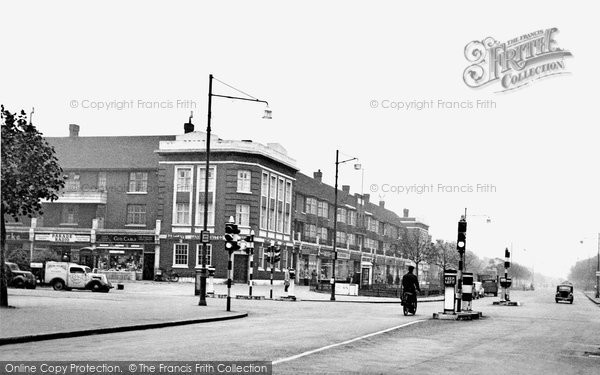
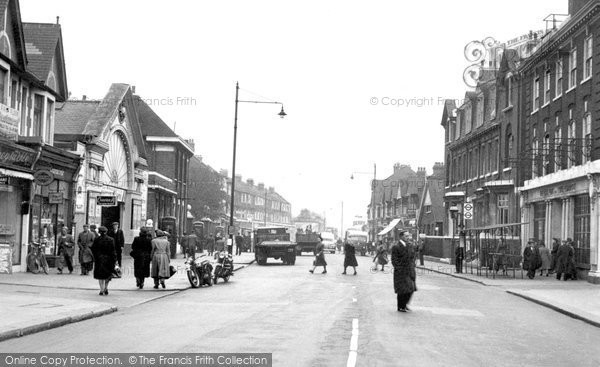
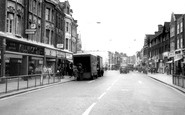
High Street North is a relatively undistinguished and typical London suburban shopping street: the exuberance of the Town Hall complex is forgotten. The Midland Bank on the corner of Caulfield Road (right) is one of their 1920s Classical-style single-storey buildings that add quality to many High Streets. On the left the taller Victorian brick buildings were demolished in the 1970s and replaced by bland flat roofed ones.
Read more and see photos from this book.
We pass under the River Thames via the Blackwall Tunnel - the northbound side dates from the 1890s, an early project of the LCC, which was established in 1888. East Ham was in Essex until 1965, but since the mid 19th century very much a part of greater London. Here we approach East Ham’s town centre along the busy North Circular Road, which seems in places merely a casual linkage of suburban roads. These terraces of neat Edwardian bay-windowed houses survive, and lead towards the Town Hall with its tower.
Read more and see photos from this book.
Our tour now heads north-east to Greenwich to a much grander building. The Royal Naval Hospital, a counterpart to the Chelsea Hospital for soldiers, began as a rebuild of Greenwich Palace by Charles II in the 1660s, but it changed direction in the 1690s. The second pediment from the right is Webb’s 1660s work. In 1873 it became the Royal Naval College; when that closed, in the 1990s it became part of Greenwich University. In the distance are the chimneys of Greenwich Power Station of 1902-10.
Read more and see photos from this book.