East Hagbourne, Oxfordshire
East Hagbourne photos
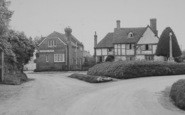
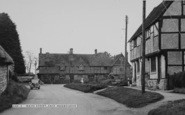
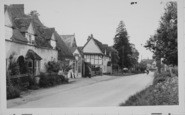
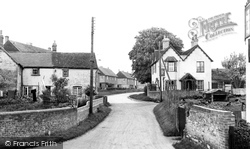
Displaying 1 of 4 old photos of East Hagbourne. View all East Hagbourne photos
East Hagbourne maps
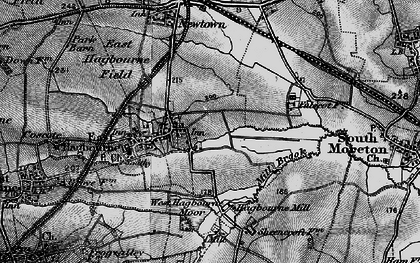
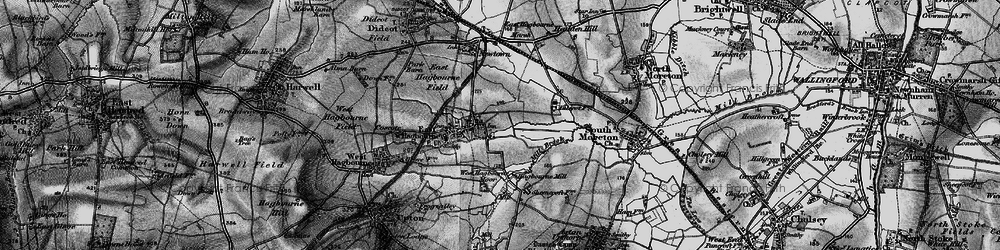
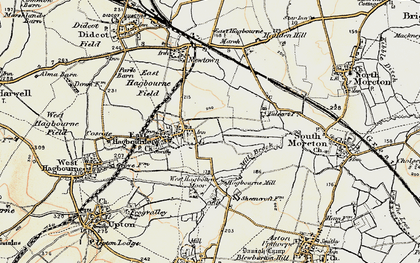
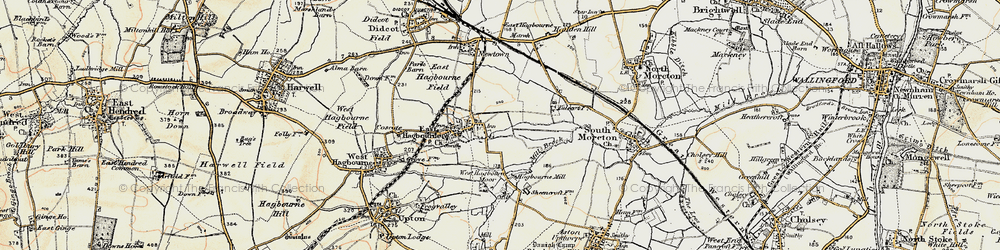
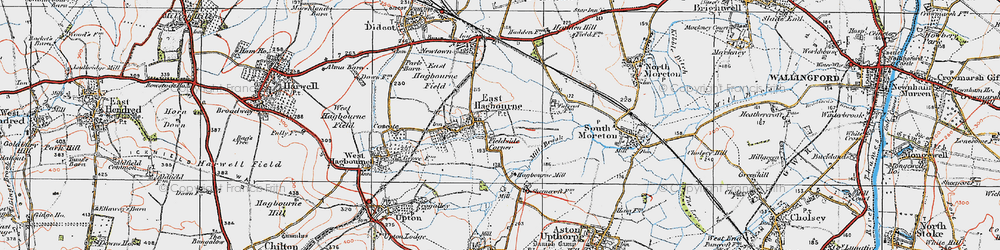
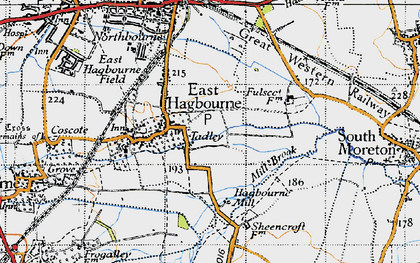
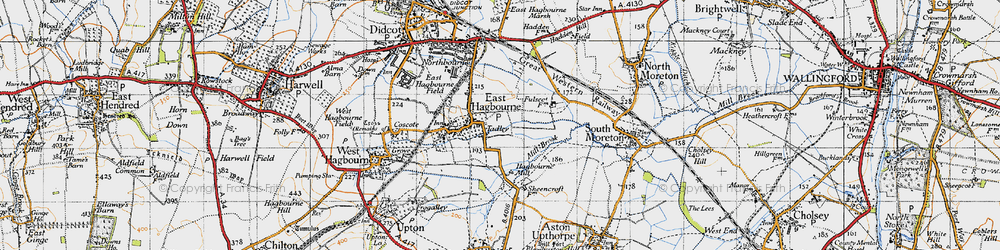
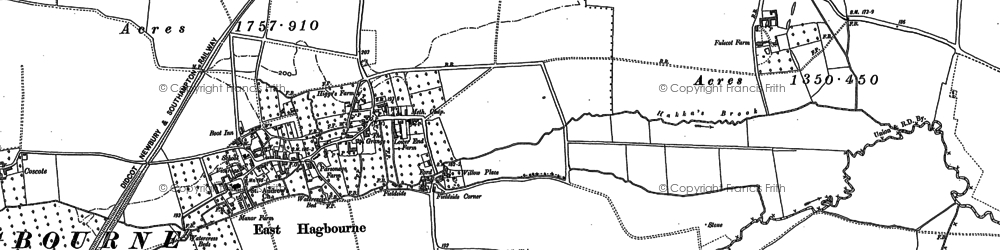
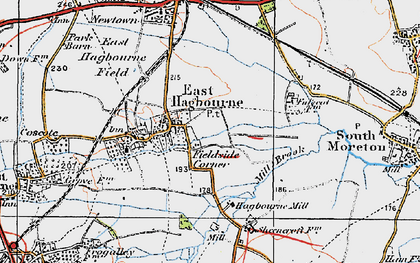
Historic maps of East Hagbourne and the local area, hand-drawn by Ordnance Survey and Samuel Lewis. View all East Hagbourne maps
East Hagbourne books
Displaying 3 of 3 books about East Hagbourne and the local area. View all East Hagbourne books
You can read extracts and browse photos from these books.
Memories of East Hagbourne
Displaying a selection of personal
memories of East Hagbourne
.
Add your memory of East Hagbourne
or of a photo of East Hagbourne.
Boot Inn 1955, now The Old Boot, a private house
Ceased operation as a pub in 1959. Now (2007) privately occupied by the Beran family. Previous owners were a builder who divided the land, the village schoolmaster, and the Jarvis'. A few relics of its pub days remain with serving hatches still visible and vertical planking in the hallway. The black rectangle to the left of the building was the privy,... [more]
Shared on 14 January 2007
Oxfordshire memories
I was evacuated from London to Blewbury Healm-wic Boarding School in 1941 (the thatched cottage shown in the photograph). The Williamson sisters ran the school, owned I believe by their brother, a naval architect (submarines). They opened the school for refugee children, teaching many subjects including Maths, French, English, Literature, Art, Geography and History.
My sister and I spent many happy... [more]
Shared on 28 July 2009
When my family moved to Sutton Courtenay in the 1960s this was the only shop left in the old part of the village. It was a fabulous place with big glass jars of sweets behind the counter, I used to visit here as soon as I received my pocket money! It was run by the Mussells, I think (pronounced 'Muzz-ells'). My... [more]
Shared on 20 June 2009
George Orwell (real name Eric Blair), who was the author of '1984' and 'Animal Farm', is buried in All Saints' churchyard.
Shared on 07 December 2008
I was born in Cholsey in 1946 and spent probabably the best childhood I could have in a wonderful country village. I attended the village school, I was in the Church Choir and also the Brownies. A wonderful Vicar came to the village in approx 1956 (can't remember the exact year) Mr Bontoft he was called and I became very friendly... [more]
Shared on 03 May 2008
I recently found your site and was excited to show it to Dad. He was evacuated out of central London during WW2. He was sent to live with the Bumpass Family from Cholsey. Andrew and Mary were their names and they had two children Eileen and Dennis. Dad told us lots of happy memories that he had of his time in... [more]
Shared on 23 November 2007
I spent several summer school holidays in Didcot with my mate and grandad,
he lived in Newlands Avenue with my Uncle Bert. Grandad ran the bar in the army camp. He used to send me round to wake up the men first thing. The man in charge was a Sergeant Biggs. Mum worked in the post office where she met Dad,... [more]
Shared on 09 December 2008
My grandmother lived in Steventon with her own grandmother around 1880. She was Florence Prior and her own gran was Eliza Prior who by then was a widow and a laundress living in Timsbury Cottage. I have tried to find the cottage but the only place I have seen with a similar name is Timsbury Villa. I sometimes wonder if it... [more]
Shared on 12 January 2008
Extracts From East Hagbourne & Oxfordshire books
Displaying a selection of extracts from Frith books about East Hagbourne, inspired by Frith photos.
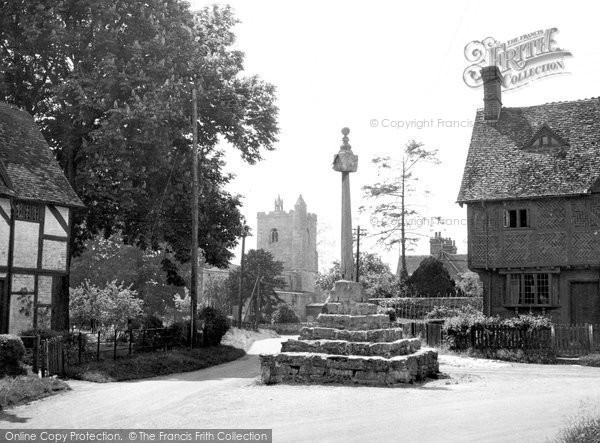
A medieval 15th-century cross, two 17th-century houses with contrasting architectural styles and the church of St Andrew have all been captured in this delightful photograph. Perched on the tower parapet of the church is a bell-cote, which houses its Sanctus bell. The timber-framed, part jettied house on the right is one of a row of three.
Read more and see photos from this book.
Abingdon Photographic Memories
The Crown and Thistle Hotel, first mentioned in 1605, was a coaching inn, and one of the town's best known ones. It is still popular, and has the truncated remains of its inn courtyard within – we see it here from the yard end of the carriageway through the building. The further part of the yard in this view now has a roof supported on posts to give shelter to tables and chairs.
Read more and see photos from this book.
Abingdon Photographic Memories
Skirting the modern shopping centre, our tour reaches Stert Street, which runs south towards the Market Place; in the 1890s, it was one of Abingdon's main shopping streets. On the right, W H Hooke's bookshop (now a jeweller's) is the start of the market place encroachment. We are looking towards St Nicholas's Church. Until 1883, only its tower was visible; then two pubs which jutted into the street, one on each side, were demolished for road improvement. Little survives on the left... [more]
Read more and see photos from this book.