The Francis Frith Collection.
You are here:

Intake

Intake maps

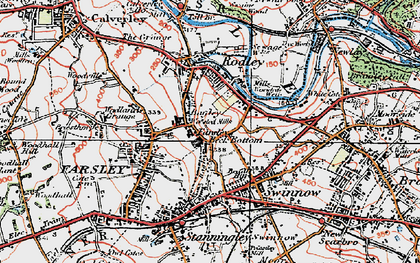
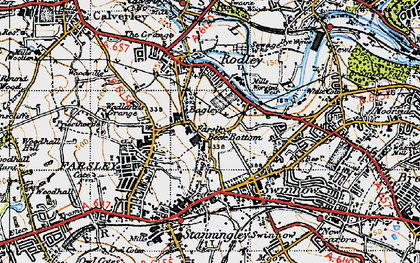
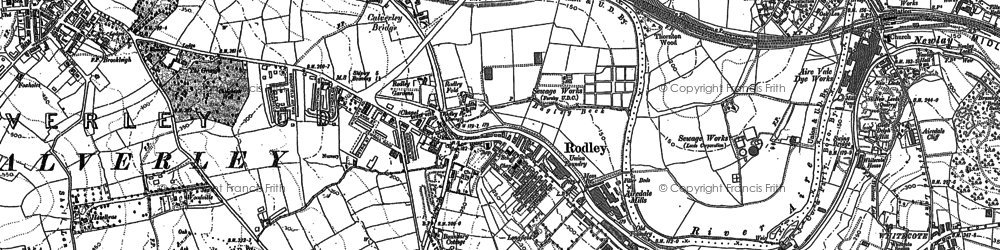
Historic maps of Intake and the local area, hand-drawn by Ordnance Survey and Samuel Lewis.   View all Intake maps

Intake photos

We have no photos of Intake, although we do have photos of these nearby places:

Doncaster| Armthorpe| Bentley| Sprotbrough| New Rossington| Wadworth| Blaxton| Skellow| Finningley| Askern| Conisbrough| Thorne

Intake area books

Displaying 1 of 28 books about Intake and the local area.   View all books for this area

Memories of Intake

Intake memories
Read and share Intake memories

Displaying a selection of personal memories of Intake. There are 10 shared memories to read.
Add your memory of Intake or of a photo of Intake.


From Horse Power To Petrol

In 1945 there was still a lot of horse and carts about. I am aware that Doncaster Corporation had buses and dustbin lorries and other petrol driven vehicles but there was not many private cars about. The only one that I recall belonged to Dr Scott who used it when he was on his HOME visit rounds. It was a small open topped tourer with a canvas hood that could be pulled up and over, and fastened on the windscreen in times of inclement weather. He always had with him his little white Highland Terrier [Scottie] dog, who rode along with his nose hanging over the side of the car. It was so rare to see a car or lorry, that if we were playing in the street, and someone heard one coming [and you could hear them from streets away] we would go and stand on the kerb and wish for it to come down our street so that we could see it. Most of the traffic consistered... Read more

Training to be A Bricklayer

During my chidhood I was to perform lots of different tasks that would make life for my mother a little easier. I did not know it at the time but she was actually training me for my working life. Not only did I run errands, help turn the handle of the mangle on wash day, chop sticks for the fire, fill the coal bucket and fetch and carry whatever was required, I also bred rabbits for the pot and these needed feeding and cleaning out. [I have never eaten rabbit in my life, possibly because I saw them as pets]. In October 1951, I became eligible for a paper round. In those days, a lad or girl had to be 12 years old to qualify. I duly attained a job with Shaws Newsagent on Cantley Bridge and was paid the princely sum of twelve shillings and sixpence a week [62 new pence]. My round consisted of all the streets on the Doncaster side of Cantley Bridge, Avenue Road, St. Augustines,... Read more

The Intake Social Club Outings

After the Second World War had finished, and the people were already used to rationing, the Committee members of the Intake Club decided to relieve the hardships on the residents of Intake a little by organising outings for their members. These took the form of trips to the seaside and Chirstmas pantomines and was paid for by asking its members to save a few shillings a week with the Club. On the appointed day, we all congregated in Manor Drive where a fleet of buses waited to ferry us to the Doncaster Railway Station, and waiting for us there, was a train, a complete train, 12 or13 coaches, that would take us all to CLEETHORPES. This was a place that we had heard of but not one of us had seen, a mystical magical land of sea, sand, donkeys, fun fairs and roundabouts and we were going there. During the journey, members of the Committee came round and gave us a quarter pound of sweets [the weekly ration was two... Read more

To Wheatley And Back

After the Second World War and during the austere period of rationing, among the items that were in short supply was coal. People would burn anything in order to keep warm, and many were the trips that I made to Flint Woods for wood. My dad had a big saw and it was my job to cut these tree trunks into small logs. Also, in addition, we would burn coke. This was obtained from the Gas Works on Wheatley Hall Road and it was also down to me to fetch it. Why this was is because I had a trolley and that was essential for the task. Every Saturday morning during winter-time, I would be given sixpence and a large sack, take up the ropes of my trolley and pull it to Wheatley where I would then wait in line for my coke ticket [sixpence or two and a half pence], and when I say waiting in line, is because hundreds of kids like me would also be there, with... Read more

After The War

I do not know the exact year that Doncaster had its first Royal visit after the Second World War had ended but all the school children in the parish were required to put on their best bibs and tuckers for school and we were then walked to the Grandstand Road next to the Fire Station where we were given little Union Jacks, so that when the King came by we could give him a cheering Doncaster reception. In due course the Royal carriage appeared and we were told to cheer and wave our flags. In the carriage was King George the Sixth, Queen Elizabeth [the currant Queen's mother] and Queen Mary [the King's mother]. When the carriage reached our group, the Queen turned in our direction, she seemed to be looking straight at me and she gave me the most beautiful smile. I fell in love with her there and then and although she did not get the best press reports as she got a little older, I remained... Read more

Intake Playgrounds

I have mentioned in passing that Intake did not have the same panache as say Balby, Hexthorpe or Armthorpe in places of entertainment but it did provide some wide open spaces to play in. Over the Armthorpe Road opposite Flint House, there was the disused sand quarry of the Brick Marketing Company which was being used by the local authourity for dumping the Borough's rubbish and this was a goldmine for destitute youngsters. Old bikes or prams were much sought after items and many a trolley or bike was constructed from these treasures, and many happy hours spent playing on them. Another bar of gold were car tyres [or bowlers] and with the aid of a short stick would be bowled all over Intake. If your mother sent you on an errand to the shops or wherever, the first thing anyone did was pick up his bowler. Another place to visit was the Boating Lake [Sandal Park]. There was no road from Armthorpe Water Tower to Sandal Park in those... Read more

Classmates 1A to 4A. 1946 to 1950

John Maude, David Jeeves, Tony Sockett, Trevor Plane, Terry Keene, Madeline Ward, Brenda Sayles, Gillian Scott, Barbara Baker, Pat Roome, June Engledow, Ray Smith, John Wood, Frankie Mills, Irene Harris, Dorothy Stone, Marcia Bramley, John Mc Neil,John Stevenson, Ken Barlow, Mick Horrocks, Mike and Eleanor Williams [the twins], Janet Cartlidge, Eddie Bell, John Sheperd, Mick Sanderson, Joyce Knowles, Alex Mc Donald and Anne Fiddler, and my apologies to the other 9 or 10 people that I have forgotten. In my previous memory of my junior school years I forgot to mention that our headmaster was Mr [Pop] North and it was to him you were sent for the cane. The offence was duly written in the Punishment Book along with the number of strokes that were to be administered. During the Falklands War, Mr North's son was to lose his life when the huge super-cargo ship of which he was captain was sunk by the Argentinian Air Force.

The Ramblings of an Old Tintacker [Intaker]

I lived in Devonshire Road from 1941 to 1962 and when we first arrived Intake ended with Warwick Road, Argyll Avenue and Cumberland Avenue for those of us that lived on this side of Shaftesbury Avenue. From any of those roads a lad could walk in a straight line to Armthorpe Water Tower or Sandal Beat Wood.The only cultivated lands were owned by Mr Trinder at Flint Farm and Eddie Magner whose farm and racing stables were behind the Racecourse. Mr Magner farmed not only the fields behind the course but also two large fields on the other side of the Straight Mile Road which are now occupied by football fields and a large school. During Race Week, a Gypsy camp would be set up on the tracks adjoining his fields and horses would be tethered [or sometimes roam free] on the land. Meanwhile Mr Trinder's farm extended from what is now Flint Road to behind Warwick Road. During the Second World War, some of the land behind Warwick Road... Read more

© Copyright 1998-2012 Frith Content Inc. All rights reserved.