The Francis Frith Collection.
You are here: Explore your past > Mellor
Better Days Sale - 25% off - beat those recession blues!

Mellor, Lancashire

Mellor photos

Displaying 2 of 2 old photos of Mellor.   View all Mellor photos

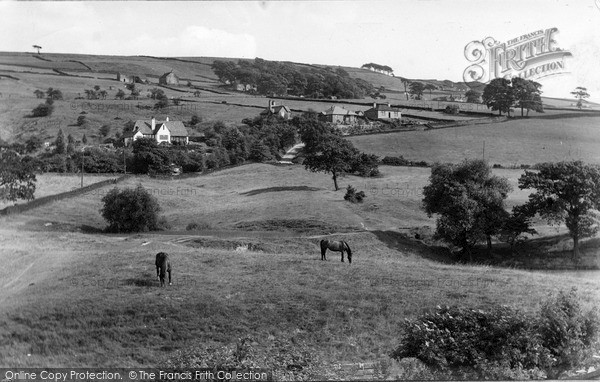
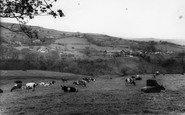
Mellor, from Cobden Edge c1960 photo

Mellor, from Cobden Edge c1960

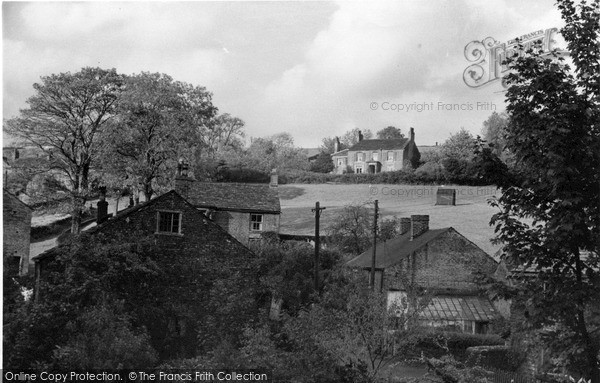
Mellor, view from Tarden c1955 photo

Mellor, view from Tarden c1955

Mellor photos
View all 2 Mellor photos

Mellor maps

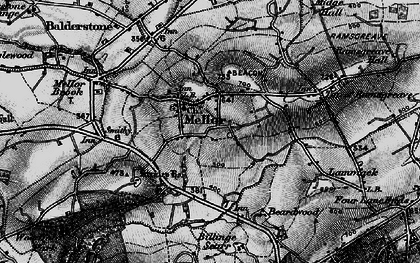
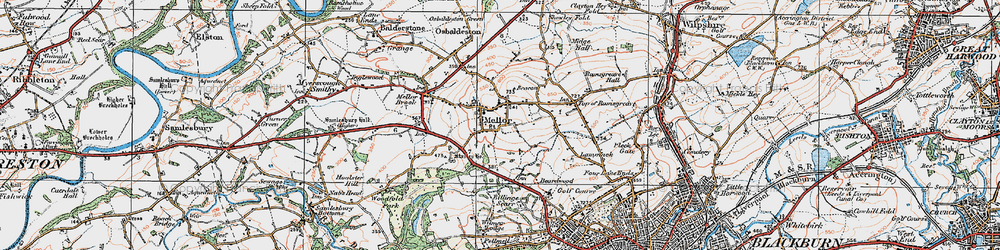
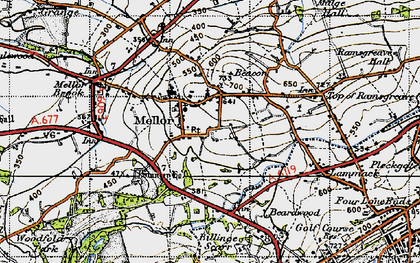
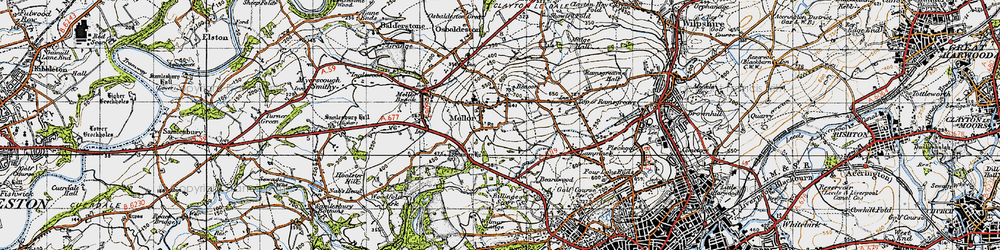
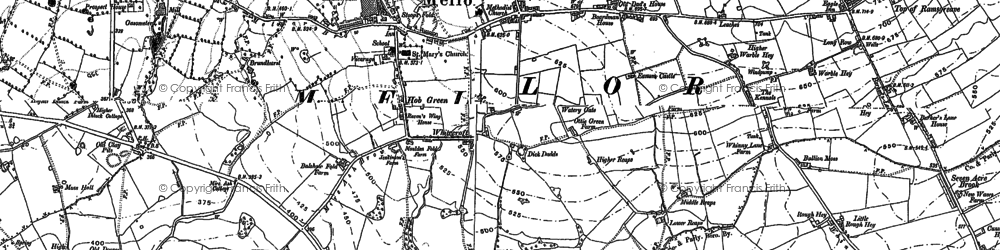
Historic maps of Mellor and the local area, hand-drawn by Ordnance Survey and Samuel Lewis.   View all Mellor maps

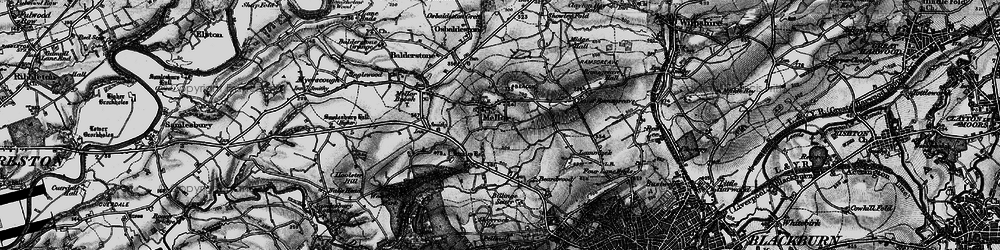
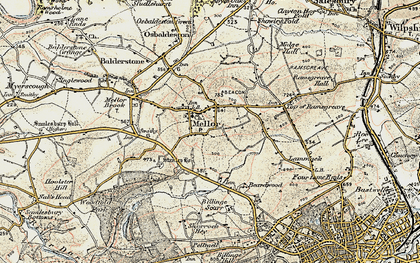
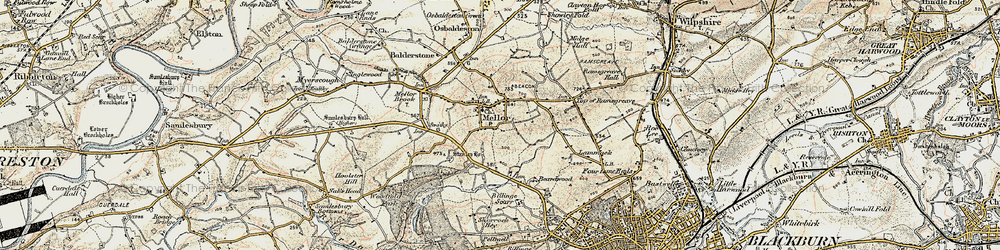
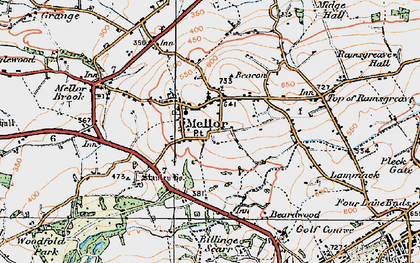
Mellor map

Historic map of Mellor

Lancashire map

Illustrated Victorian map of Lancashire

Mellor map

Historic Map of any Mellor postcode

Mellor maps
View all Mellor maps

Memories of Mellor

No memories of Mellor have been shared yet - be the first!
Add your memory of Mellor or of a photo of Mellor.

Lancashire memories

Peel Brow

Peel Brow was laid out in 1789. It links Ramsbottom on the west bank of the River Irwell with the districts of Shuttleworth on the east bank. It joined the Bury-Haslingden turnpike, now the A56. It was built in phases. The OS map for 1890 shows houses at the bottom end but not at the top. Some of the houses nearest the camera were demolished in the 1960s and 70s to make way for the M66 motorway.
I lived in the road for 19 years and went to the local primary school just off the picture to the right. The shop on the right hand side was a general grocers run by Mr & Mrs Kenna. There were other shops further down: a butchers (Taylors), a grocer (Browns), a fish & chip shop, a bakers (Beswicks) and a plumbers. Further up the Brow was a hardware shop run by Mrs Fish who had a bungalow opposite.
As can be seen from the picture people did not have cars, nor did they have telephones. The only cars belonged to Mr & Mrs Fish and to Mr & Mrs Cryer who ran a haulage business. They were the only ones I can remember having telephones. The area was part of Ramsbottom Urban District but that was disolved in 1974 and the area became part of Bury Metropolitan District.
All the houses had coal fires and coal was delivered by the sack ful to the back yard gates. This meant lots of smoke and smog in winter.
The road dips steeply in the distance and could be very dangerous in winter with ice and snow. I used to walk up and down each day as I later went to school in Haslingden and caught the train at the bottom of the Brow. It felt very steep at night with a bag full of school books.
As children we played in the street and in the fields at the back of the houses. There was almost no traffic so it was safe. There were some delivery vehicles: the milkmen came round each day. One milkman used a horse and cart until well into the 1950s. Other tradesmen delivered bread, groceries, hardware, paraffin and pop on a regular weekly basis.
Everyone knew each other and I can still name most of the people who lived in the top 6 terraces. Many had family in Peel Brow. I had my grandmother, two aunts and uncles and two great aunts. At the bottom of the Brow was Patmos Methodist Chapel. In those days many families attended church on Sunday and joined in church activities during the week.

Shared on 30 April 2008 by John Tomlinson.

View towards Holcombe

This is a view from the east side of the valley looking towards Holcombe Hill and the Peel Monument. The tower was erected in memory of Sir Robert Peel who repealed the Corn Laws in about 1846. The hill is a favourite local walk especially on Good Friday. Trains used to run from Manchester as far as Holcombe Brook at the foot of the hill and thousands used to enjoy the day. The railway to Holcombe Brook closed and for a few years the event was less popular but now it has been revived. The buildings in the foreground are part of what was Peel Brow School. In the 1950s it was in two parts: Peel Brow County Secondary School and Peel Brow Primary School. Mr Vernon Booth (Dinky) was the Head of the Primary School for many years. Rhodes Boyson, who later became a Conservative MP and Minister, was Head of the Secondary Modern School for a while. The mill chimneys show that manufacturing was still important in those days and they often contributed to the smog and poor visibility. Probably this photograph was taken during Wakes week in early July when the mills closed.

Shared on 30 April 2008 by John Tomlinson.

River Irwell

This is the weir on the River Irwell where it swings round and is bridged by the road up to Peel Brow. The mills on the right are on Kenyon Street. There were cotton weaving mills, towel mills and soap works. The Church spire is St. Paul's Church. I used to go past here everyday on my way to the railways station to catch the train to school in Haslingden. Sometimes the river was very low and a bit smelly and at other times it was a raging torrent. Just a little further down stream the river skirts round what was Ramsbottom Paper Mill, where my father worked, and on past Ramsbottom Cricket Club at Acre Bottom.

Shared on 30 April 2008 by John Tomlinson.

Brookhouse

I used to live at Brookhouse with my parents, great aunt and maternal grand mother. Brookhouse was split into 3 houses at the time (131, 133, 135 Holcolme Road). My grandfather (Thomas Lomax) visited at Christmases and holidays. My parents were Pat (Lomax)and Andrew Martyn-Clark. My aunt who worked at the local Tech (Bury) was Mrs Irene Cosgrove (nee Lomax). My grandmother was Jane Lomax (nee Dunn). She was known as Jennie Dunn in the village. My great-grandfather was Frank Lomax. He was one of several Lomax siblings. They were related to the majority of the Lomaxes at this end of Tottington. He was very active until his late eighties. I can recall the houses being built in the field at the bottom of the hill. There was also an electricity sub-station there. I think it still is. The first house on the right was owned by a Mr Jones,  Ernest I think - not sure. I do recall he had a Wolsey or Riley 1500 saloon that he drove at 20 mph everywhere! I think his wife died there and he upped sticks and left. I think he may have been something to do with finance in the local government. The bungalow below this was owned by the Bradshaws, a much travelled couple who used to throw things over the hedge into our garden, stuff they thought a small boy would be interested in like a test tube of ashes from the Mt Vesuvius eruption!  Not clear but I think they were carted off to a rest home. The house was subsequently owned by a very nice couple, John and Jean Schofield. The had a daughter, Lisa. Jean Schofield was an Occupational Therapist, I think at Whitefield. Got to know the family quite well. My mother and I got involved with swimming with the disabled and I also did archery too. Jean Schofield died of cancer. John moved out. John gave me my first ham radio, rescued from a Lancaster Bomber. Many electic shocks from that thing. Very, very dangerous. Started me on my electronics career. He was the owner of the Manchester Rubber Company. It may well still be going. Had a sister Freda. On this side of the road there lived Mr Jim Brooks. He was involved in the towel making business. He also lost his wife too, and then he married a young lady called Ingrid, talk of our house for ages. He was always fastidious about keeping the weeds from his garden. He used to pay me to dig them out. Piece work!  Never earned any money there, however a really nice gentleman who tried to teach me the rudiments of cricket.

Shared on 29 May 2008 by Jol Martyn-Clark.

Extracts From Mellor & Lancashire books

Displaying a selection of extracts from Frith books about Mellor, inspired by Frith photos.

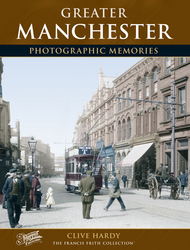
Greater Manchester Photographic Memories

Straddling an unclassified road between Hayfield and Marple, the village of Mellor is noted for its church, which is dedicated to St Thomas. As can be seen from our picture, the church stands on an exposed hill above the village. Though rebuilt in the early 19th century, the church contains an early Norman drum-shaped font, and what is believed to be the oldest wooden pulpit in England.

This is an extract from Greater Manchester Photographic Memories.
Read more and see photos from this book.

Manchester Pocket Album

Monton had been a separate village until the incorporation of Eccles, when it was taken under the new council’s wing. Monton Green is also the name of the road in our photograph. Behind the photographer is the very large Broadoak Park, home of the Worsley Golf Club; the short road leading to the clubhouse is called Stableford Avenue. Like the other areas of Eccles and Salford, Monton likes to keep its own identity.

This is an extract from Manchester Pocket Album.
Read more and see photos from this book.

Manchester Pocket Album

The dome of the Infirmary is on the left, and Lewis’s tower is in the centre. On Tuesday 1 September 1908, a large crowd gathered here to watch about one hundred patients being moved out of the Infirmary. Horse-drawn ambulances, taxi cabs, flat wagons, and even a horse bus were used to convey the patients down to the new Royal Infirmary on Oxford Road. Only one patient was left behind because he was too ill to move. The main buildings were soon demolished, but the Wash House remained, as did part of the Asylum, which was used as a reference library before the Central Library was built.

This is an extract from Manchester Pocket Album.
Read more and see photos from this book.