Ruswarp
Ruswarp photos
Displaying the first of 7 old photos of Ruswarp. View all Ruswarp photos
Ruswarp maps
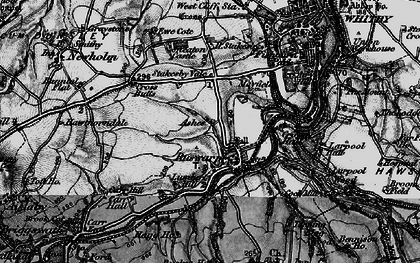
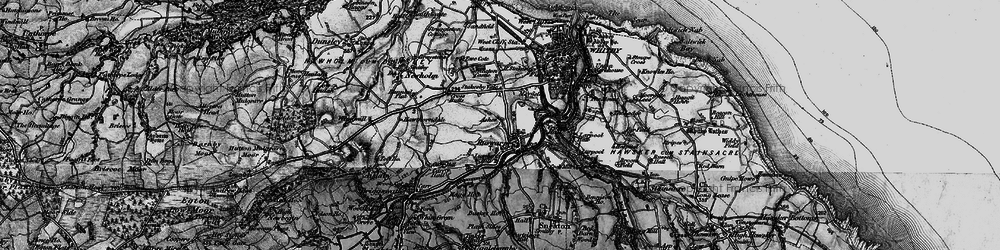
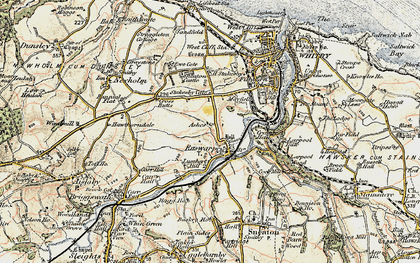
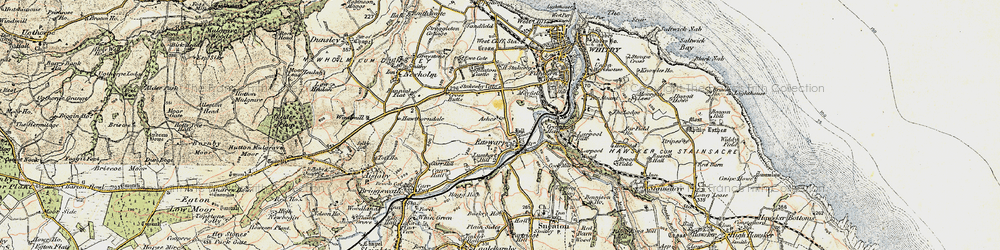
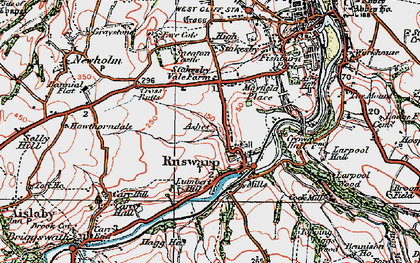
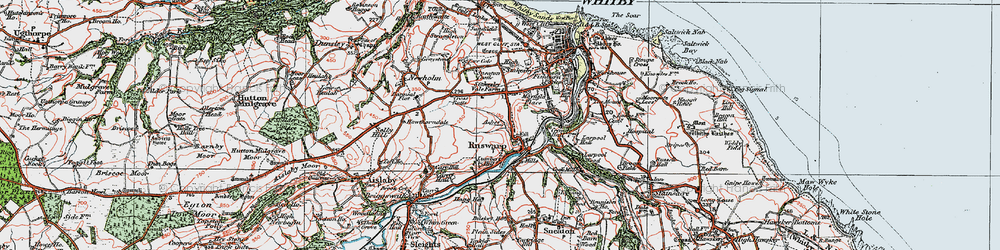
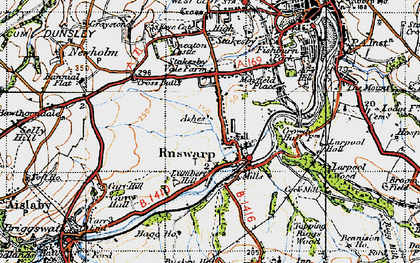
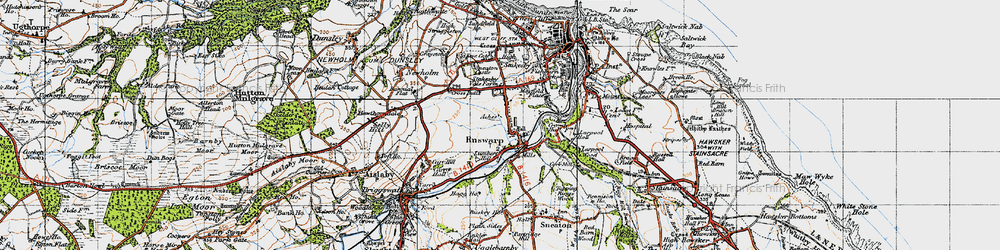
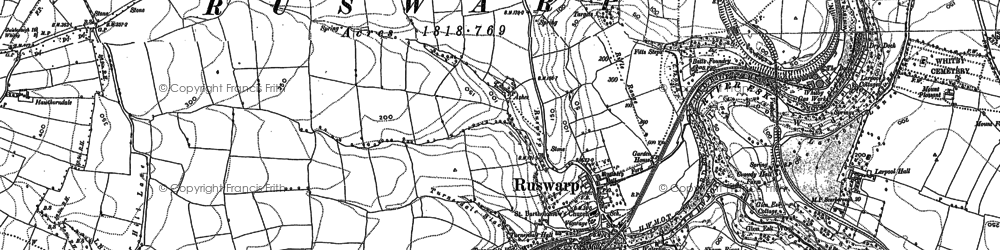
Historic maps of Ruswarp and the local area, hand-drawn by Ordnance Survey and Samuel Lewis. View all Ruswarp maps
Ruswarp area books
Displaying 1 of 28 books about Ruswarp and the local area. View all books for this area
You can read extracts and browse photos from these books.
Memories of Ruswarp
Displaying a selection of personal
memories of Ruswarp.
Add your memory of Ruswarp
or of a photo of Ruswarp.
Featured Buildings.
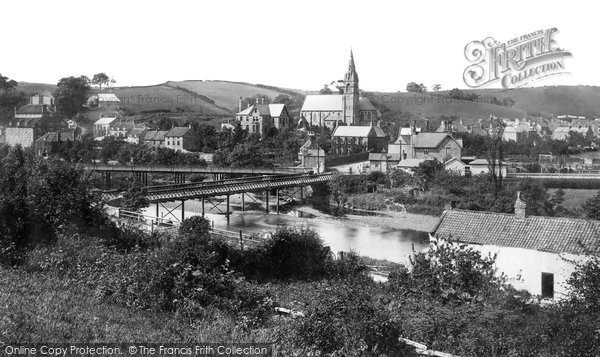
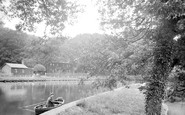
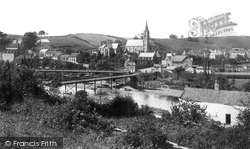
The large building on the left edge of the photograph is Ruswarp Mill. A mill has been here since Saxon times and the first written record of this mill appears in the Domesday book.
The name Ruswarp may have originated from the mill. The mill was water powered and the river would have been dammed to make a mill race. Dams in this area are known as 'scarps' and if the dam was made of wood, the brushwood was called 'rise'. Hence 'Risescarp' - brushwood dam.
Alternatively, it may have arisen from the use of brushwood to divert fish in to fish traps known as 'salmon hecks'. The old local term 'warp' describes a bank of mud deposited by a river as the flow slows down after coming down from the high moors. Some of these mudbanks sprout vegetation - brushwood from seed and twigs carried down by the river. Hence 'Risewarp'.
The present mill building shown in this... Read more
North Yorkshire memories
The Pearts
The little girl is my grandmother Jane Peart born 18 September 1884. Her nickname was Ginny. Her daughter, my late Auntie was called Jennie.
Beside her is my great uncle, Robert Leadley Peart who drowned at St Petersburg on 19 July 1908 aged 20 years.
The Peart Family.
This is the Peart family. Amelia the eldest aged 17 holds her baby brother George. Next to her on the rock is Robert Leadley Peart and at her side is Robert's twin Matthew. Next to Matthew is Jane (known as Ginny) and then Tom.
Ginny was born 18th September 1884 and was six years old in this photograph.
Robert (on the rock) was drowned aged 20 on 19th July 1908 after being swept overboard at St Petersburg.
George was also drowned in the sinking of HMS Hogue on 22nd September 1914. He was 23.
There were also two other brothers not shown in the photo - David who died aged 53 years on 11th July 1925 and William who died aged 39 years on 7th June 1918.
Their mother and father were Jane (nee Leadley) and David Peart who lived on the Tate Hill.
Ginny married Ernest Swales a ships carpenter in 1909 aged 25 years. They lived in the warehouses under Ginny's parents pub the Duke of... Read more
The Peart Twins.
The children are twin boys. Matthew Peart on the left and Robert Peart on the right. Robert was drowned at the age of twenty when he was swept overboard near St Petersburg on 19 July 1908.
The Swing Bridge.
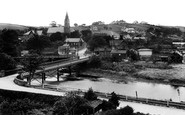
This is a swing bridge - it swings horizontally. It actually swings out in two halves to rest over the pointed timber structures that can be seen in the river. These timber structures are known locally as 'dolphins' and are sometimes used when maintenance of the bridge arms is required. The large building on the far side of the river at the end of the bridge to the right is the Dolphin Hotel. Presumably it takes its name from the bridge dolphins.
Power Boats
The wooden clinker built boat, painted white in the lower right of the picture, was one of a pair of fast boats that the late Arthur Shippey and Tom Louis ran from coffee house end steps. They would call loudly ""half hour trips round the bay now"" -- ""come on down"". Tourists were happy to pay 1/6d for the pleasure of getting soaked to the skin.
As a small boy living close to the harbour in Baxtergate, I was well known to Arthur (who lived next door) Tom liked a drink in our pub, so I was always allowed to take a free ride when things were quiet. I can tell you that this was a huge thrill.
I often wonder what became the fate of the power boats.
Penzance Promenade
I have such happy memories of my early years when as a schoolboy I along with many of my friends walked up and down the Promenade at Penzance of a Sunday evening in pursuit of girls. Even in the blackout during the Second World War we still put in an appearance. At the time I was a choirboy at St John's Church, Penzance and attended both morning and evening services.
During the summer months a Sunday afternoon pastime was to listen to the town band play in the Morrab Gardens where once again our main purpose was to meet up with local girls!
I am delighted to have found this site and have enjoyed reading the memories of others.