The Francis Frith Collection.
You are here: Explore your past > Standon
Better Days Sale - 25% off - beat those recession blues!

Standon, Hertfordshire

Standon photos

Displaying 3 of 14 old photos of Standon.   View all Standon photos

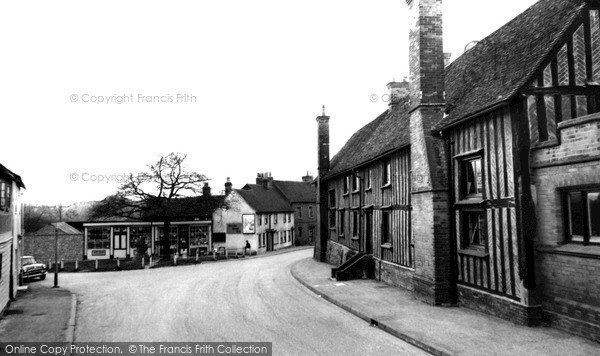
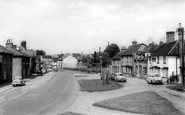
Standon, High Street c1965 photo

Standon, High Street c1965

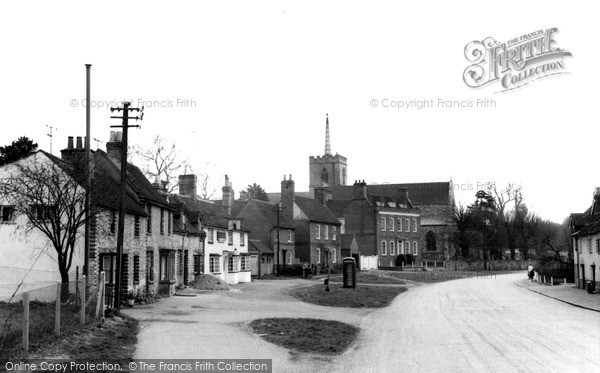
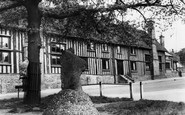
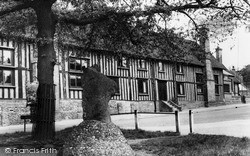
Standon, Mounting Stone and School c1965 photo

Standon, Mounting Stone and School c1965

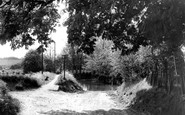
Standon, Old Paper Mill c1965 photo

Standon, Old Paper Mill c1965

Standon photos
View all 14 Standon photos

Standon maps

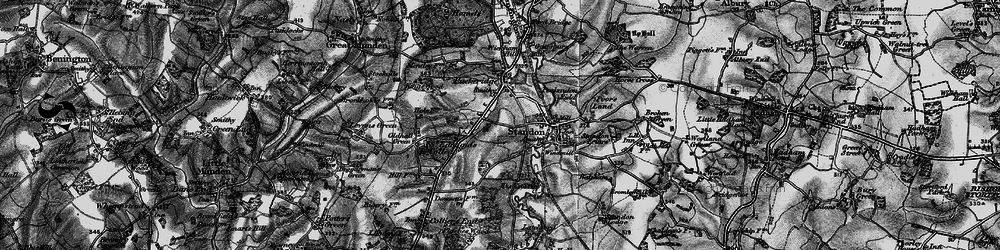
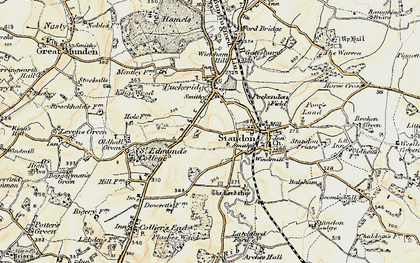
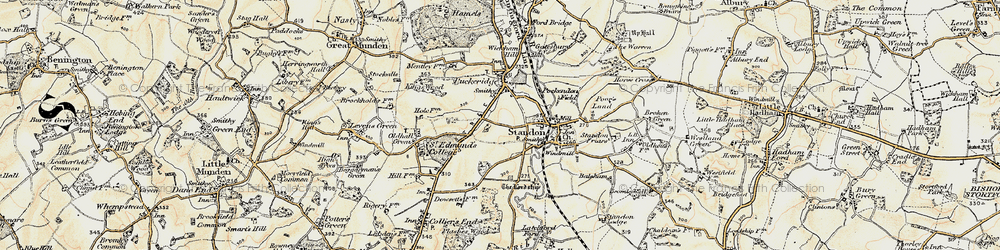
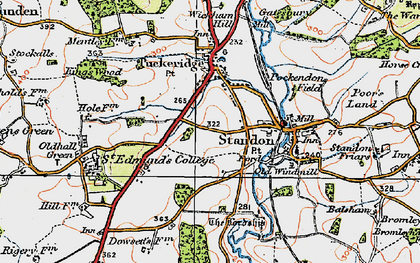
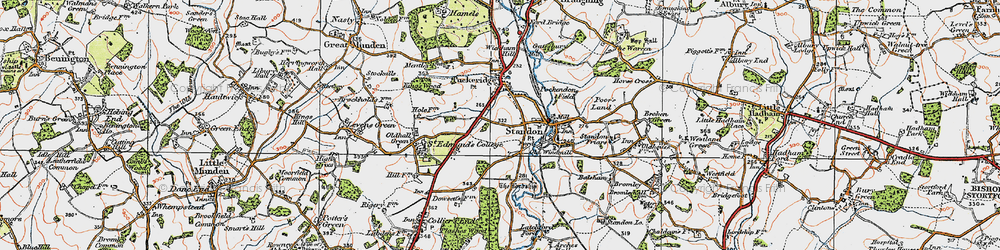
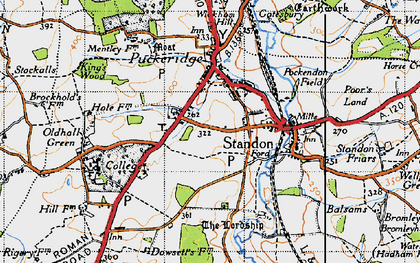
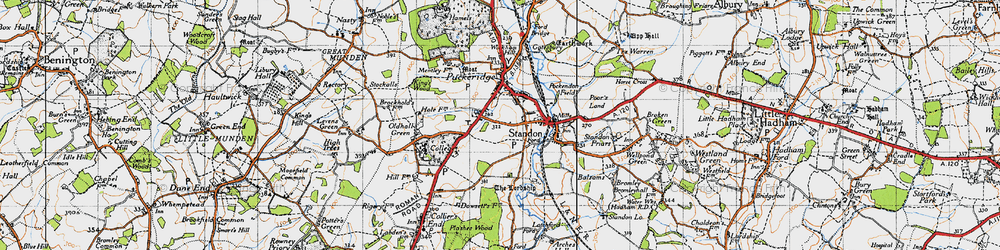
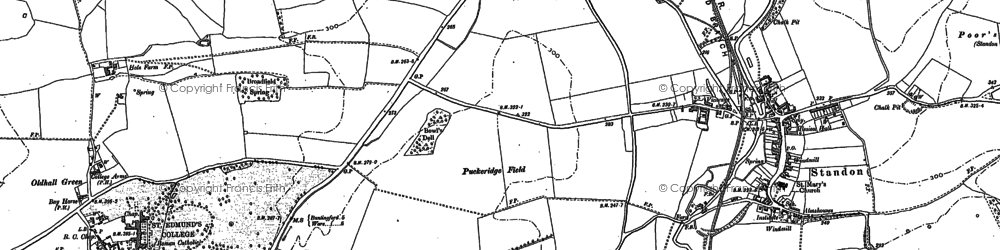
Historic maps of Standon and the local area, hand-drawn by Ordnance Survey and Samuel Lewis.   View all Standon maps

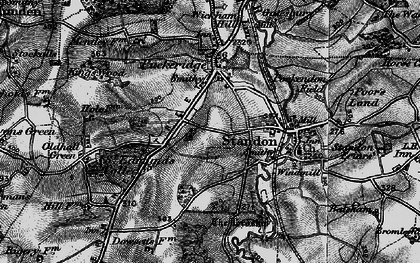
Standon map

Historic map of Standon

Hertfordshire map

Illustrated Victorian map of Hertfordshire

Standon map

Historic Map of any Standon postcode

Standon maps
View all Standon maps

Standon books

Displaying 2 of 8 books about Standon and the local area.   View all Standon books

On Sale! 70 off

Hitchin Town and City Memories
Paperback
rrp £12  £3.60

On Sale! 70 off

Hitchin Town and City Memories
Hardback
rrp £16  £4.80

On Sale! 70 off

Hemel Hempstead - A History & Celebration
Hardback
rrp £15.99  £4.80

Standon books
View all 8 Standon and Hertfordshire books

Memories of Standon

Standon memories
Read and share Standon memories

Displaying a selection of personal memories of Standon .
Add your memory of Standon or of a photo of Standon.

The Picketts of Standon

The majority of my father's family lived in and around Standon from 1600 onwards and one of them was the Sexton of St. Mary's and another was the innkeeper of The Three Horseshoes at Farnham in 1881. My Grandfather was born in the Three Horsehoes. Does anyone have any connections with the Pickett family?

Shared on 17 January 2007 by Angela Kenny.

Hertfordshire memories

A good time in Much Hadham

I spent about one year in Much Hadham as German prisoner of war, 1946 till July 1947, working for the Hertfordshire War Agricultural Executice Committee; I specially was engaged in our camp labour office as clerk, under Mr. Wooley and later Mr. Smolenski, two wonderful men. We enjoyed already a lot of liberty, and I really loved this little village, which I visited once again in the late sixties, when I still discovered some remainders of one of our old Nissen huts! These months in Hertfordshire had an immense positive influence on all my further life, especially when I then worked in out of school civic education. Thank you, Much Hadham!
Walter Scharnagl, Dechant-Heimbach-Str. 43, D-53177 Bonn, Germany.

Shared on 30 September 2008 by Walter Scharnagl.

Memories of the Red Lion

I was born in 1966 and lived in the Red Lion. My dad and mum were married in 1961. My dad lived in the village all his life, moving to the Red Lion on his marriage. My dad was formerly of Temperance Hall, down the road from the village stores.
Mum and Dad lived in the Red Lion in one room for several months before Dad had renovated it to be liveable. The Red Lion has a circular stair case which runs from the celler to the lounge then on to the second floor then on to the attic which was renovated in 1978ish when Dad also rebuilt the chimney on the back of the property, adding a twist to it.
There was three of us, myself and a brother and a sister. We played in the ditch which ran through the Red Lion property and the surrounding fields. We used to go to Jacob's Ladder which is on the way to Bakers End if you follow the ditch north. We played at Hogham Woods and stole Mr Gosnal's apples from his orchard which was across the road from the village shop. As you went up Fishers Hill on the right was a tree and we called it the fairy tree, I don't know why, it was always called it and in the field at the top you were guaranteed mushrooms when the season was right.
There was 3 new houses built at the Red Lion Yard, and a set of garages. The Tudor Cottage which was owned by a ladie called affectionately by us as 'Bossy' is still there to this day also.  I remember walking up Fishers Hill with me mum and Bossy and her dog Jamie which was a little Yorkshire terrier.

As you go over Fishers Hill and come down the other side there was a water well which is still there to this day and I can't resist trying to get the wheel running whenever I am in the village for a walk.
I attended the village school along with all the other children from the village. Outside the staff room was a rose garden where we had our school photos taken on starting school. We had a school swimming pool. The autumn was always a favourite time of year at school as the conker trees at the bottom of the school fields were laden with conkers. We had a fab cook, Mrs Carter, and dinner ladies were Mrs Storey, Mrs Rowe and later came along Mrs Chappel who was also the school secretary. If you were picked to ring the dinner bell you felt important for the rest of the day. My first teacher was called Mrs Reed and our class was in the hall where the dining room was. I remember Mrs Porter also, she played the piano for assembly in the mornings and taught the older children. We also had a swimming gala every year and it was always fun. We even had a bonfire night at the school with the fence to the next field as a safety measure, and for the Queen's Silver Jubilee we had a Jubilee Day at the school which was like a huge fete with party, music and loads of games and food. I left Wareside School in 1977 which was the year  of the Silver Jubilee and we all got a mug with a pic of the Queen on and a coin also.
The drama group started about I would guess 25 yrs ago, maybe longer, and the village hall over the road from the house was full of laughter and music and the shingle path which went from the Red Lion across the front of the village hall was tarmaced.

The village has changed so much since I left there 20 years ago. My parents, brother and sister still live there. My brother now has a house in the grounds of
Temperance Hall. My sister Lives at Hillside Cottages overlooking Hogham wood.  My parents moved to formerly named Bakers Mead which they looked up and found originally it was named Glengarrie which affectionatly means 'Home over the Valley', so they changed it back to the original name.

I was baptised in the village church and sang in the choir for many years
and have my grandparents buried there, along with my uncle, Dad's brother.

The village had many pubs years ago including the Cross Keys and the Fox as well as the White Horse and the Chequers.

As for the treacle mines, lol it is a myth. Up from the Red Lion was a small row of houses and a little old lady sold treacle toffee many years ago to passers by and so hence the treacle mine myth of Wareside ...

Shared on 18 October 2008 by Amanda Shaw.

Visits to Wareside 1964 - present

My dad was born at Hillside Cottages in Wareside in 1929 (I think). I remember visiting my Grandmother there up until she moved to Ware round about 1978/9. She lived in the house with the "Hillside Cottages" sign on the front. I remember going to visit every Saturday afternoon. The front garden was a typical cottage garden where I would collect seeds in summer from the flowers and there was a huge apple tree in the back garden that dad would prune and we 3 children would climb to collect apples. There was also a well on one side that we were always told to say away from. One of my favourite pastimes was making "mud pies" using the earth from the dug over vegetable patches at the back. We would also go for walks over to "Hogham". Not sure if this is it's real name but it's the coppice of trees you can see from the front of the house, straight ahead in the distance. This would involve crossing the old iron bridge over the river (now replaced) and then over the old railway line. We also used to collect mushrooms from a particular field along by the railway line. They grew every year. My sister used to collect bits of china from the Bourn also out the front of the cottages in the field opposite while my brother rummaged around in the rubbish dump in the same field (now flattened and grassed over). We would stay for tea at Gran's (always marmite sandwiches with butter warmed by the fire and fruitcake made by gran) and she would always let us have a sweet each bought from the Wavy Line shop at the end of the row of cottages and on the opposite side of the road (now a house I think). I remember sitting on the front door step in summer after dark watching the bats fly about. I adored that house, so if the person(s) living there now ever wish to sell, please get in touch. My dad went to Wareside Primary School and I think he still occasionally meets up with other school mates there. My Grandmother is buried in the church at Wareside and used to play the organ there when she was little so I think she lived locally most of her life aswell.

Shared on 13 December 2007 by Sandra Penstone-Smith.

Extracts From Standon & Hertfordshire books

Displaying a selection of extracts from Frith books about Standon, inspired by Frith photos.

North and East Hertfordshire Photographic Memories

The large piece of puddingstone (we get a good view of it in S377013) is reputed to have been turned up by a plough on a field called 'Plain', and it was set up in the street opposite the church gate. It was later moved to the triangle in front of Groom's shop in 1904. The Top Shop has gone, but the stone remains. Hertfordshire puddingstone is a naturally forming conglomerate of well-rounded gravel in a cement-like matrix. Often confused with concrete, it is relatively common in the eastern and central part of Hertfordshire, but not unknown in other glacial areas. The road on the left leads down to Paper Mill and the ford across the River Rib.

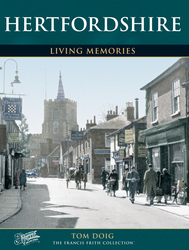
Hertfordshire Living Memories

The parish church of St Mary at Standon has a three-stage detached tower - one of the few in England. It is said to have been built by the Knights Hospitallers as a ‘processional’ church - again, one of only three in England. The Windmill pub stands out as the white building in the centre left of the view. The building in front of the church was the vicarage; it replaced the original, which stood in Burr’s meadow behind the concrete posts and fencing on the left of the picture. The old vicarage and its two adjacent properties are known locally as the ‘Three Bears.’ None of the other buildings owns up to being Goldilocks!

This is an extract from Hertfordshire Living Memories.
Read more and see photos from this book.

North and East Hertfordshire Photographic Memories

Previously a corn mill, the building was converted to manufacture hand-made paper in 1713. More than forty people were employed here collecting rags, which were sorted by women and children, washed in the river and laid out to dry in Laundry Meadow opposite the mill to the right of the photograph. The rags were then cut up and pounded to form the fibres in the paper. In 1865, the mill was converted to a saw mill and later to an engineering workshop. It is now a private residence. The ford does not cut straight across the Rib, but runs along the river bed and then emerges further down stream on the opposite bank. Motorists use the ford at their peril: it is susceptible to flash flooding, and many an unwary traveller has found himself and his car floating away down stream.