Tottington, Lancashire
Tottington photos
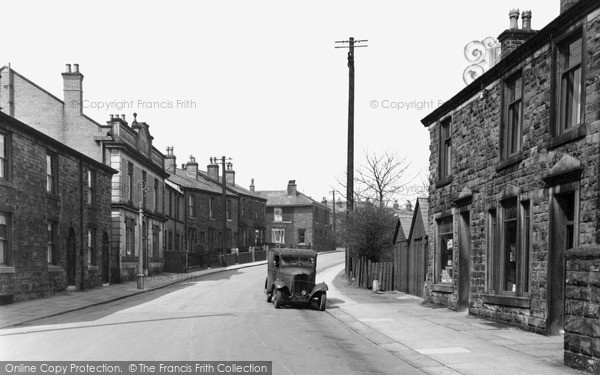
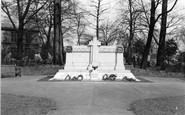
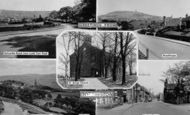
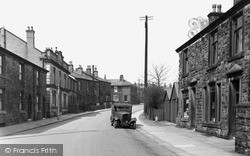
Displaying 1 of 2 old photos of Tottington. View all Tottington photos
Tottington maps
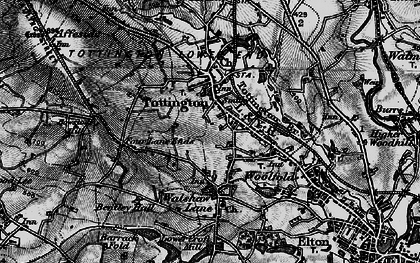
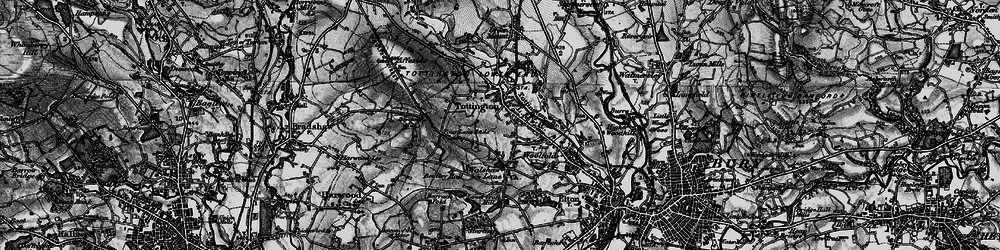
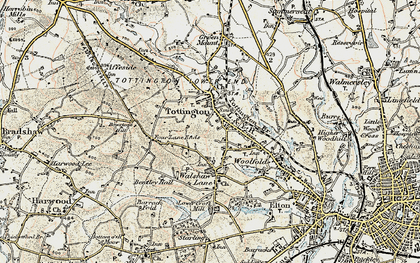
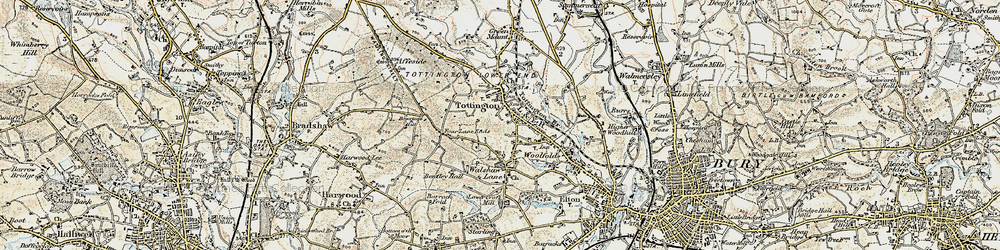
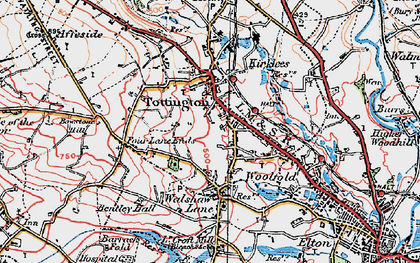
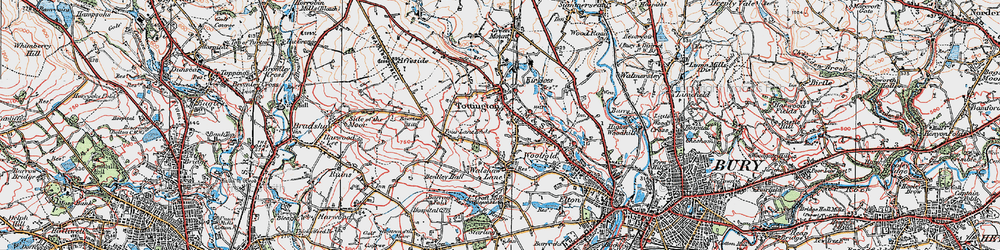
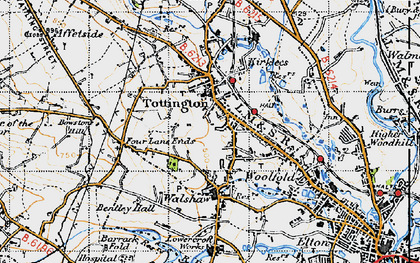
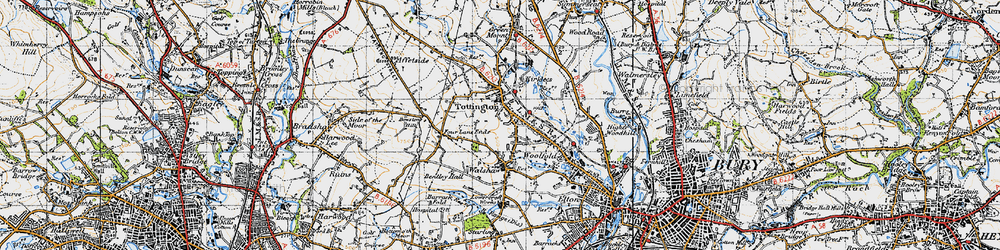
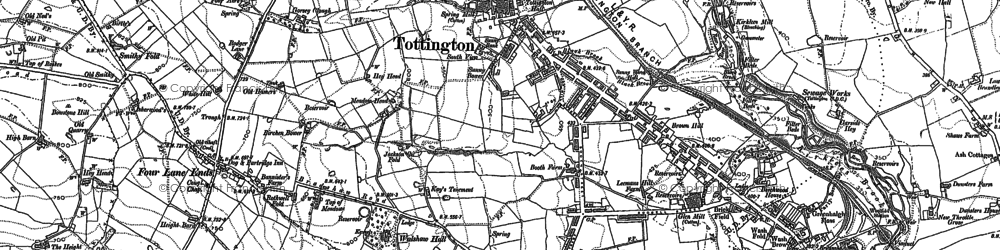
Historic maps of Tottington and the local area, hand-drawn by Ordnance Survey and Samuel Lewis. View all Tottington maps
Tottington books
Displaying 3 of 4 books about Tottington and the local area. View all Tottington books
2 Tottington photos appear in 1 Frith book titles. You can read extracts and browse photos from these books.
Memories of Tottington
Displaying a selection of personal
memories of Tottington
.
Add your memory of Tottington
or of a photo of Tottington.
My grandfather was born at Horncliffe Lodge, Tottington Higher End on Nov 15 1882. His name was Arthur Owens. His mother was Mary Platt whose family I believe were a prominent family in the village. His father was Richard Owens. Arthur, a cabinet maker, left England around 1910 and settled in Australia.
Shared on 21 February 2008
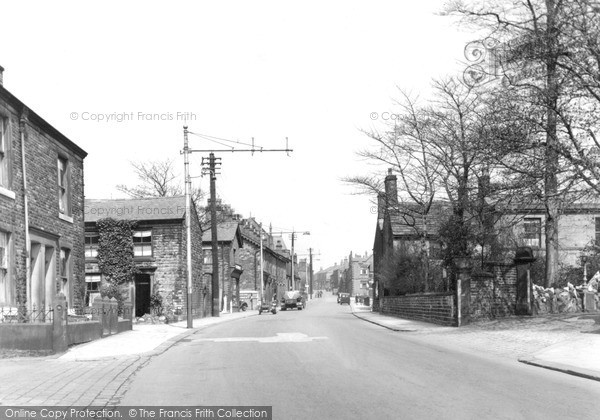
tottington, market street c1955
I remember this view of market street. At this time Tottington was an Urban District with its own council of 14 members. The gates and building on the right of the picture were Tottington Town Hall and council offices.The building also housed the public Library. I was a member of that council in that year. I am now 80 years old... [more]
Shared on 05 January 2008
I used to live at Brookhouse with my parents, great aunt and maternal grand mother. Brookhouse was split into 3 houses at the time (131, 133, 135 Holcolme Road). My grandfather (Thomas Lomax) visited at Christmases and holidays. My parents were Pat (Lomax)and Andrew Martyn-Clark. My aunt who worked at the local Tech (Bury) was Mrs Irene Cosgrove (nee Lomax). My... [more]
Shared on 29 May 2008
Lancashire memories
My great-grandfather, David Arthur Hardman, was the architect for the Textile Hall in Bury. His son, my grandfather, William Percy Hardman, was also an architect, who emigrated to Boston, then New York in 1911.
Shared on 06 June 2009
Bury market was famous and its modern version, though not as interesting, still is. We used to go to the market and buy one of Thompson's black puddings, piping hot in a grease-proof paper, The man would split it and put plenty of mustard on. There was the roast potato man, vegetable stalls, fish stalls and the famous Cheap Jack. He... [more]
Shared on 10 August 2006
Walmersley Road Recreation ground was later renamed Clarence Park. This is the bandstand where on summer Sunday afternoons there would be a band concert and deck chairs (strictly for the older generation of course). The house in the distance was the park keeper's residence, and woe betide any child who was caught walking on the flower beds. There was a large... [more]
Shared on 10 August 2006
Kay Gardens was the terminus for all bus services from surrounding districts and towns. On this photograph, the large building at the back of the picture was the Co-op, which was at that time a department store, but also housed a restaurant on the first floor, widely used by office workers at lunch times, and of course for funeral parties. At... [more]
Shared on 10 August 2006
The awnings on the left of this picture show the location of Woolworths, whilst Marks and Spencers was a little further up on the right hand side. The building immediately before Woolworths was a bank and over the top was Joseph, Thompson and Marsdens Acountants.
Shared on 10 August 2006
Extracts From Tottington & Lancashire books
Displaying a selection of extracts from Frith books about Tottington, inspired by Frith photos.
Greater Manchester Photographic Memories
Tottington's unusual claim to fame is that it is one of the most northerly places to have suffered a hit from a German V1 flying bomb, or Doodlebug, during the Second World War. The weapon was air-launched on 24 December 1944 from under the wing of a bomber; this was at best a somewhat dangerous procedure, even for the aircrew. It... [more]
Read more and see photos from this book.
Greater Manchester Photographic Memories
The manor or honour of Tottington covered 15 square miles, and was awarded to General George Monck (1608-70) for services to the Crown. A former Royalist officer who changed sides after being captured, Monck fought with distinction on the side of Parliament. A firm believer in the authority of civil power, he was instrumental in securing the restoration of Charles II... [more]
Read more and see photos from this book.
Monton had been a separate village until the incorporation of Eccles, when it was taken under the new council's wing. Monton Green is also the name of the road in our photograph. Behind the photographer is the very large Broadoak Park, home of the Worsley Golf Club; the short road leading to the clubhouse is called Stableford Avenue. Like the other areas of Eccles and Salford, Monton likes to keep its own identity.
Read more and see photos from this book.