The Francis Frith Collection.
You are here: Explore your past > Widford
Better Days Sale - 25% off - beat those recession blues!

Widford, Essex

Widford photos

Displaying 1 of 2 old photos of Widford.   View all Widford photos

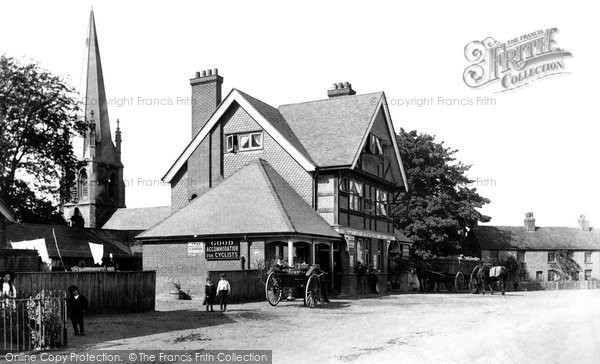
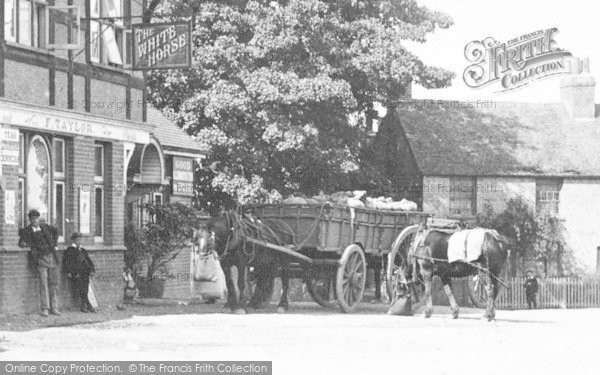
Widford, The White Horse 1906 photo

Widford, The White Horse 1906

Widford photos
View all 2 Widford photos

Widford maps

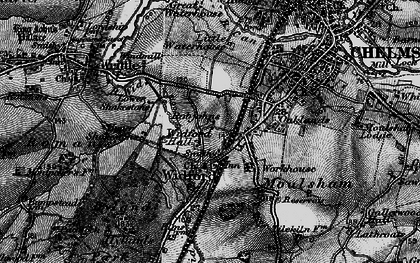
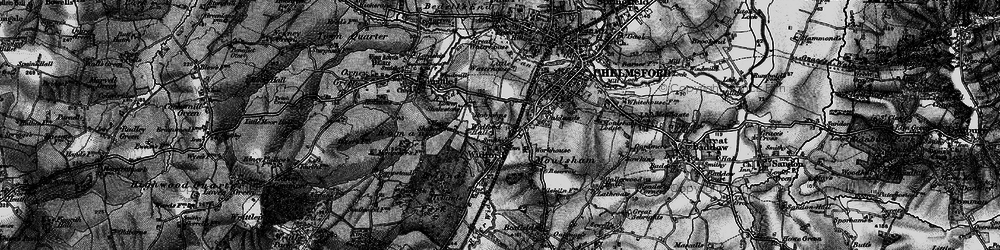
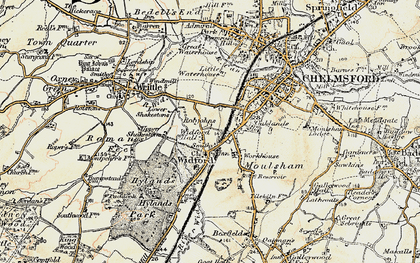
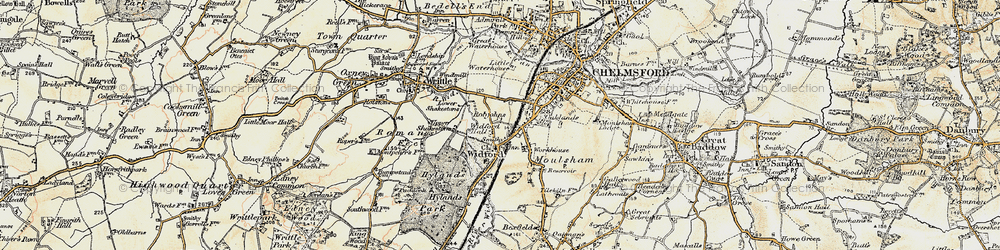
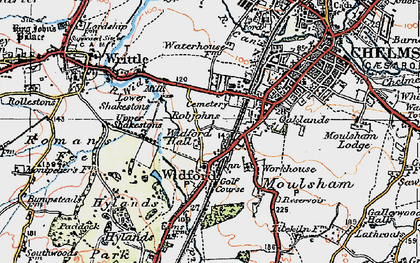
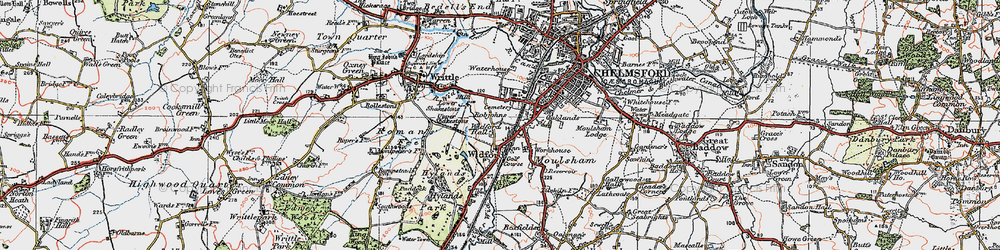
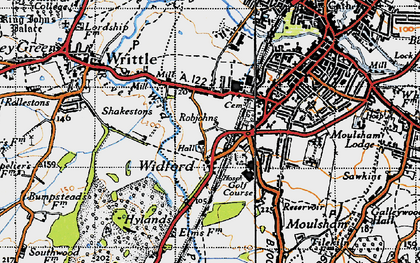
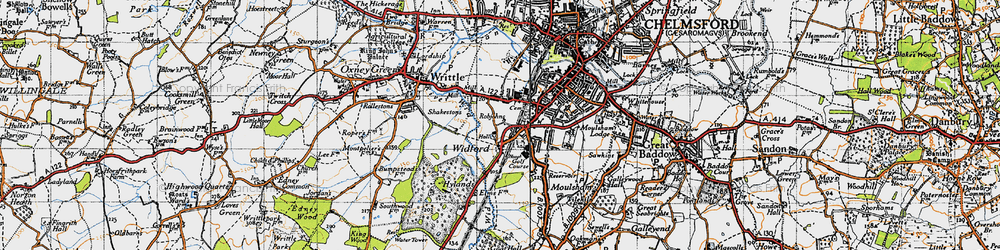
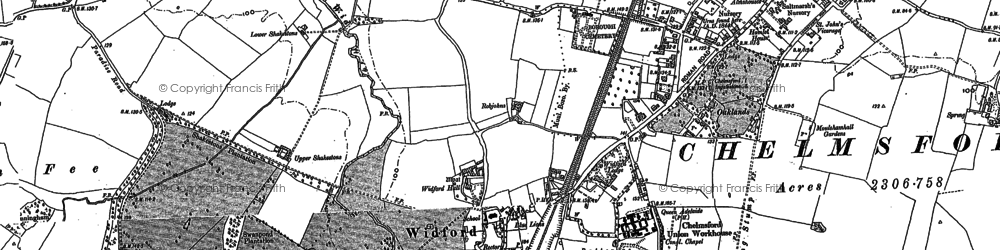
Historic maps of Widford and the local area, hand-drawn by Ordnance Survey and Samuel Lewis.   View all Widford maps

Widford map

Historic map of Widford

Essex map

Illustrated Victorian map of Essex

Widford map

Historic Map of any Widford postcode

Widford maps
View all Widford maps

Widford books

Displaying 2 of 13 books about Widford and the local area.   View all Widford books

On Sale! 70 off

Braintree Town and City Memories
Hardback
rrp £16  £4.80

On Sale! 70 off

Chigwell Photographic Memories
Paperback
rrp £10.99  £3.30

On Sale! 70 off

Chigwell Photographic Memories
Hardback
rrp £14.99  £4.50

Widford books
View all 13 Widford and Essex books

Memories of Widford

No memories of Widford have been shared yet - be the first!
Add your memory of Widford or of a photo of Widford.

Essex memories

Writtle Football Club

I was the first manager of Writtle Football Club and was a member of the club from 1966/67 until I left to come to Australia in 2000. I have many happy memories of my years at the club and remember great stalwarts of the club such as Ken Poole, Alfie Brown, Geoff Baker, Tom Farr and Gwen Farr, Fred Butcher and his wife Joan, who used to wash the kit and would have it washed and on the line before we made our way home from Paradise Road on Saturdays.
Now the club continues under the guidance of  Eric Gallacher as chairman, whom I signed for the club in 1969. It is good to notice that the club is still going strong under Eric's guidance, along with the many other willing volunteers.
We have 2 excellent paintings of Writtle village by Ken Willett in our sitting room, one presented by the football club and one by the sports and social club. We have many happy memories of Writtle and many of the residents.
Ray and Marlene Dixon

Shared on 29 April 2009 by Ray Dixon.

Mid 70s

Hi, we moved to Galleywood in the mid 70s and my mum Valerie went to work in the White Bear but unfortunately don't have any photos of it in the 70s.

Shared on 03 May 2008 by Beverley Campbell.

William Leech, Gun Maker 1796-1948, still trading

William Leech moved from St Martins in the Field, London to 20 Duke Street,  Chelmsford in 1794. There he started up his gun maker's shop. Later he moved to 3 &4 Tindale Street, Chelmesford. Percy Leech, the last family gun maker, trading under W Leech & Sons, sold the business about 1948. The new owners continued to trade from the shop in Tindale Street until 1984. W Leech & Son still continue to trade up to this date from other premises.

The Leech family owned land across the road what they called the gardens, in which they had a range to test the guns that that they made. Also in the gardens was a shed in which they made up the cartridges for the guns.

The Leech family helped to form the Methodist Church in Chelmsford. They, along with other members of the Methodist  Church, held services in their homes, before going on to rent a cottage in Springfield to hold their meetings.

Shared on 26 November 2008 by Ann Jones.

Bootmakers Shop

My great-grandfather was the bootmaker who worked from the shop in Moulsham Street in the late 1890s. His name was Leonard Orrin and he married Annie Caple in 1901. I believe the shop was owned by his father and mother, Thomas and Eliza. They lived at 123 Moulsham Street, Chelmsford.
He and Annie went on to have 11 children, one of whom was my grandmother.

Shared on 02 August 2008 by Jo Kearney.

Extracts From Widford & Essex books

Displaying a selection of extracts from Frith books about Widford, inspired by Frith photos.

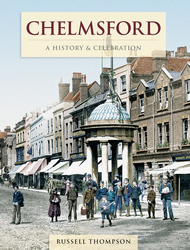
Chelmsford - A History & Celebration

By now, the High Street was crammed with houses: all the plots had been filled. The tenements could only expand lengthways along their own ‘backsides’, and most buildings had a jumble of outhouses, barns and sheds at the rear. Middle Row, which had hitherto backed onto the conduit-stream, now began occupying pockets of land on the west side of the stream, too. Initially, these were used as woodyards, but they soon evolved into half- timbered outbuildings; so Back Lane became somewhat narrower. The High Street, too, grew more restricted when another line of market stalls, permanent enough to have tiled roofs, was erected immediately to the east of Middle Row. These were known as Little Middle Row. The High Street, at this point, was now nine feet wide. Many of the town’s inns were now large and well established: these included the Boar’s Head, which stood on the site of Woolworth’s. Across the road - and stretching down to the bridge - were two inns fused together, the Lion and the Hart; and on the far corner of Springfield Road - where Next now is - was the Crown. Each had a carriageway opening onto a large, enclosed courtyard. Ranged around this major road junction, they were well placed to receive passing custom.

This is an extract from Chelmsford - A History & Celebration.
Read more and see photos from this book.

Chelmsford - A History & Celebration

The situation resulted in the formation of a local Board of Health. Their headquarters, ironically, were in the same Middle Row house where the first cholera victims had died. The Board brought about swingeing changes in Chelmsford - although much of it was a question of getting the townspeople to alter things they were perfectly happy with. The members of the Board took steps to get the entire town properly drained, and to restrict animals wandering the High Street too freely on market-day. In 1851 the members of the Board finally shut off the conduit stream, and replaced the domed conduit-head rotunda with Judge Tindal’s statue. From then on, Conduit Square and Back Lane became Tindal Square and Tindal Street, respectively. Market-day was also posing problems for the corn merchants. They were not satisfied that the new Shire Hall provided them with a suitable trading floor. Inside, the building was darkened and cluttered by dividing walls and architectural fripperies. They could only inspect their corn properly by taking it outside. The magistrates made an effort to improve the space, but it was not really a solution. Finally, a purpose-built Corn Exchange was erected in Tindal Square. It opened for business in June 1857, and was certainly a grand building. Its yellow-brick Italianate façade masked a long, glass-roofed trading-area. There were no more complaints about insufficient light. The architect was Frederic Chancellor, a Londoner.

This is an extract from Chelmsford - A History & Celebration.
Read more and see photos from this book.

Chelmsford - A History & Celebration

And fair enough - the road signs to Chelmsford do not shout ‘Historic Cathedral City’ - they say things like ‘County town since 1250’, or ‘The birthplace of radio’. Good old Chelmsford: straightforward, practical, and aware of civic duty. What often gets overlooked though, is that it is also an historic cathedral city, in the sense that it is both a cathedral city and historic. And although it is foolish to say that one place is more historic than another - because everywhere is equally historic when it comes down to it - it is indeed true that some places’ histories are more interesting or better documented than others. Chelmsford has been smiled-upon in both respects. Follow a heritage trail around Chelmsford, however, and you can be forgiven for thinking that half of its history lies under car parks. In some cases, you would be right. But if Chelmsford wears its history lightly, it is because it has always been mindful of moving forward, of building on the past. Consider this: give or take a few yards, Guglielmo Marconi founded the world’s first radio factory on the very spot where a 1st-century pagan temple had once stood. Ley-line enthusiasts would undoubtedly discern a paranormal significance in this. I prefer to see it as an example of how a town can rise and rise again, like a phoenix. Anyway, Chelmsford still retains a lot of overground history - it is just a matter of knowing where to look. There can be enormous history in the kink of a pavement, the width of an alleyway. And, being relatively flat, this is a good town to explore on foot.

This is an extract from Chelmsford - A History & Celebration.
Read more and see photos from this book.