Places
8 places found.
Those places high-lighted have photos. All locations may have maps, books and memories.
Photos
77 photos found. Showing results 281 to 77.
Maps
49 maps found.
Books
Sorry, no books were found that related to your search.
Memories
1,425 memories found. Showing results 141 to 150.
Caerau Ancestry!
My mother Christine Evans I believe lived in George St Caerau and left for Australia with her new RAAF husband Vince Murphy just after the War around 1945. She was followed out to Australia by her parents Christmas and Kathleen ...Read more
A memory of Caerau by
Burns Pit Disaster
From his seat, by the fire, my grandad could see the great mound of the spoil heap of Stanley Burns Pit. It was the site of a horrific explosion, on 16th February 1909, in which 168 men and boys lost their lives. He would ...Read more
A memory of Stanley in 1900 by
Weekend Visits
I was only about 6 years old but I clearly remember visiting my grandparents' house on weekends. My grandfather was a gamekeeper on the moors until his retirement. In the early 1970s he and his wife moved to nearby Penistone. ...Read more
A memory of Upper Midhope in 1970 by
Jeff Bromley A Place In History! 1944 1963 2013
I hope this memory of Normacot is the first of many to be placed by me and then hopefully by others. I was born in 1944 in Lower Spring Road, (opposite Garbetts Toffee Factory), one of a family of 5 ...Read more
A memory of Normacot by
Happy Days
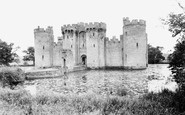
I have many fond memories of Bodiam and the Castle, from when I was 1 year old in 1943, until I was 15. Along with dear Mum and my two sisters, our whole extended family on my mum's side consisting of several families would move to ...Read more
A memory of Bodiam in 1950 by
My Fading Memories
I was but a lad of 8 when my folks bundled us all off to a wide land downunder. Since 1968, Australia has been my home. I often speak of my fading memories of Queensbury, my walks through the village, living on 'The ...Read more
A memory of Queensbury in 1968 by
Wickham Bishops Born And Bred
In 1950 I was born on a cold winter's night to my mother Rosemary Jesse, at 'The Black Houses', Kelvedon Road, Wickham Bishops, built by architect, designer and socio-economic theorist Arthur Heygate Macmurdo. ...Read more
A memory of Wickham Bishops by
Newmarket Hospital
I worked in racing stables in Exeter Road. In the spring of 1960 I was injured when a yearling I was exercising suddenly reared and I 'went out the back door', narrowly missing the edge of the pavement, but hitting my ...Read more
A memory of Newmarket in 1960 by
Ordiquish Parish Of Bellie
My grandparents, Robert (Bob) and Margaret (Maggie) Urquhart, moved from the Braes of Enzie, parish of Rathven, to Ordiquish, parish of Bellie, probably in 1941. However, their tenanted croft at Ordiquish was soon to be ...Read more
A memory of Fochabers by
Two Weddings
My parents were married at Great Hampden church in July 1929, they were Neater Ruth Groom of Prestwood, and Harold Aubrey Hall of Beenham in Berkshire. January 4th 1956 Barbara Hall, their only child, was married to Reginald ...Read more
A memory of Great Hampden in 1920 by
Captions
876 captions found. Showing results 337 to 360.

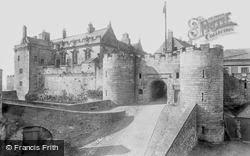
One of Scotland's greatest royal fortresses, Stirling Castle was taken by William Wallace in 1297 but was surrendered to Edward I in August 1305 following a siege.
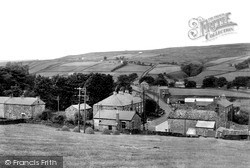
The village grew from about the 14th century as people migrated into Weardale following the discovery of iron ore and further veins of lead.
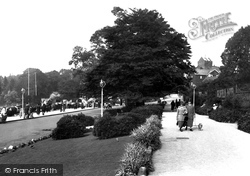
The provision of the public gardens of the Promenade at Bowness also followed the coming of the railway in 1847, and the increased popularity of the Lake District as a health-giving holiday resort for
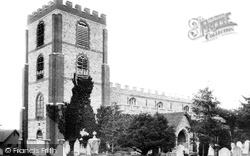
In 1800, shortly after the roof of Chelmsford's future cathedral had collapsed, the tower of All Saints', Writtle, followed suit.
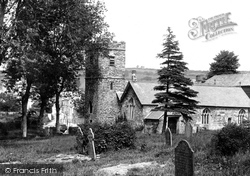
The present structure dates from the early 15th century, and has a leper squint through which lepers could follow the service.
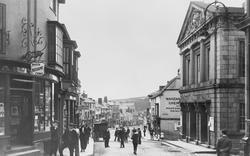
In 1886 it was actually cancelled following the deaths of two prominent townswomen, Mrs Trevenen and Miss Grylls. Wakehams the Chemists are still trading today.
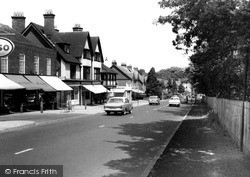
Housing development followed the railway, but the station closed in 1965.
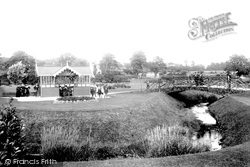
In all, with additional areas added, the park totalled a grand 102 acres, which follows the Roath Brook between fashionable Cyncoed and Penylan to the east and Heath, Cathays and Roath
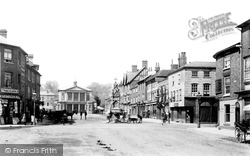
Its 18th-century economy depended on the coaching trade; further expansion followed the dawning of the railway age. The Town Hall was built to commemorate the Diamond Jubilee of Queen Victoria.
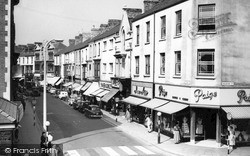
The new-found cleanliness following the demise of the tin plate industry can be clearly seen here.
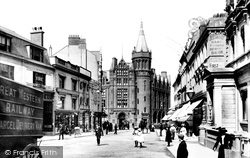
Bedford Street is another road that disappeared from the map following the blitz.
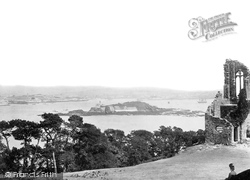
The broad channel between Drake's Island and Mount Edgecumbe, known as The Bridges, is only navigable via one narrow channel, which is why ships always appear to take 'the long way round', following
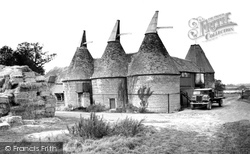
It is suggested that the remains of Herstmonceux Castle form part of the oldest brick mansion in Britain; it was built in 1441, following a grant from the king to Roger de Fiennes to ‘embattle’
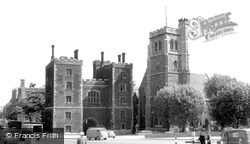
Here the Lollards, followers of Wycliffe, were imprisoned and tortured.
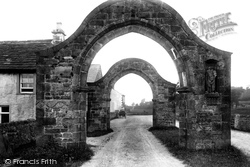
They were eventually demolished following accidents, but one has since been re-erected in an adjacent field.
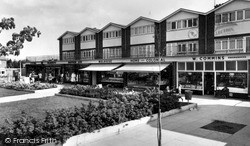
It was envisaged that the population of Stevenage would increase from 7,000 to 60,000 in the following twenty years, and indeed 67.000 people lived in the town in 1971.
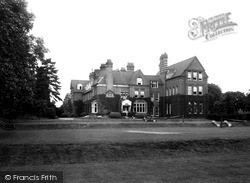
Many others followed in the 1960s and 70s, and the school occupies most of the south side of the road, with its playing fields extending close to the River Nene.
Here the Lollards, followers of Wycliffe, were imprisoned and tortured.
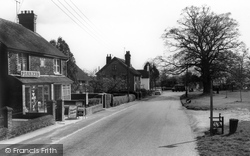
Initially a hamlet, the village of Barns Green dates from the Middle Ages, but grew rapidly during the 18th and 19th centuries following the opening of the Mid-Sussex railway line.
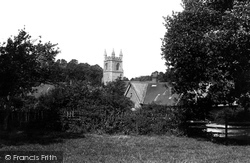
The construction of St Mary's Church and its neighbouring primary school followed shortly after. In 1860 the village was home to Duke & Sons, famous makers of cricket bats and balls.
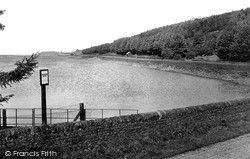
It was constructed in 1850, and as demand outstripped supply, others followed in 1871 and then in 1929. Today the Ridgegate Treatment Works can process 2 million gallons of water each day.
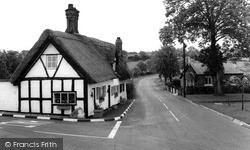
Nearby there is a 5½-mile trail, the Whitegate Way, that follows an old railway line built in the 19th century to transport salt.
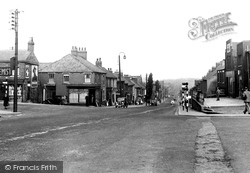
The main A177 road south from Shincliffe leads to Coxhoe; it may follow the course of an old Roman road.
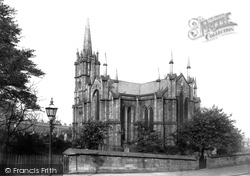
In 1968 the roof was removed, and in March 1969 the church was re-hallowed following restoration.
Places (8)
Photos (77)
Memories (1425)
Books (0)
Maps (49)