Places
36 places found.
Those places high-lighted have photos. All locations may have maps, books and memories.
- Shanklin, Isle of Wight
- Ventnor, Isle of Wight
- Ryde, Isle of Wight
- Cowes, Isle of Wight
- Sandown, Isle of Wight
- Port of Ness, Western Isles
- London, Greater London
- Cambridge, Cambridgeshire
- Dublin, Republic of Ireland
- Killarney, Republic of Ireland
- Douglas, Isle of Man
- Plymouth, Devon
- Newport, Isle of Wight
- Southwold, Suffolk
- Bristol, Avon
- Lowestoft, Suffolk
- Cromer, Norfolk
- Edinburgh, Lothian
- Maldon, Essex
- Clacton-On-Sea, Essex
- Felixstowe, Suffolk
- Norwich, Norfolk
- Hitchin, Hertfordshire
- Stevenage, Hertfordshire
- Colchester, Essex
- Nottingham, Nottinghamshire
- Bedford, Bedfordshire
- Bury St Edmunds, Suffolk
- Aldeburgh, Suffolk
- St Albans, Hertfordshire
- Hunstanton, Norfolk
- Chelmsford, Essex
- Bishop's Stortford, Hertfordshire
- Peterborough, Cambridgeshire
- Brentwood, Essex
- Glengarriff, Republic of Ireland
Photos
11,145 photos found. Showing results 19,181 to 11,145.
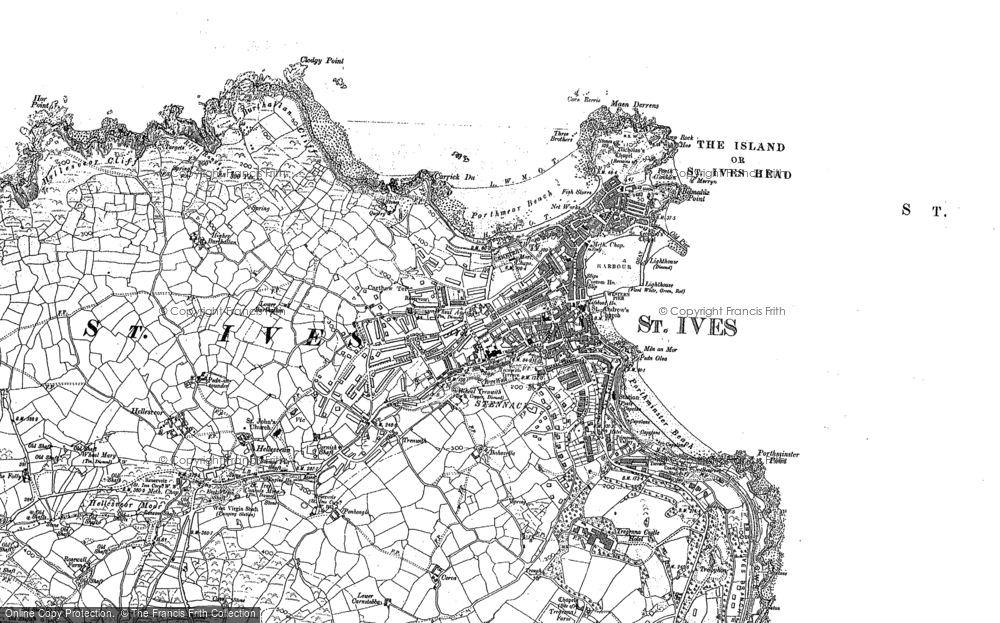
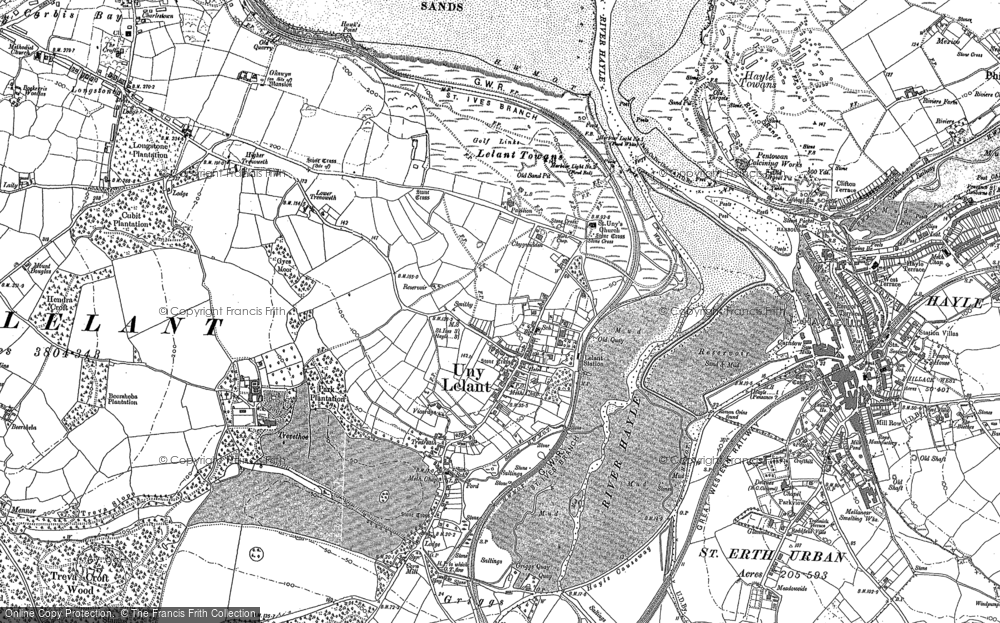
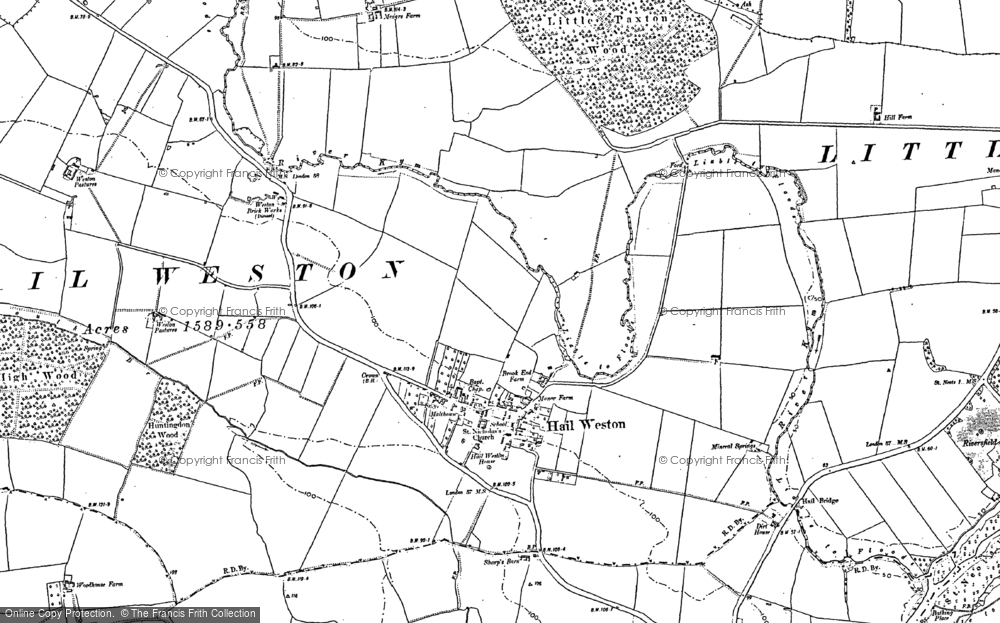
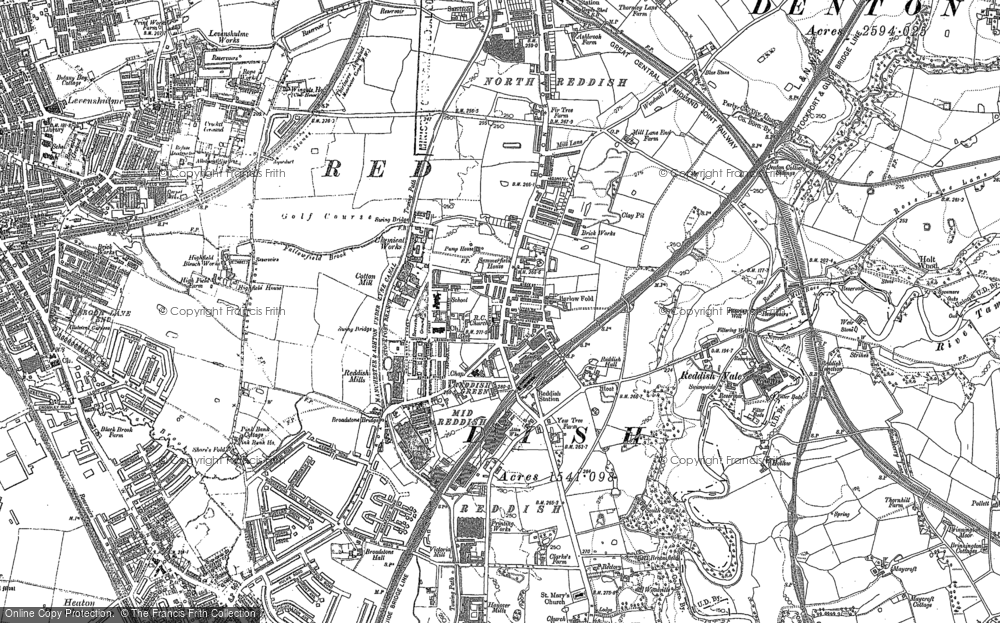
Maps
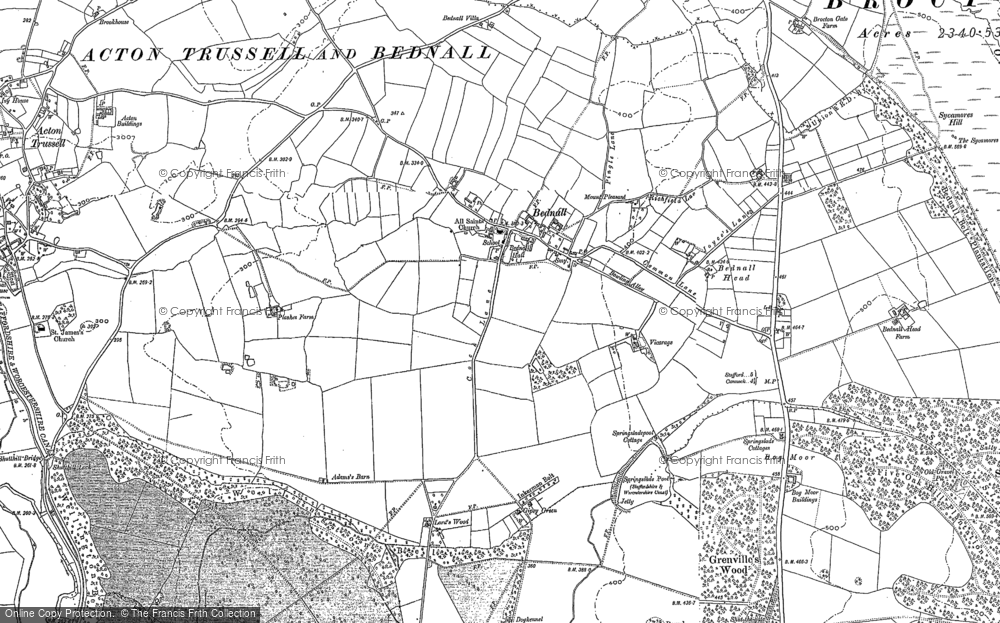
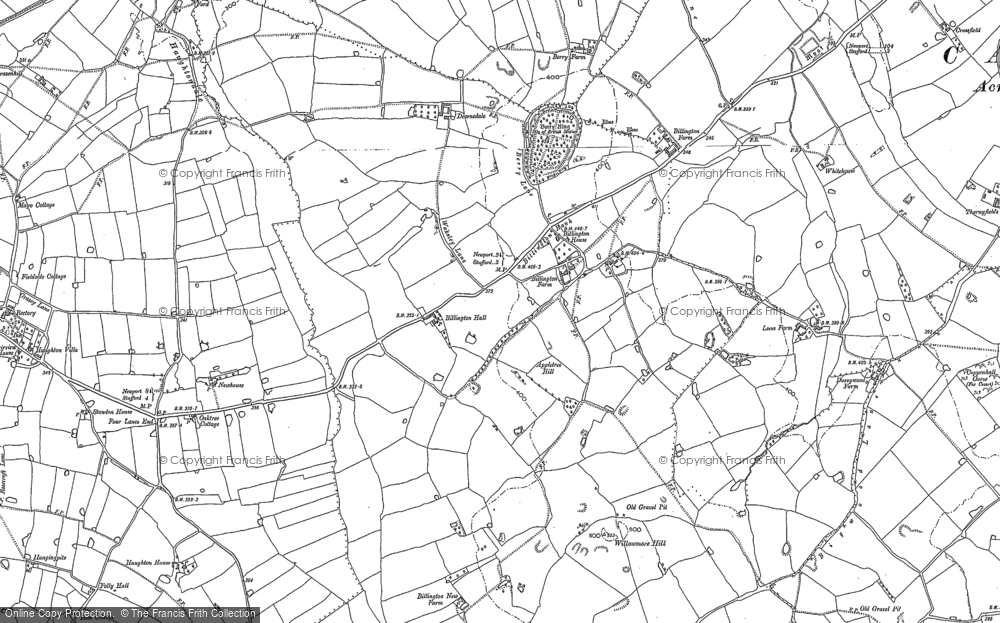
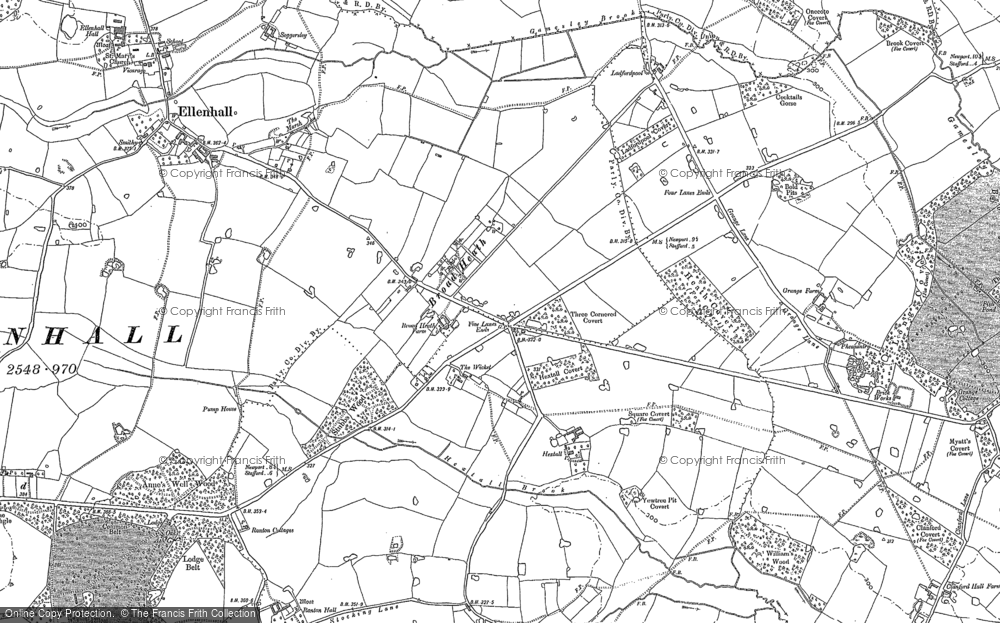
181,031 maps found.
Books
442 books found. Showing results 23,017 to 23,040.
Memories
29,076 memories found. Showing results 9,591 to 9,600.
Growing Up In The 1940's And 50's
We originally lived in Camberwell and were bombed out in the blitz of 1940. After sleeping on the platform of the Elephant & Castle underground train station for a few weeks, my dad found us a house to rent ...Read more
A memory of Wealdstone in 1940 by
Fairfield House, Early 1960's
Further to memories of Fairfield; when I was 7 I came to Fairfield House and stayed for 3 and a half years. Like many residents I had breathing problems and was sent there for the sea air. I have lots of good ...Read more
A memory of Broadstairs in 1960
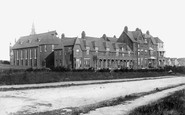
Blakes Corner
I remember Blakes Corner so well. I was born in 1959 and it was just like the picture. The memories came flooding back to me. I used to walk the streets of Barking with my dad.
A memory of Barking in 1969 by
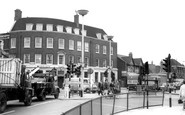
Growing Up In The Village. 1960 1965
As a young lad growing up in the village was a joy with the forest & common for a playground. We knew nearly everybody that lived there. You talk about Morgans the newsagent and Myers the Butchers; I ...Read more
A memory of Chigwell Row in 1960 by
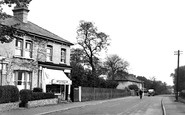
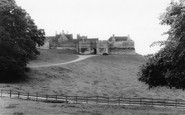
Rockingham Castle
One of my earliest memories is being driven around the farm here in my father's Land Rover. He was farm manager here until 1964 when we moved to Suffolk.
A memory of Rockingham in 1963 by
Battersea
I was born in 1930 in Chelsea but moved to Haines Street, Battersea (demolished to make way for New Covent Garden in the 1960's) in 1933. Moved to No.3 Sleaford Street Battersea in 1935 and went to Sleaford Street School until 1939 (Mr ...Read more
A memory of Battersea in 1930 by
Grandfathers Farm
Pen-y-Bont was my grandfather's farm, Tegid Rees was his name, Glyneth, Margaret, John (my father now deceased 1987), Beryl & David were his family. I remember to the left of the front door to the kitchen there was a big ...Read more
A memory of Gellilydan in 1970 by
Tow Law, Weardale, Durham
In 2001 I found out my mother had been adopted in April 1953 and her real father,Thomas Beattie, was born in 1912 and lived in Tow Law. Thomas Beattie's father was called Richard Beattie and his mother was Mary Anne Beattie ...Read more
A memory of Tow Law in 1910 by
Summer Of '76
My friend Sue and I worked as waitresses at the Runnacleve during July and August of that hot summer whilst on holiday from catering college. Not that we saw much of the sun! We served breakfast, lunch and dinner with short breaks ...Read more
A memory of Ilfracombe in 1976 by
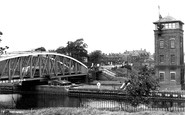
The Barton Road Swing Bridge
This photograph shows the Barton Road Swing Bridge over the Manchester Ship Canal, taken from the Bridgewater Canal Aqueduct, which stands alongside this bridge and carried the Bridgewater Canal over the ...Read more
A memory of Barton Upon Irwell in 1950 by
Your search returned a large number of results. Please try to refine your search further.
Captions
29,395 captions found. Showing results 23,017 to 23,040.

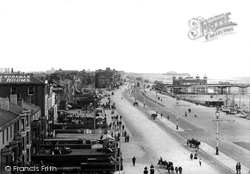
The most striking difference between this and the previous picture is the widening of the Promenade.
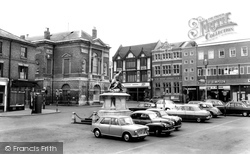
This photograph, taken 15 years after B258003 (p20-21), shows the new shop masthead on Boots. The range to the right of the Post Office has been rebuilt as Lipton House.
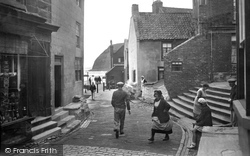
Yards or passages lead to many of the houses; they seem to have been put wherever they would fit, a little like a wrongly-completed jigsaw. This gives the village a unique charm.
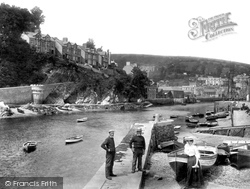
The fishermen are standing on 'Little Pier'. We are looking upstream at half tide towards West Looe on the far side of the harbour.
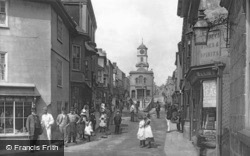
This ancient borough and market town is most famous for its fine-grained granite, which was used in the construction of Waterloo Bridge.
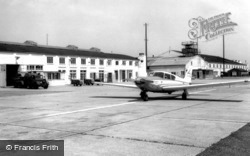
The air traffic control centre is housed in a building which rather resembles an old war-time nissen hut; to the right of it is the quaintly-named emergency services rendezvous point.
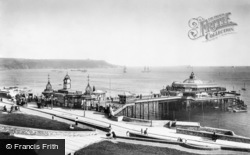
Plymouth never quite achieved the status of being a major seaside resort, though tourists have always bathed from its beaches and promenaded across the famous Hoe.
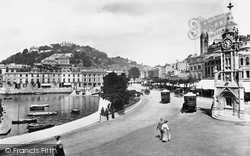
The harbour was at that time still the preserve of local fishermen, but today the area is monopolised by pleasure craft and luxury yachts.
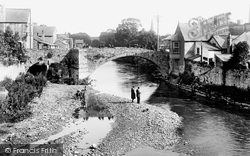
It was partly demolished by a large flood on 21 August 1775. Two of the small arches were replaced with one large one, which explains why the bridge is not symmetrical.
This boat-hire yard was alongside the upstream side of Battersea Bridge.
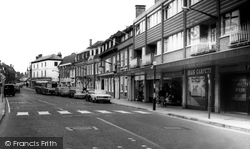
Beyond lies 'Banker's Row' - the location of the Westminster, the National Provincial, Lloyds and Barclays Banks.
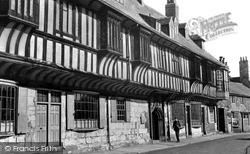
The central doors, which can just be seen in this photograph, were made by the famous wood carver, Thompson of Kilburn: his signature, a mouse, is carved on the right-hand door.
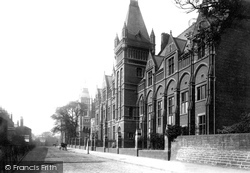
This was part of the Victoria University, which was constituted in 1880, the other colleges being at Manchester and Liverpool.The colleges went their separate ways in 1904, each becoming an independent
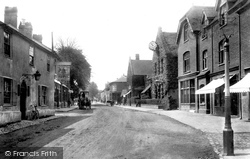
The Fighting Cocks Inn can be seen on our left, but the Hero of Inkerman was demolished to make way for the new by-pass, and was re- built further to the left.
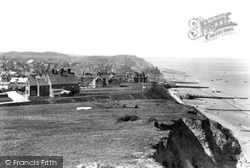
At this time Sheringham was developing into a popular seaside resort which would rival Cromer, though the inclination of the townsfolk was to ensure that it retained its charm.
The yachts are on the site of the terminus.
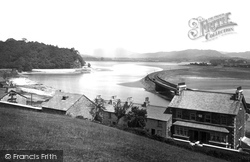
Greenodd stands on the Leven Estuary where the River Leven from Windermere and the River Crake from Coniston Water flow into Morecambe Bay and the Irish Sea.The line of the Furness Railway, built
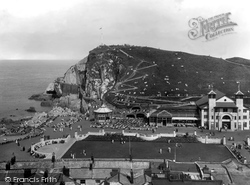
The 750-seat Victoria Pavilion Theatre was opened on 18 May 1925.
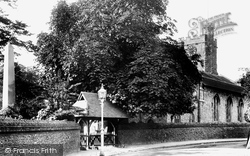
The parish church of St Peter and St Paul had been rebuilt in 1790 as a typical Kentish church.
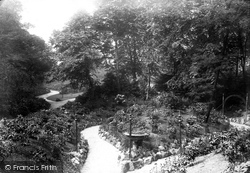
In 1901 the lady mayoress asked the Trustees if she could use the Gardens for entertainments for children from local workhouses, orphanages and charitable institutions, to celebrate the coronation of King
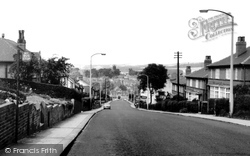
Greasbrough was once described as a pleasant village 'situated on a delightful eminence'; by the early 19th century it was a farming and mining community of over 1000.
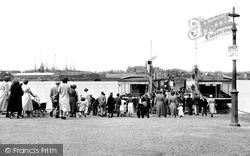
Southampton's famous Floating Bridge enabled foot passengers and traffic to cross the Itchen between the city and the south-eastern suburb of Woolston.
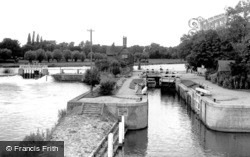
Streatley is the village to the left of the river, and Goring is to the right. Every year, a regatta is held upstream, a colourful and vibrant event, where the villagers fight it out for 'top dog'.
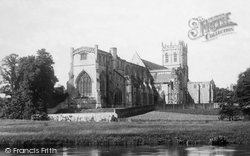
Legend has it that the church takes its name from a mysterious carpenter who helped raise the rafters at the top of this impressive building.
Places (6814)
Photos (11145)
Memories (29076)
Books (442)
Maps (181031)