Places
36 places found.
Those places high-lighted have photos. All locations may have maps, books and memories.
- Shanklin, Isle of Wight
- Ventnor, Isle of Wight
- Ryde, Isle of Wight
- Cowes, Isle of Wight
- Sandown, Isle of Wight
- Port of Ness, Western Isles
- London, Greater London
- Cambridge, Cambridgeshire
- Dublin, Republic of Ireland
- Killarney, Republic of Ireland
- Douglas, Isle of Man
- Plymouth, Devon
- Newport, Isle of Wight
- Southwold, Suffolk
- Bristol, Avon
- Lowestoft, Suffolk
- Cromer, Norfolk
- Edinburgh, Lothian
- Maldon, Essex
- Clacton-On-Sea, Essex
- Felixstowe, Suffolk
- Norwich, Norfolk
- Hitchin, Hertfordshire
- Stevenage, Hertfordshire
- Colchester, Essex
- Nottingham, Nottinghamshire
- Bedford, Bedfordshire
- Bury St Edmunds, Suffolk
- Aldeburgh, Suffolk
- St Albans, Hertfordshire
- Hunstanton, Norfolk
- Chelmsford, Essex
- Bishop's Stortford, Hertfordshire
- Peterborough, Cambridgeshire
- Brentwood, Essex
- Glengarriff, Republic of Ireland
Photos
11,145 photos found. Showing results 4,981 to 5,000.

Maps
181,031 maps found.
Books
442 books found. Showing results 5,977 to 6,000.
Memories
29,069 memories found. Showing results 2,491 to 2,500.
Bats/Snow
I lived in a caravan park in Hullbridge 60-64. My memories are of bats that swooped after dark and the year it snowed so bad that the gas froze in the bottles. It started Boxing Day and went on until Easter and we had to leave the van and live with family.
A memory of Hullbridge in 1960 by
Drumtochty Grampian
This picture is of some houses in Methven, Perthshire now demolished. The village of Drumtochty was a made up name by a Perthshire author on or about 1880. It was based on a Perthshire village. This has nothing to do ...Read more
A memory of Drumtochty Castle by
Very Little Has Changed
Although no longer a grammer school this does remain an educational establishment, effectively a sixth form college for Horsham. It goes by the name of The College of Richard Collyer, in honour of the man who left money in ...Read more
A memory of Horsham by
Living With Nanny
I remember well living with my nanny in Neames Forstell, she was Rose Beake, a formidable lady, but oh how I loved her. I remember going to Selling school, and if it rained or snowed being brought home in the police car by Sargeant ...Read more
A memory of Selling in 1954 by
Old Redding Both Famous And Notorious !
Old Redding is a hilly rural lane connecting Hatch End with Harrow Weald. It is notorious for its connection with The Grimsdyke Hotel where Gilbert of Gilbert and Sullivan fame met his death in a drowning ...Read more
A memory of Hatch End in 1963 by
Bank Holidays
Eastenders without gardens used to flock to Chingford Plains on a Bank Holiday to enjoy the grass and forest. Crowded buses used to terminate at the Royal Forest Hotel and then park in the front of the hotel ready for ...Read more
A memory of Chingford in 1958 by
Childhood Holidays
My gran bought 3 caravans in 1957 which were on the caravan site at Lower Largo. My parents, brother, me, my aunt, my uncle and their 2 children all spent all our holidays there - summer, easter, bank hols, etc. Us children ...Read more
A memory of Lower Largo in 1957 by
Coffee Bars
Does anybody remember the coffee bars of Chingford. There was one at the bottom of Chingford Mount, it had the pyrex coffee cups, a juke box (6d a play if I remember correctly.) We all used to hang out there on Sundays and some ...Read more
A memory of Chingford in 1957 by
Fatso & Friend
It was 1970 before I found myself working in this enclosure with 'Fatso' the male lion and his mate, whose name I, unfortunately, cannot remember. I began working at Dudley zoo in 1970 as the Giraffe Keeper and was moved to the 'Cat ...Read more
A memory of Dudley in 1970 by
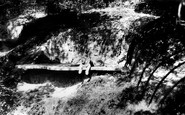
On The Street Where I Lived
The photo shows the bottom of Highwalls Avenue, I lived half way up round the corner. It was a steep climb when i was litlle but got easier as I grew. I was born in this road and had such a happy time.
A memory of Dinas Powis in 1950 by
Your search returned a large number of results. Please try to refine your search further.
Captions
29,395 captions found. Showing results 5,977 to 6,000.
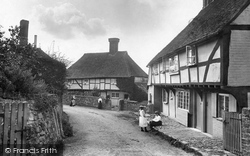
Only a mile or so from Petworth, the village of Byworth typifies the rural community in this Edwardian photograph.
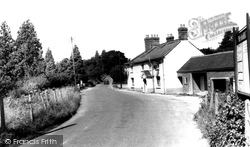
On the downlands close by are a considerable number of prehistoric barrows - burial grounds of some of the earliest inhabitants.
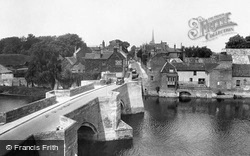
The sign on the creeper-clad walls of the Old Bridge Hotel proclaim it as 'one of England's best'.
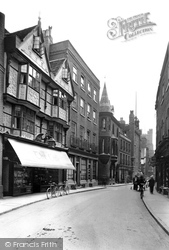
Looking south down the wonderful architectural hotch-potch of Trinity Street, with the medieval church of Great St Mary in the distance.
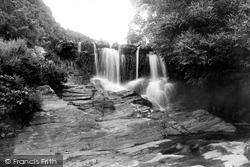
This waterfall is not as spectacular as the Rhenass falls of Glen Helen or those of Glen Meay or Dhoon Glen, but even so the Frith cameraman managed to provide us with a pleasing view of the Colby falls
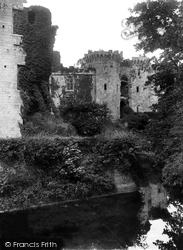
castle demol- ished and made untenable); Conwy (Scottish Committee to consider how garrison may be slighted); Denbigh (extensive demolition); Flint (extensive demolition); Harlech (demo- lition of

Boston was not only the largest town and the commercial capital of Lincolnshire in the early 19th century but was also the first town in the county to industrialise.
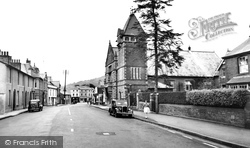
On top of Table Mountain is a 2,500-year-old fort (a crug) of Hywel, from which the town derived its name.
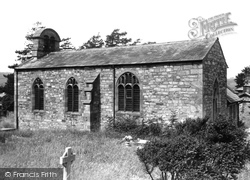
The church of St Chad, with two bells hanging in its open belfry, stands a short distance down the lane opposite the Fenwick Arms.
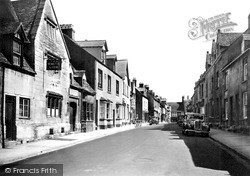
This old wool town is situated north of Cheltenham in the deep valley of the River Isbourne.
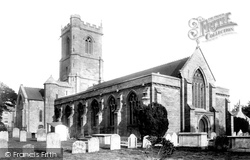
This is St Mary's Parish Church, seen from the north-west, showing the two bays of the nave and aisles extended in 1860 (right).
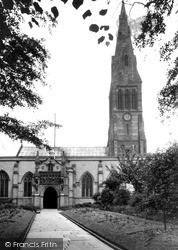
Sited away from the city centre in the last remaining enclave of 18th-century and earlier buildings, the Cathedral with its fine broach spire of 1862 would hardly wring an awed gasp from even the most
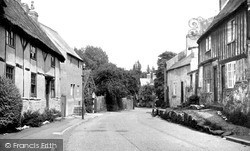
Rothley lies some five miles to the north of Leicester and to the west of the busy A6.
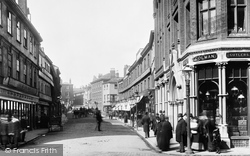
Not visible in this photograph, but well worth walking to see at the west end of the street, is St Stephen's church, a large and handsome building which was founded before the Norman Conquest.
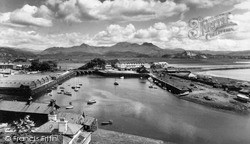
At the height of the great slate trade of the 19th century, slate was shipped out from Porthmadog harbour, and the town grew steadily because of this.
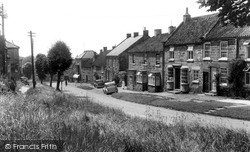
On the western edge of the North York Moors, Osmotherly was a centre for milling, weaving and clog making, and it grew considerably in the hundred years from 1750.
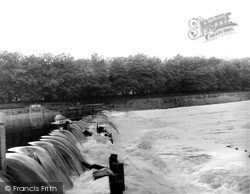
East of the village, the Shelford Road climbs on to the red sandstone hills, which are undercut by the River Trent to form river cliffs.
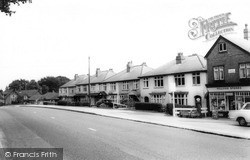
Lickey village is an unremarkable sort of place, but the name is famous among railway buffs because the two-mile Lickey Incline (between Bromsgrove and Barnt Green) is, almost incredibly, the steepest
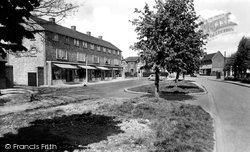
The Causeway development, carried out between 1955 and 1957, created a parade of shops, flats and dwellings on the site of Causeway House, which was finally demolished in 1957.
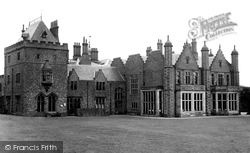
Begun in the mid 1830s, Walton Hall was to be both the family home and the country estate of Gilbert Greenall, a wealthy local brewer and prominent businessman.
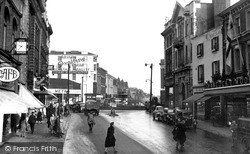
Hancock & Wood and Roberts shoe shop are almost all that remain of this 1950s scene.
During the inter-war years the council tried to alleviate the high rate of unemployment and set up a number of public works schemes.
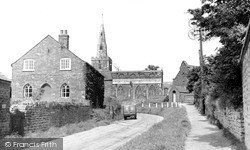
It is notable for its collection of grotesque gargoyles, and for two carved capitals which are derived from the stories of Reynard the Fox; appropriate in Cottesmore country.
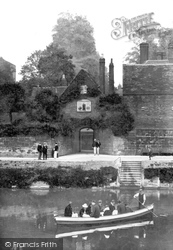
The ferry originated for the use of monks from the priory, to cross to their farmland on the west bank.
Places (6814)
Photos (11145)
Memories (29069)
Books (442)
Maps (181031)