
Construction Of Bristol's Floating Harbour
A Memory of Bristol.
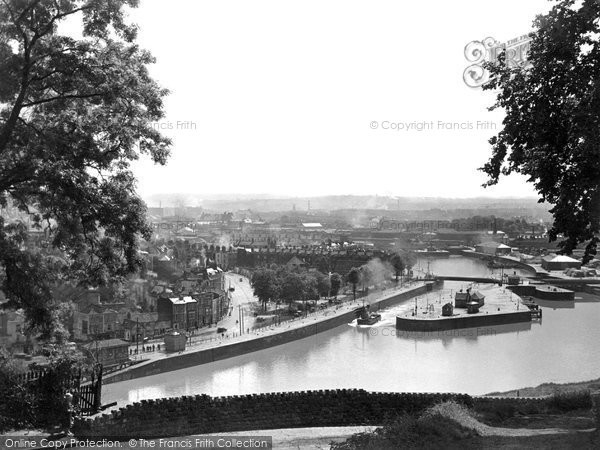
Construction of the floating harbour: In the 18th century, the docks in Liverpool grew larger and so increased competition with Bristol for the tobacco trade. Coastal trade was also important, with the area called 'Welsh Back' concentrating on trows with cargoes from the slate industry in Wales, stone, timber and coal. The limitations of Bristol's docks were causing problems to business, so in 1802 William Jessop proposed installing a dam and lock at Hotwells to create the harbour. The 530,000 scheme was approved by Parliament, and construction began in May 1804. The scheme included the construction of the Cumberland Basin, a large wide stretch of the harbour in Hotwells where the Quay walls and bollards have listed building status.
Launch of the SS 'Great Britain', the revolutionary ship of Isambard Kingdom Brunel, at Bristol in 1843. The tidal new cut was constructed from Netham to Hotwells, with another dam installed at this end of the harbour. The Feeder Canal between Temple Meads and Netham provided a link to the tidal river so that boats could continue upstream to Bath. However, the new scheme required a way to equalise the levels inside and outside the Dock for the passage of vessels to and from the Avon, and bridges to cross the water. Jessop built Cumberland Basin with two entrance locks from the tidal Avon, of width 45 ft (13.7 m) and 35 ft (10.7 m), and a 45 feet (13.7 m) wide junction lock between the Basin and what became known as the Floating Harbour. This arrangement provided flexibility of operation with the Basin being used as a lock when there were large numbers of arrivals and sailings. The harbour was officially opened on 1 May 1809.
Add your comment
You must be signed-in to your Frith account to post a comment.
Add to Album
You must be signed in to save to an album
Sign inSparked a Memory for you?
If this has sparked a memory, why not share it here?
Comments & Feedback
Be the first to comment on this Memory! Starting a conversation is a great way to share, and get involved! Why not give some feedback on this Memory, add your own recollections, or ask questions below.