Merry Christmas & Happy New Year!
Christmas Deliveries: If you placed an order on or before midday on Friday 19th December for Christmas delivery it was despatched before the Royal Mail or Parcel Force deadline and therefore should be received in time for Christmas. Orders placed after midday on Friday 19th December will be delivered in the New Year.
Please Note: Our offices and factory are now closed until Monday 5th January when we will be pleased to deal with any queries that have arisen during the holiday period.
During the holiday our Gift Cards may still be ordered for any last minute orders and will be sent automatically by email direct to your recipient - see here: Gift Cards
Places
4 places found.
Those places high-lighted have photos. All locations may have maps, books and memories.
Photos
88 photos found. Showing results 81 to 88.

Maps
70 maps found.
Books
Sorry, no books were found that related to your search.
Memories
713 memories found. Showing results 41 to 50.
Childhood
I was born July 1951, my parents were Dorothy (nee Moore) and Eric Almond, we lived at 156 Warde St. It was my grandparent's house, my grandfather Thomas Almond had died in 1950, so we moved in with Gran Clara (nee Cheetham) ...Read more
A memory of Hulme in 1951 by
Wee Andy's Tuck Shop
I remember when I was at Newton Academy School there was a wee tuck shop across the road called Wee Andys. It was the front room of their house and they sold sweets and Iron Bru drinks. The size of the drinks depended on how much ...Read more
A memory of Ayr in 1950 by
Edward Mathews
My dad worked at Mathews the iron founders, little Ernie Worsey. He was a shift worker, always dirty covered in black sand from head to foot. My dad used to cobble his own boots, and big boots they were. It was ...Read more
A memory of Bradley
Family
My great grandmother, Mrs Burbidge lived in the house on Charwelton Hill, three fields away from the main road. Mother said a tin box was left by the road where post, bread and groceries were left. Later, in 1941 my grandfather, gran and ...Read more
A memory of Charwelton in 1940 by
Ty Gynn Caravan Site
Hi, My family used to holiday in a caravan on Ty-gynn (sorry unsure of the spelling) camp site, we holidayed there from the late 1960's to about 1974. The caravan belonged to the mother of a work mate of my late father, the ...Read more
A memory of Towyn in 1968 by
Wallsend 1954 68
Born in the Green Maternity Hosp 1954, lived in Windsor Drive, Howden, Sandown Gardens, Howden and Prospect Ave. I remember being taken to the Masons Arms at Bigges Main in a pushchair, parked outside the corrugated iron lean to ...Read more
A memory of Wallsend by
Braddock And Bagshaws Chemists
I left Robinhill Technical School in July 1954 and started work at Braddock and Bagshaw's Chemist at the bottom of the iron railings on Yorkshire Street. I worked there until January 1960 when I left to do my ...Read more
A memory of Oldham in 1954 by
Army Barracks Overlooking Vivary Park
I lived in the Army Barracks [Jelelahbad] from around 1960-61 and went to Mary Magdalene School which is now closed and used as an auctions room. One teacher I recall was a Mr Oak and pupils were Margaret ...Read more
A memory of Taunton in 1960
Frank Skinner
My grandfather was the blacksmith in Dormansland so I have happy memories, such as watching him in the Forge, him taking me for a walk and picking primroses from the railway bank, also walking to Dormans Park. I also remember ...Read more
A memory of Dormansland by
Childhood Memories Of Penrhyn Bay
My grandmother and grandfather lived at "Oaklands", in Maesgwyn Road, opposite a corrugated iron church. The road was unmade and beyond the church to the sea was a large meadow where cattle and sheep grazed. On ...Read more
A memory of Penrhyn in 1930
Captions
796 captions found. Showing results 97 to 120.
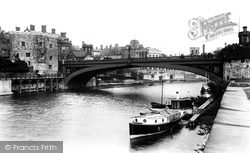
Built of cast-iron, the bridge was opened in 1863 and improved the city by giving direct access to the original railway station, which was situated within the city walls.
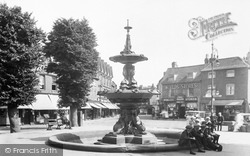
The ancient open space of Frogmoor had from 1877 until the Second World War a fine cast-iron fountain and well trimmed trees.
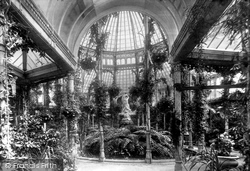
Somerleyton Hall's impressive cast iron and glass-domed winter garden, with its rich abundance of ferns, climbing plants and typical Victorian ornamentation. It was demolished in 1914.
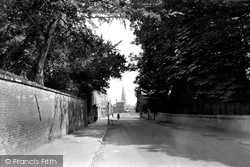
Beyond the high brick wall with its iron restraints, a very good array of Georgian houses lead the eye into the market place and on to St Dionysius Church.
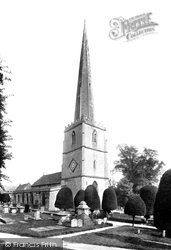
In the tiny square nearby are the town's unusual stocks, made from iron.
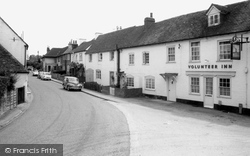
The downlands hereabouts bear the marks of Iron Age dwellers who occupied this valley three thousand years ago.
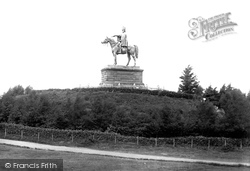
The Iron Duke, depicted here in bronze, originally stood at Hyde Park Corner in London before being dismantled piece by piece and transported to Aldershot by horses.
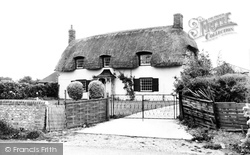
The cottage's window frames pay homage to the cast iron that came with the British industrial revolution.
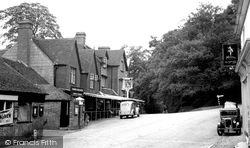
People have certainly lived here since the Iron Age - a fortification from that period on Burley Beacon Ridge guards the surrounding heathland.
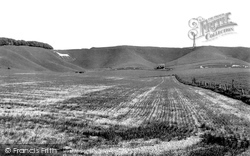
On the top of the hill are the remains of Oldbury Castle (an Iron Age fort) and the striking Lansdowne Monument erected in 1845 to the memory of an ancestor of a local landowner.
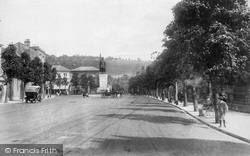
Broadway and its continuation, the High Street, almost certainly follow the line of an ancient trackway that crossed the River Itchen during the Iron Age.
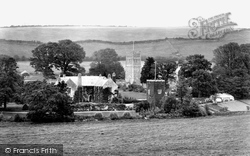
The growing Victorian population of East- the-Water's first place of worship was a prefabricated 'iron church' built in 1881.
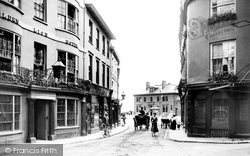
On the left is the Golden Lion Hotel, with its attractive twin shallow bays and decorative wrought-iron balcony.
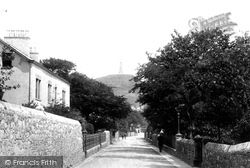
Today, there are more houses along the street and fewer trees, and the iron railings on the left have gone.
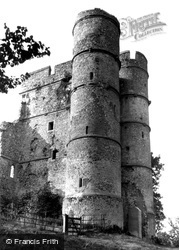
Its primitive and stylised design link it, through coinage, with the ancient Iron Age tribe the Atrebates, who ruled the area before the Roman invasion.
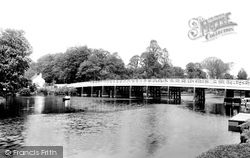
The bridge, which spans the Thames, is famous locally for its distinctive cast iron lattice design.
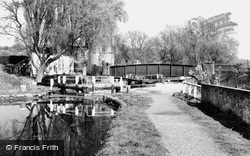
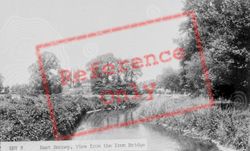
A Thames Trader lorry is crossing the iron bridge.
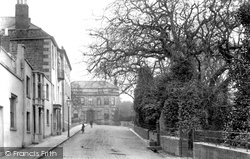
The building on the left with the iron balcony is Great Office, where local mine accounts were handled; it was once the Register Office.
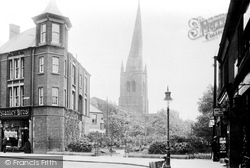
The iron railings probably went for wartime salvage, and a part of the gardens disappeared to make way for car parking.
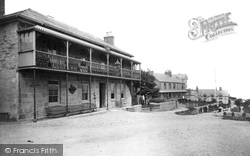
An almost colonial-style veranda with fancy railings is supported on cast-iron pillars with a twisted decoration.
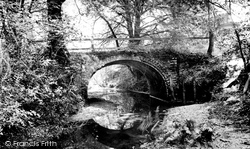
It supplied wood and charcoal to fire kilns for the manufacture of pottery or for the smelting of iron.
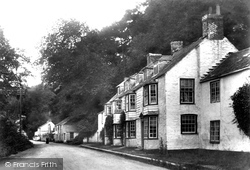
There was a major iron foundry here until 1879: the Williams Perran Foundry imported raw materials and exported goods such as steam engines from the wharf on the creek.
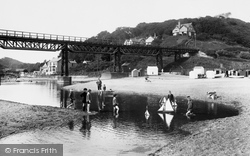
It was a popular place for holidays, even though the village had been spoiled by the ruins of an alum works and an iron bridge that carried the railway line between Whitby and Saltburn.
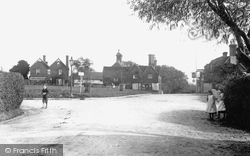
The settlement was once the centre of a local iron-working industry, and the white-painted Gun Inn with its swinging signboard was where John Browne, the local ironmaster, designed ordnance for the navies
Places (4)
Photos (88)
Memories (713)
Books (0)
Maps (70)