Places
Sorry, no places were found that related to your search.
Did you mean: north ness or na h ness or nook ness ?
Photos
12 photos found. Showing results 781 to 12.
Maps
9,582 maps found.
Books
Sorry, no books were found that related to your search.
Memories
4,597 memories found. Showing results 391 to 400.
Ward End Adult School
The Ward End Adult School was held on Sunday mornings in 'The Barn', St.Margaret's Road, Ward End before the 2nd World War. It was run on a sort of religious basis, like a church (non-denominational, I think, but similar to ...Read more
A memory of Ward End in 1930 by
2up And 2down!
My father was born in Ford Street Hockley Brook Birmingham in 1936. He was the youngest of 6, 2 sisters and 3 brothers. Ford Street consisted of a row of houses on one side and factories on the other side. The houses were 2 up ...Read more
A memory of Birmingham in 1940 by
Wouldham 1946 49
Hi, I was born in Wouldham, 3 Castle Street, in 1946 and my family moved away in 1949 but I had a memory of the house that stayed with me all my life. The memory is of a tree in the garden that had a swing that my dad used to ...Read more
A memory of Wouldham by
Clements Hall Childrens Home
My memory of Hockley is staying in a children's home called Clements Hall in 1960/5. It was near a few orchards where we would go scrumping for our midnight feasts. It really was a great place to stay as a kiddy. We ...Read more
A memory of Hockley in 1960 by
Twelve Happy Months
I was born in Nant Gwynant in 1925 and lived there for the first 20 years of my life. In 1944 I was drafted into the army and served in German and Italy. Upon release in 1947, I decided to try and make a career in ...Read more
A memory of Nantgwynant by
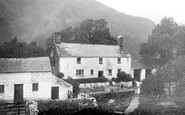
Crosby Rosedale Aveune
I was born in my grandparents' home in Rosedale Avenue in July 1947. I remember Crosby well, the cinema at the top of Endbutt Lane, going to church at St Peter and St Paul's RC Church, seeing the Beatles, and here I am in ...Read more
A memory of Crosby in 1947 by
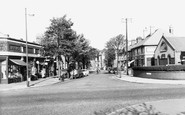
Love That Place!
Born at Petersfield in 1940, my first home was Berry Cottage, down Sandy Lane, opposite Sibley's farm. Berry cottage had only 4 rooms (2 up and 2 down), no running water, only a well and later a tap down in the lane. I remember ...Read more
A memory of Rake Firs in 1940 by
Growing Up In Easebourne
I went to live in Cowdray House, aged 4, in 1951. My father worked in the accounts office in Easebourne village, and I attended Easebourne Primary School (Headmaster was Mr Bevan) along with Barbara Fisher, who also ...Read more
A memory of Easebourne in 1956 by
Colerne In The Second World War Continued
Those of us at Colerne school who passed our 'scholarship' exam at the age of about eleven usually went on to Chippenham Secondary School, which probably goes under a different name now: it's at ...Read more
A memory of Colerne in 1940 by
1962/63 Best Time Of My Childhood
I can't believe this, amazing even if the names are coincidence, I was at Warnham Court 1962-63, I can remember lots of names: Roy Riggs, with his 'German' dictionary. June Palmer. John Thorp, we ...Read more
A memory of Warnham Court School in 1962 by
Captions
1,652 captions found. Showing results 937 to 960.

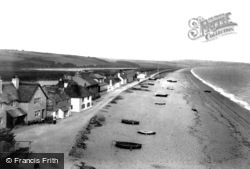
Another view of Slapton Sands, this time looking north. The sea wall is a little more substantial today, otherwise the view is unchanged.
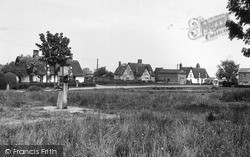
Another harvest from the fen was buckthorn, vital for charcoal, which was used in making explosive fuses during the Second World War.
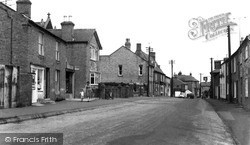
Here on the left is the old post office before it moved to the Green. The library beside it has now expanded to fill the whole building.
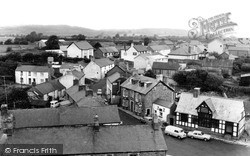
On the right is a half-timbered building that houses a bank.
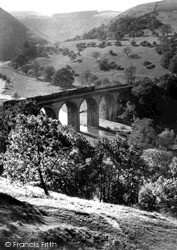
This is another nostalgic picture of steam in the Peak District. It has gone now: but for how long?
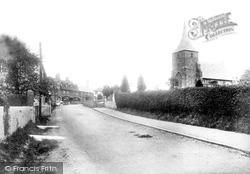
The camera is looking along Church Street, which curves away uphill to the village square of Ticehurst, another Wealden iron-making village.
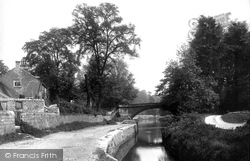
brass plate on it on which the following was inscribed: 'Whoso is hungry, and lists well to eat, Let him come to Sprotbrough, for his meat,And for a night and for a day, His horse shall have both
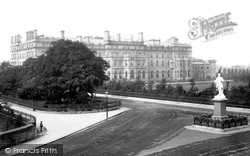
Both thrive to the present day. The first hotel, built about 1851, still stands to the east of the old railway station, and is used by British Rail as offices.
The house has now gone, and the bridge has been replaced by another. This photograph was taken in Lower Monk Street near the weir in Swan Meadows.
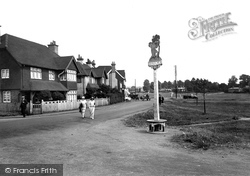
Both are long gone, although smaller firms and businesses occupy those same sites today.
At the opening of the first motorway bridge thirty years earlier, Enoch Williams was reported to have said to an interviewer that traffic would increase to such an extent that another bridge would
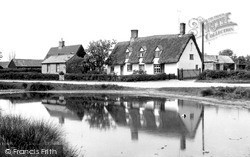
Another harvest from the fen was buckthorn, vital for charcoal.
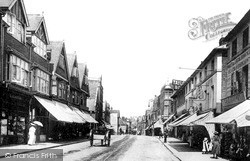
Another view of the High Street at a less congested point and on a very hot and sunny summer's day: the shopkeepers have lowered their sun-blinds to protect their wares, and the lady on the left has
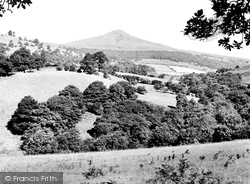
Often you can walk for miles in its foothills without meeting another person.
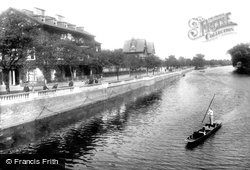
Another glimpse of the Swan Hotel's neo-classical portico can be seen through the leaves on the left.
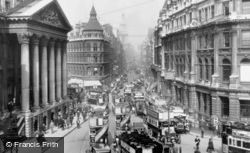
It would be another ten years before roofs were added to the London General Omnibus Company's fleets.
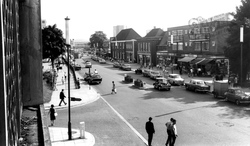
Another view of this central shopping area, demonstrating the planners' clear intention to incorporate greenery in the shape of existing trees, and the flower boxes on the central island reservation.
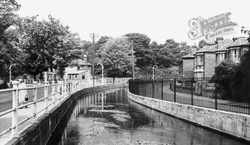
In 1908 another historian record- ed that 'many modern red-brick cottages are now in process of building to supply the needs of the men who are employed in the Eastleigh Railway Works'.
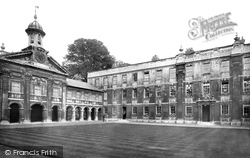
The chapel is another example of Wren's work; it shows Italian influences.
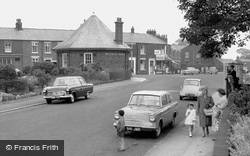
On the triangular village green, far left, is the war memorial and another recording the tragedy in August 1944 when an American bomber aeroplane fell on Holy Trinity village school.
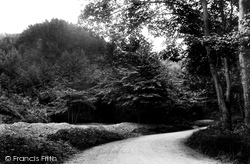
Prinknash Abbey stands on the lower slopes, a small Benedictine community that moved here from Caldey Island in 1928.
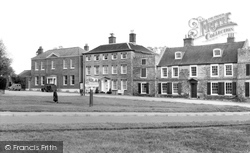
Hingham was responsible for providing New England with many settlers in the 17th century, where they founded another Hingham.
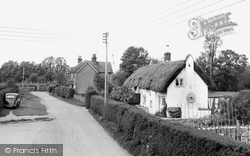
A hundred years before this picture was taken it would have been less desirable, with the nearest passable road a mile away and the best route from one country house to another across the fields.
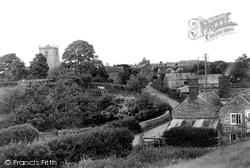
It is to be hoped that these will continue to keep the church standing for another 700 years and more.
Places (0)
Photos (12)
Memories (4597)
Books (0)
Maps (9582)