Places
36 places found.
Those places high-lighted have photos. All locations may have maps, books and memories.
- Shanklin, Isle of Wight
- Ventnor, Isle of Wight
- Ryde, Isle of Wight
- Cowes, Isle of Wight
- Sandown, Isle of Wight
- Port of Ness, Western Isles
- London, Greater London
- Cambridge, Cambridgeshire
- Dublin, Republic of Ireland
- Killarney, Republic of Ireland
- Douglas, Isle of Man
- Plymouth, Devon
- Newport, Isle of Wight
- Southwold, Suffolk
- Bristol, Avon
- Lowestoft, Suffolk
- Cromer, Norfolk
- Edinburgh, Lothian
- Maldon, Essex
- Clacton-On-Sea, Essex
- Felixstowe, Suffolk
- Norwich, Norfolk
- Hitchin, Hertfordshire
- Stevenage, Hertfordshire
- Colchester, Essex
- Nottingham, Nottinghamshire
- Bedford, Bedfordshire
- Bury St Edmunds, Suffolk
- Aldeburgh, Suffolk
- St Albans, Hertfordshire
- Hunstanton, Norfolk
- Chelmsford, Essex
- Bishop's Stortford, Hertfordshire
- Peterborough, Cambridgeshire
- Brentwood, Essex
- Glengarriff, Republic of Ireland
Photos
11,145 photos found. Showing results 921 to 940.

Maps
181,031 maps found.
Books
442 books found. Showing results 1,105 to 1,128.
Memories
29,068 memories found. Showing results 461 to 470.
Genealogy
My GGGrandmother, SARAH BRYANT, was born in Litton in 1839. She married a WILLIAM CARTER of Welton, M.S.Norton. She was the daughter of Thomas Bryant and Emily ??. Thomas was born in Stoke, Som. Emily was born in Ashwick,Som. Thomas was ...Read more
A memory of Litton by
The Second World War
There was an air raid shelter under the green opposite the Three Jolly Wheelers pub. It comprised a number of concrete passageways. My mother my sister and I would use it on occasions when there was a particularly bad ...Read more
A memory of Woodford Bridge in 1945 by
Where I Grew Up Born 1944
My Mum and Dad moved into the village in the 1930's into a new house in Rogers Lane and lived there for 66 years. My father was the village tailor working from a workshop in the back garden. My mother was very ...Read more
A memory of Stoke Poges in 1950 by
Sailing With My Dad
The best memories of sailing with my dad most weekends and baleing water out of the dingy. It leaked.
A memory of Heybridge in 1968 by
Stories Of North Creake
My grandfather, John Arnett, was the teacher at the North Creake school for many years. Four of his sons came to Canada. When I was a little girl growing up in distant Saskatchewan the uncles would gather and tell ...Read more
A memory of North Creake in 1890 by
Salford In The War
As a child I lived in Earl St Hanky Park then moved to Cottrill St off Ellor St. I attended John St school in the Ellor St area. I never really knew my dad. He went in the army when I was 4 years old in 1939 and returned in ...Read more
A memory of Salford in 1930 by
Frognal Hampstead London Nw3 6yd
Frognal was mentioned in the early 15th century as a customary tenement and in 1740 Frognal field was the eastern abutment of Northfield, part of the demesne. By the 17th century there were several cottages and ...Read more
A memory of Hampstead by
Gowers Bridge
Gowers bridge was not too far from where we lived and was a great place to take the children for a picnic, to learn to ride a tricycle and to skim stones across and see who won, then pick our way to Llyn Bwrw Eira, along the banks, ...Read more
A memory of Llanrwst in 1956 by
The Watford To Rickmansworth Railway In The Second World War
Croxley Green station is now - in the 21st century - merely a shadow of its former busy life. My Auntie Dorrie (Doris Lacey) worked at this station throughout the Second World War ...Read more
A memory of Croxley Green in 1940 by
Catching A Train
After visiting my aunt and uncle who were the Matron and Superintendant of the Banstead Residential School, which was adjacent to the railway line, my mother and I would hasten along to the station to begin our journey home. If a ...Read more
A memory of Banstead in 1930 by
Your search returned a large number of results. Please try to refine your search further.
Captions
29,395 captions found. Showing results 1,105 to 1,128.
Acorns were the main source of food for pigs in Norman England, and pigs were an important source of food for many Lancashire villages.
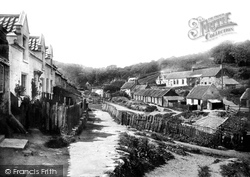
Nestling in the shelter of Lythe Bank, the ancient village holds the homes of many of the men who worked in the alum industry and on local estates.
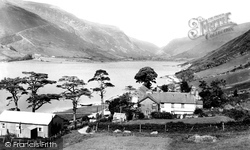
In translation, Tal-y-Llyn means 'the end of the lake': that aptly describes the location of the village, with its little church and inns in the shadow of Cadair Idris.
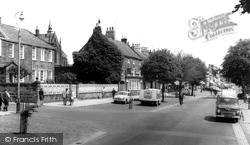
The Sunnyfield Estate originally comprised a large area of 'pleasure grounds and grass land' to the north of Westgate.
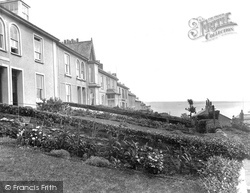
This fine terrace of houses is another indication of improved housing design and of the spread of St Ives onto the higher ground overlooking St Ives Bay.
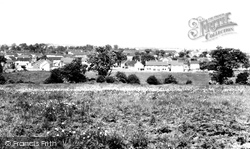
Until the turn of the 20th century Basildon was just a collection of small villages.
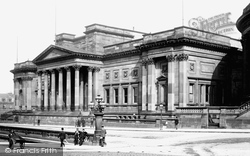
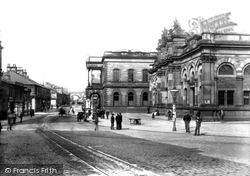
The William Brown Library, with its fine portico of six Corinthian columns, was built in 1860 to house the natural history collection of the 13th Earl of Derby; this had been bequeathed to the town in
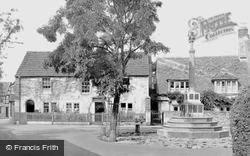
FOR MANY YEARS, after the decline of the weaving industry, the manufacture of rubber linked the two West Wiltshire towns of Bradford on Avon and Melksham.
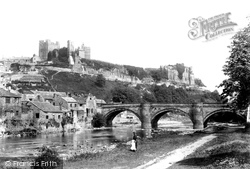
Richmond's Norman fortress was begun by Alan the Red of Brittany in 1071 and dominates the entrance to Swaledale.
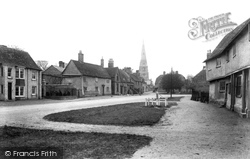
The village of Spaldwick lies at the centre of a medieval estate which included most of the neighbouring settlements. The church in the background is known as 'the cathedral of the valley'.
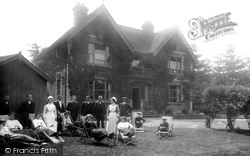
The assembled staff pose outside a sanatorium for tuberculosis patients from London set up just outside the village of Ockley.
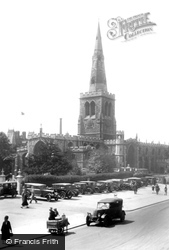
The cars occupy the site of the first Corn Exchange, which became the Floral Hall after its replacement opened in 1874.
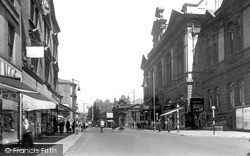
In the early-1850s, an old soldier lived in Tunstall who, because he was a veteran of Wellington's army at Waterloo, went by the name of 'Waterloo'.
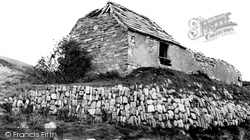
Seen as a ruin, looking east from the beach of Worbarrow Bay, stone-roofed Sea Cottage was the home of generations of the Miller family.
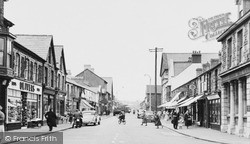
Treorchy is the capital of Rhondda Fawr, and on a historical note, is listed in 1977 as the place in which the female workforce numbered the same as the male - an indication of the locality's well-documented
In the early-1850s, an old soldier lived in Tunstall who, because he was a veteran of Wellington's army at Waterloo, went by the name of 'Waterloo'.
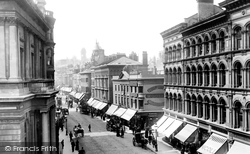
New Street was the scene of many events. Large crowds gathered along it for the laying of the foundation stone of the Masonic Hall.
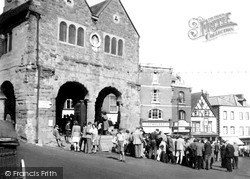
The Market Hall, built of red sandstone, dates from the mid 1600s and stands on the site of an earlier hall. The carving between the windows is of a bust of Charles II.
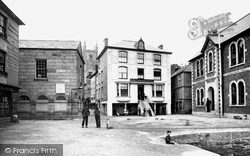
Fowey, the 'Troy Town' popularised by the Victorian writer Quiller Couch, is blessed with a spacious natural harbour, and was once one of the foremost seaports of Britain.
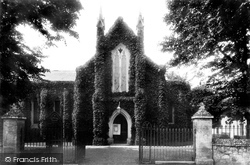
All Saints was built in 1837 on land donated by Sir John Kennaway. Construction cost £3,000 of which £1,500 was given by Rev Joseph Bradney.
A quarter of a century apart, this and the previous view of the High Street show how little it changed throughout the 20th century, with the exception of traffic problems and an increased number
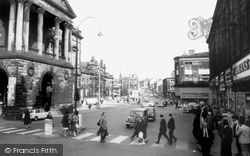
An elegant lamp standard adorns the zebra crossing in front of the Town Hall, and hanging baskets brighten the stonework.
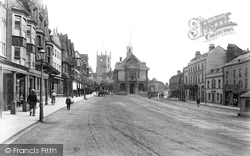
Dominant in this photograph of the east end of the High Street is the Town Hall, which at the date of this photograph had just been rebuilt by local architect C E Ponting.
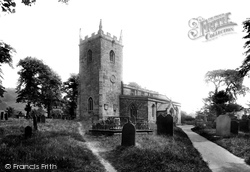
Eyam`s parish church of St Lawrence has many memories of the tragic visitation of the plague in 1665-6.
Places (6814)
Photos (11145)
Memories (29068)
Books (442)
Maps (181031)