Places
36 places found.
Those places high-lighted have photos. All locations may have maps, books and memories.
- Shanklin, Isle of Wight
- Ventnor, Isle of Wight
- Ryde, Isle of Wight
- Cowes, Isle of Wight
- Sandown, Isle of Wight
- Port of Ness, Western Isles
- London, Greater London
- Cambridge, Cambridgeshire
- Dublin, Republic of Ireland
- Killarney, Republic of Ireland
- Douglas, Isle of Man
- Plymouth, Devon
- Newport, Isle of Wight
- Southwold, Suffolk
- Bristol, Avon
- Lowestoft, Suffolk
- Cromer, Norfolk
- Edinburgh, Lothian
- Maldon, Essex
- Clacton-On-Sea, Essex
- Felixstowe, Suffolk
- Norwich, Norfolk
- Hitchin, Hertfordshire
- Stevenage, Hertfordshire
- Colchester, Essex
- Nottingham, Nottinghamshire
- Bedford, Bedfordshire
- Bury St Edmunds, Suffolk
- Aldeburgh, Suffolk
- St Albans, Hertfordshire
- Hunstanton, Norfolk
- Chelmsford, Essex
- Bishop's Stortford, Hertfordshire
- Peterborough, Cambridgeshire
- Brentwood, Essex
- Glengarriff, Republic of Ireland
Photos
11,145 photos found. Showing results 1,001 to 1,020.

Maps
181,031 maps found.
Books
442 books found. Showing results 1,201 to 1,224.
Memories
29,068 memories found. Showing results 501 to 510.
1901 Census
This is actually a memory of my father, who is listed in the census of Wales for 1901 as being a quarryman, lodging at Cidwyn View, Betws Garmon aged 21. I hope to visit the village (?) this Sept. and also the quarry. I would love to know if this house still stands.
A memory of Betws Garmon in 1900 by
Mill Street Clowne. 1950
The gentleman pushing a cart in the foreground of this picture is my grandfather, Ernest Pearce (1895-1970). The cart was used to transport bundles of sticks that he cut for sale as firewood. They were sold for 4d a bundle. ...Read more
A memory of Clowne in 1950 by
My Grandparents Home
My grandparents Isabella and Jack Lymer and my Uncle Victor Lymer lived above the cafe until my nan's death in 1968. When I was young it was the flat to the left as you look at the picture. It is now the hairdressers. My mum ...Read more
A memory of Newbiggin by

1901 Wickhambreux
Sarah Clayden Rudd nee Wacey and her daughters lived in Wickhambreux. They were listed there at the time of the 1891 census as living 'the green' and in 1901 she and her daughters, Sarah and Rebecca, are living there and ...Read more
A memory of Wickhambreaux in 1890 by
North Road Looking North From Church Street, Fen Street Junction
Previous memories talk about The Talbot Inn and on the left hand corner (Church Street Corner) Marshall's the newsagents . Before the village was bypassed around 1956 the Newsagents ...Read more
A memory of Stilton in 1954 by
Even Better Today
I still visit this church, although it is locked much of the time. It looks even better today than it did way back then. The village of 'Send' was supposed to have been built around this church (I am told), however it ended up a ...Read more
A memory of Send by
Where I Grew Up
I lived most of my life in Sible Hedingham, as a family we moved there from London in 1962. I was just 2 years old at the time. My father Robert Farren, "Bob" as he was best known and my mother Ivy, took over the licence of ...Read more
A memory of Sible Hedingham in 1962 by
Living In Wickford
I lived in Wickford until 1963. My sisters and I would walk down London Road to the high street, first stopping at the little sweet shop and then looking into the windows of Prentice. I got my first 2 wheeler there in 1954. We ...Read more
A memory of Wickford in 1954 by
Growing Up In Westend In The 70s And 80s
I was born in 1965 and grew up in Westend. I moved to America in 1988 and have only been back to visit once since then back in 1989/90. I can't really imagine how much the village has ...Read more
A memory of West End by
Inherited Postcard
I have an original postcard of this picture from the Frith Series. It is unstamped and printed on the card is "Affix Half Penny Stamp". Handwritten on the card is "The seat of Mr Tremayn & about one mile from here" Also printed on the card is F. Frith & Co Ltd, Reigate, No 21284
A memory of Morval by
Your search returned a large number of results. Please try to refine your search further.
Captions
29,395 captions found. Showing results 1,201 to 1,224.
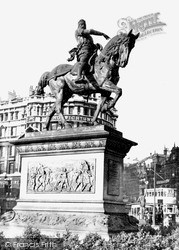
This statue by Brock is of Edward of Woodstock, better known as the Black Prince on account of his black armour.
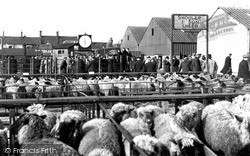
The clothes of the traders may have changed, but Melton has been at the centre of the sheep farming industry for a number of centuries.
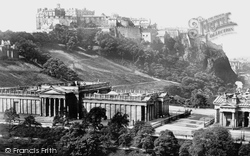
The Edinburgh Castle we see today is, with a few additions, that built by the Earl of Morton following the siege of 1572.
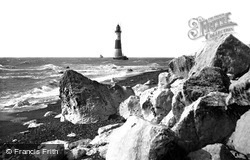
At the eastern extremity of the South Downs, the Royal Sovereign Lighthouse at the foot of Beachy Head warned shipping of the hazards of the chalk cliffs, which now lie under the sea.
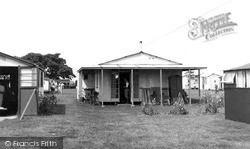
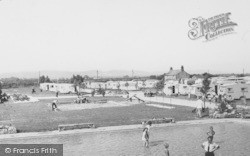
This is one of the larger chalets with a garage at the side. Some of the much-loved deckchairs of the period are leaning against the wall, with bicycles for transport.
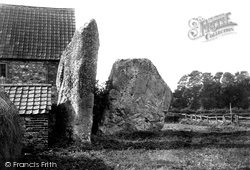
In the middle of the northern inner circle stands the Cove; it originally consisted of three stones, of which two now remain.
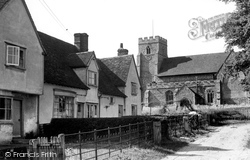
This row of cottages started life as one 15th-century house of the hall-and-wings type. It is now all one house again. St Michael`s Church is mainly early 14th- century.
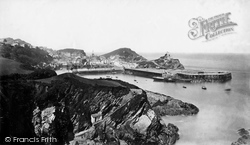
At the top of Lantern Hill (centre right), 100 feet above sea level, stands the Chapel of St Nicholas, patron saint of sailors, fittingly enough, and also of scholars.
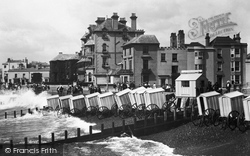
Beyond the line of bathing machines, waves crash against the beach in this turn-of-the-century photograph. Much of the town's architecture dating from this period survives today.
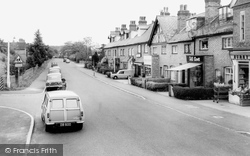
A local landowner, the Earl of Plymouth, encouraged the building of Barnt Green Station (on the left here) for the convenience of his tenant farmers.
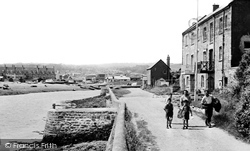
Axmouth's harbour, a mile from the heart of the village, is as picturesque as when the Frith photographers took this series of photographs.
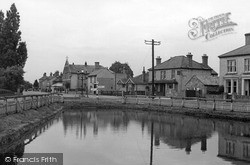
The weir is at the junction of the roads to Chatteris and Ramsey. The manor of Warboys was held by the Cromwell family until 1622, when it was sold to Sir John Leman, Lord Mayor of London in 1616.
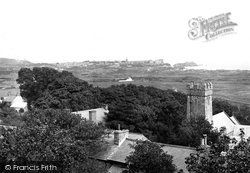
The 16th-century tower of the church of St Nicholas and St Teilo rises above the rooftops of leafy Penally. The tree line follows the line of the Tenby Pembroke railway track.
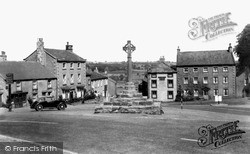
The weathered steps of the ancient Market Cross at Middleham show the antiquity of this medieval township at the mouth of Wensleydale.
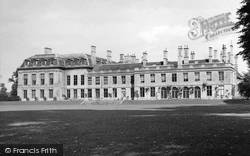
Boughton House lies about one and a half miles to the south-east of Geddington. Situated in its own magnificent parkland, the house has been described as the 'English Versailles'.
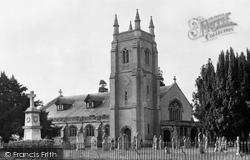
Approaching the village from the west along the Botley Road, we see on the right All Saints' Church, built in 1836 in Early English style. The village war memorial is on the left of the picture.
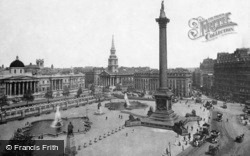
Sir Robert Peel called it ‘one of the finest sites in Europe’.
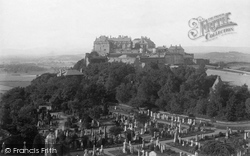
To the left of the gatehouse can be seen the royal palace of James V, which abuts James IV's Prince's Tower.
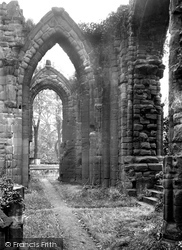
Construction of St John's Priory was begun about 1075-76 when the Bishop of Lichfield, Peter de Leia, transferred the seat of his diocese to Chester.
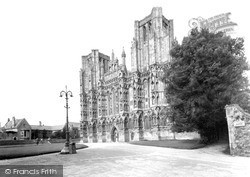
The faces on the statues, probably the portraits of local inhabitants, were meticulously painted, despite the fact that the artists and sculptors knew they were not visible from below.
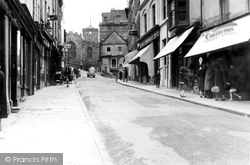
A branch of Stead and Simpson, a shoe shop, is on the right directly opposite Cash & Co, also a shoe shop. Below and to the right of St Mary's Church we can see the gable end of the Old Post Office.
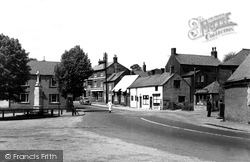
The A47 Leicester-Uppingham road forms one side of the roughly triangular market place; although the photograph shows, in the main, modest cottages of 17th- and 18th-century date, more impressive houses
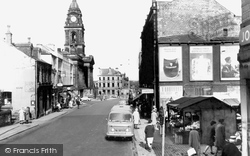
Looming over the town is the tower of the town hall, clearly more than a little influenced in its design by its more prestigious neighbour at Leeds.
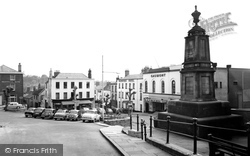
'Chepe' and 'stowe' combine to mean 'market place', which indicates the early origins of this town.
Places (6814)
Photos (11145)
Memories (29068)
Books (442)
Maps (181031)