Merry Christmas & Happy New Year!
Christmas Deliveries: If you placed an order on or before midday on Friday 19th December for Christmas delivery it was despatched before the Royal Mail or Parcel Force deadline and therefore should be received in time for Christmas. Orders placed after midday on Friday 19th December will be delivered in the New Year.
Please Note: Our offices and factory are now closed until Monday 5th January when we will be pleased to deal with any queries that have arisen during the holiday period.
During the holiday our Gift Cards may still be ordered for any last minute orders and will be sent automatically by email direct to your recipient - see here: Gift Cards
Places
4 places found.
Those places high-lighted have photos. All locations may have maps, books and memories.
Photos
68 photos found. Showing results 141 to 68.
Maps
70 maps found.
Books
Sorry, no books were found that related to your search.
Memories
713 memories found. Showing results 71 to 80.
Market Drayton Revisited
I visited my mother in the Midlands (Shrewsbury)recently. A trip to Market Drayton on Wednesdays is mandatory (my stipulation) each time I travel from my home in Essex where I have resided for many years now. ...Read more
A memory of Market Drayton in 2010 by
Triggered A Few More Memories
Waterloo in the 1940s to 1950s My early memories are of Waterloo where I used to live at Winchester Avenue until 1958. My father died there in 1989. On College Road there were air raid shelters which me and ...Read more
A memory of Waterloo by
Notes From The Frith Files.
This photograph shows residents waiting for the No.144 Midland Red bus from Malvern to Worcester outside the village shops. Far left is EW Bird's butchers, left is Cromptons newsagents, off picture further left is Procters ...Read more
A memory of Powick
Ye Olde Gate House
This picture is of the Old Gate House, taken from the West Street side. The sign over the front door was "Ye Olde Gate House". It was a very old house and is shown on some of the old maps of Wilton. It had two addresses - The ...Read more
A memory of Wilton in 1920 by
Rivacre Baths.
For those who never saw (or may have forgotten), the photo shows the view you had after coming in through the main entrance. The large fountain can be seen in the foreground, and was enjoyed by many children as they ran around ...Read more
A memory of Little Sutton in 1947 by
Fair Green
I lived in that stange area of Mitcham known as Lonesome, situated between the level crossing at Eastfields and the bottom of Streatham Vale. It was a sort of 'No Man's Land'. My schooling from 1951- 1957 took place first at the wooden ...Read more
A memory of Mitcham in 1958 by
Ffynnongroyw
I read with interest the account of Ken Davies and his childhood memories of the Garth Mill in Ffynnongroyw. We moved to Llinegr Farm on October 2nd 1961 (I was 7) and moved on November 6th 1988 after my father's death. I remember ...Read more
A memory of Ffynnongroyw in 1961 by
Paddock Wood Huts
Not sure how long I went with my grandparents, then when they passed away my parents, but I was born in 1941 and I know we were still going there until we migrated to Australia in 1961. We 'lived' in the first hut on the ...Read more
A memory of Paddock Wood
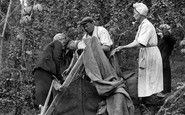
Escrick Park Gardens Market Gardens 1950 1966
My aunt and uncle - Mr and Mrs George Pratt - used to manage the market gardens in Escrick. We had many happy holidays there, and I remember the peaches and apricots growing up the wall, rows and rows ...Read more
A memory of Escrick in 1950 by
Cissiess Memories
Cissie's memories: I came to Barry in 1900. Holton Road was muddy and planks of wood were put down to enter the shops. We had a shop in 26 Holton Road, and later at the bottom of the block on spare ground Johnson's opened a ...Read more
A memory of Barry in 1900
Captions
788 captions found. Showing results 169 to 192.

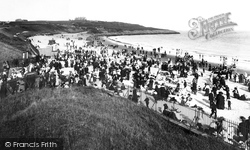
Iron railings have now been erected, with a path from the promenade leading to the beach. As the season got under way, more and more attractions appeared.
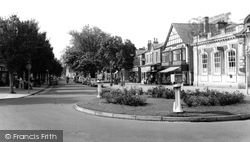
The Roman Catholic Chapel pre-dates the iron horse, having been built in 1798. Later churches, however, include St Luke's at Raven Meols (1852-55) and Holy Trinity (1890).
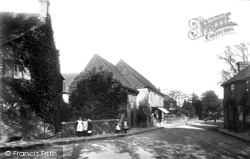
This little village on the edge of Ashdown Forest was a centre of the Wealden iron industry. It once had three foundries, the last of which became a gunpowder mill in 1849.
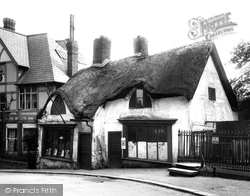
The gateway through the iron railings on the right leads into the Verdin park, which lies just behind.
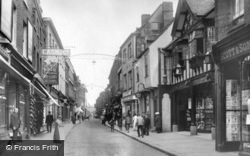
Spanning the street are a pair of open decorative iron arches on which are hung the town lamps. On the left is a formidable display of boots and shoes cascading over the shop facia.
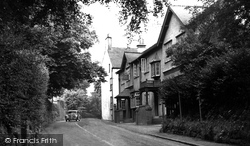
It still looks the same as in this photograph, apart from a fresh white coat of paint and a new pub sign hanging from the wrought iron wall bracket.
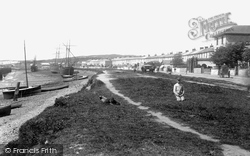
Yet it was a prosperous port and boasted thriving iron foundries and an early copper-smelting house.
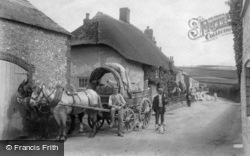
Many visitors walk up to the Iron Age hillfort of Eggardon. One such rambler was Thomas Hardy, who famously used the ramparts as a setting in his novel 'The Trumpet Major'.
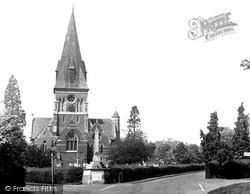
The gates to the churchyard are cast iron and very obviously much older, perhaps from the previous church which was built on the site in 1839.
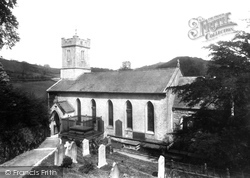
An ancient iron bloomery, or furnace, was discovered in St Paul's churchyard in 1912 when the church was being extended; this is very appropriate for the churchyard that is the last resting place
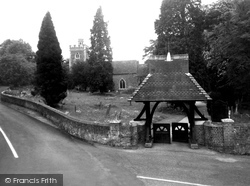
An hourglass on an elaborate iron stand carries the arms of the Farriers' Company, London, and is a unique expression of the blacksmith's art of the time - 17th century - with leaves and grapes, a
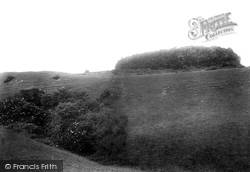
Situated near to the junction of two Roman roads and several prehistoric trackways, the Iron Age hillfort of Badbury Rings dominates the surrounding downland.
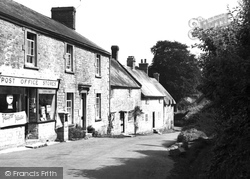
Many visitors walk up to the Iron Age hillfort of Eggardon. One such rambler was Thomas Hardy, who famously used the ramparts as a setting in his novel 'The Trumpet Major'.
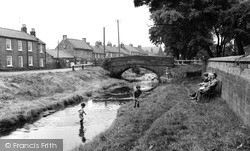
Some of the sandstone cottages in the village of Swainby are still known as the Miners' Cottages, remembering the village's brief spell as an iron mining centre during the 19th century.
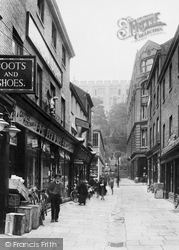
Unfortunately, the cast-iron framed building in the distance has long gone.
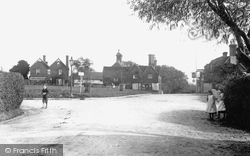
The settlement was once the centre of a local iron-working industry, and the white-painted Gun Inn with its swinging signboard was where John Browne, the local ironmaster, designed ordnance for the navies
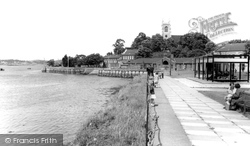
Wooden seats have replaced the old iron ones, but the fascination of the river for amateur photographers and for children is evidently unchanged.
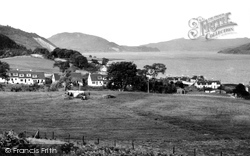
At Furnace, a small town hugging the western shores of Loch Fyne, iron-smelting works were established in the early 19th century.
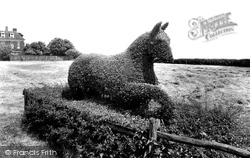
This horse represents a supremely ironic comment.
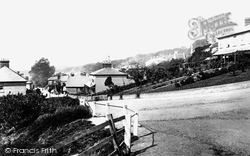
Attractive wrought iron fencing surrounds the long gardens on the right.
In the next century, industrial production made cast-iron gutters cheaper and they were more effective at this task.
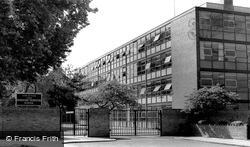
The playground is still surrounded by its hairpin iron railings.
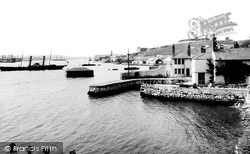
These seem to have more in common with Nelson's navy than with the iron-clad battleships that were starting to dock at Devonport at this time.
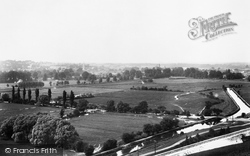
Beyond the water meadows of the River Itchen is the Iron Age hillfort of St Catherine's Hill, the site of a maze which perhaps was used by penitent local monks, who would be blindfolded as they attempted
Places (4)
Photos (68)
Memories (713)
Books (0)
Maps (70)