Places
Sorry, no places were found that related to your search.
Photos
Sorry, no photos were found that related to your search.
Maps
7,034 maps found.


Books
163 books found. Showing results 2,809 to 2,832.
Memories
22,912 memories found. Showing results 1,171 to 1,180.
Part 12
Hetton Council then cleaned up the remainder of the site, put on topsoil, and turned it into a sort of small park. There are some articles I have from the local paper published at the time giving a bit more insight to what happened. ...Read more
A memory of Middle Rainton in 1945 by
Burdon Hay Loft
My friend, Shiela Thompson, lived in a cottage at Burdon. Her father used to work on Burdon farm, he must have been a labourer as I remember him always working. My brother and myself used to cycle up to the farm on a weekend and ...Read more
A memory of Ryhope in 1962 by
Wars Years And A Little After In Russel Road, N13.
I lived in 75 Russell Road, Palmers Green during the war years and after. Although very young, I remember the doodle-bug coming over our house and landing in Brownlow Road I believe, also ...Read more
A memory of Palmers Green in 1940 by
Lido
My mother was born in Margate and we spent our holidays there from early 1950s-1970s staying with grandparents. Does anyone remember the puppet theatre in The Lido? I remember my parents taking me there when we were on holiday. I think ...Read more
A memory of Cliftonville by
Hounslow, Osterley Park C1965
I went to Isleworth Grammar School between 1956 and 1961. At lunchtime my friends and I used to cycle to Osterley Park. We used to stop on the way at the bakers in Thornbury Road and buy "stale" cakes for a 1d each. ...Read more
A memory of Hounslow in 1960 by
Marton
I attended Marton between 1961-1965. I am a catholic, so we went to church by car, as there was only a few of us. I remember the long walks on Sunday afternoon. The pictures on a friday night, girls on one side, boys on the other, with ...Read more
A memory of Whitegate in 1960 by
Methodist Chapels
I was born in Braunston in 1941 but was taken to Hellidon as a baby to live with my mother's parents, the Burbidges. In Hellidon, the Methodist church was closed during the war period, so I was taken to the Methodist ...Read more
A memory of Priors Marston in 1941 by
Miss License's Class
I also, remember my first day at the old school in Miss License's class, using chalk on slate. I was born in 1952 and must have gone there in 1957 for a couple of years, because I can also remember being in Miss Goodchild's ...Read more
A memory of Salfords by
Family Reunion At Easter Time.
My mum's family, the Tame's, owned Shilla Mill during the war. In 1975 we stayed there over Easter for a family reunion.
A memory of Polzeath in 1975 by
Childhood Visits
My family built and lived at Merthyr Mawr. My grandfather was a younger son, so left there when he grew up and married, to another Nicholl. However he managed the estate and when I was a small child we would regularly visit ...Read more
A memory of Merthyr Mawr in 1940
Your search returned a large number of results. Please try to refine your search further.
Captions
9,654 captions found. Showing results 2,809 to 2,832.

In 1322, the Earl of Lancaster sought refuge in the local church following his defeat by Edward II.
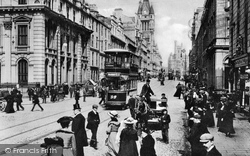
The chief thoroughfare of Aberdeen, Union Street at this time was three-quarters of a mile long, 70 ft wide and built entirely of granite.
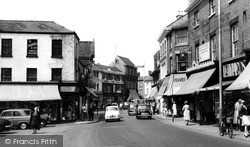
Older buildings are to be found behind the innocuous facades of 18th- and 19th-century prosperity in Melton, which was boosted by its being at the centre of the hunting world, and by its prosperous sheep
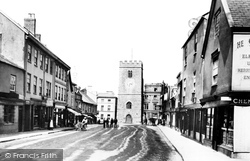
Newton Abbot and Newton Bushel were two discrete settlements at the head of the Teign estuary when William of Orange arrived there from Brixham in 1688, on his way to displace James II as King of England
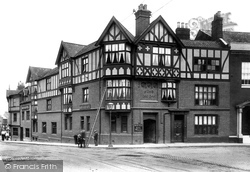
Barely 12 years old at this time, and still looking pristine, this mock-Tudor hotel was rebuilt and reworked by Herbert Green.
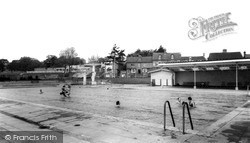
Uttoxeter's open-air swimming pool was built in 1964; at first its use was seasonal.
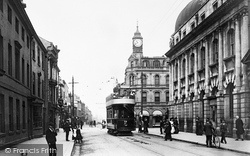
Other tramway systems closing that year included Aberdare, Burnley, Darwen, Erith, Norwich, Preston, Warrington and the short-lived system at York.
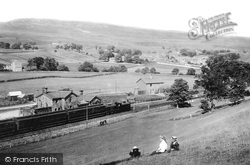
Askrigg station is on the North Eastern Railway route between Northallerton and a conection with the Midland Railway at Hawes.
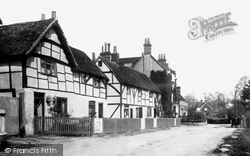
These are typical of many of the cottages in Greywell, which were plastered and painted white at this time.
Several houses in Silver Street date back to Elizabethan times.
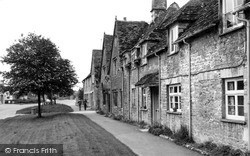
Several houses in Silver Street date back to Elizabethan times.
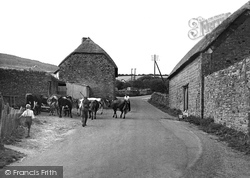
This evocative photograph shows cattle being rounded up at Chideock (always pronounced with the 'e' silent), on a peaceful day over half a century ago.
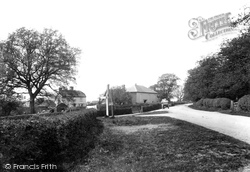
An evocative picture of the signpost and a cart at this scattered hamlet in the wooded hilly Weald south-east of Wadhurst.
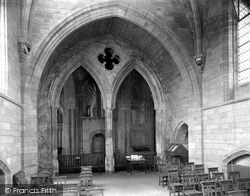
The twin arches, with the quatrefoil over, are all that remain of the 13th-century Lady Chapel.
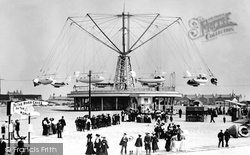
The Pleasure Beach actually started as a fairground on the South Shore. One of the early rides was the Sir Hiram Maxim Flying Machine.
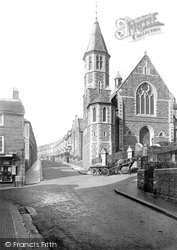
Methodists who broke from the parent society in St Ives in 1838 to form a Teetotal Society later joined the 'New Connexion' Methodists at the end of the 19th century, and moved to this neo-Gothic building
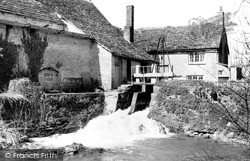
Water and water power have had a strong influence on the development of the town, which is hardly surprising, as it stands at the confluence of three rivers, the Thames, the Coln and the Leach.
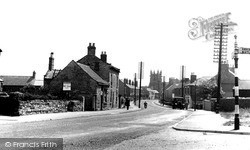
The pinnacled tower of Swanwick's parish church stands four-square at the end of Derby Road.
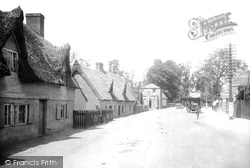
Thatched cottages abound in this view of Trumpington. At this time, the village was separate from Cambridge.
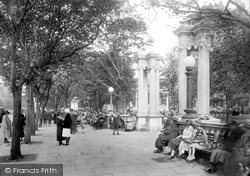
This was a popular place to sit and watch the world go by. By 1924 Southport had a resident population in excess of 51,000, having grown only fractionally since 1901 when it stood at 48,000.
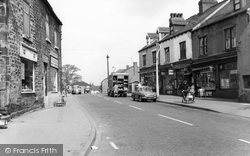
Bramley lies 2 miles east of Rotherham.
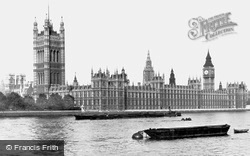
It is a summer morning, and high tide outside the Palace of Westminster, with barges at anchor. To the left is Westminster Abbey.
This was a popular place to sit and watch the world go by. By 1924 Southport had a resident population in excess of 51,000, having grown only fractionally since 1901 when it stood at 48,000.
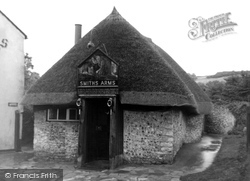
Once the village smithy, the inn at Godmanstone is said to be the smallest public house in England. The beautifully-thatched building measures only 20?ft by 10?ft; it is about 500 years old.
Places (0)
Photos (0)
Memories (22912)
Books (163)
Maps (7034)