Places
2 places found.
Those places high-lighted have photos. All locations may have maps, books and memories.
Photos
232 photos found. Showing results 41 to 60.

Maps
34 maps found.
Books
Sorry, no books were found that related to your search.
Memories
469 memories found. Showing results 21 to 30.
1970's And 1980's East Ham Memories
I left East Ham behind around 1983 for Essex, my mother and father told me we were moving because East Ham was changing, becoming dirty and run down, I was devastated. Recently I have met up with old class mates ...Read more
A memory of East Ham in 1983
Mothers Memorys
Aunt Gladys had a lovely wedding at Ospringe church, bells rang and choir boys sang. We had lovely pink silk dresses and everything to match. Aunt Gladys married Wally Fever. Uncle Wally's parents lived in a big white house in ...Read more
A memory of Ospringe in 1910 by
Boyhood Memories From 1952
It was around this time that the tram lines were taken up from Sunderland Road in Gateshead. The men stored the old lines in Somerset Street and Devonshire Street. As boys we would dig up the tar from around the ...Read more
A memory of Gateshead in 1952 by
Re Story Of Tales From My Father
I still hear all the tales of those days from my father,who spent his holidays at Number 37 with the Offer family and was sent there during the Second World War as a child, he also knew your father Reginald ...Read more
A memory of Compton Bassett by
Streatham Common The Grove Area
I used to be taken by my mother to the White House for a picnic tea with my sister. Although we had a huge garden ourselves, we loved going there. Sadly a young woman was murdered there in the 1950s ( I think) by ...Read more
A memory of Streatham in 1950 by
Holes, Hoardings & Hythe Ferry
On returning from the Middle East, my family holed up across the water at Fawley. A big city was very exciting for me and after getting off the Hythe Ferry it was all bomb craters up to about the Dolphin. Above Bar ...Read more
A memory of Southampton in 1954 by
What A Joy!
I am Pewsey born and bred and what a joy it is to discover a site where memories of our country's unique village life can be shared and stored for the future. So much to share about Pewsey life... I remember playing with all the ...Read more
A memory of Pewsey in 1976 by
Ealing Village
From the year I was born (1968) until the mid nineties I was brought up in Ealing Village, just off Hanger Lane. I have many fond memories of doing such things as building camps behind the tennis courts or in the White house, riding ...Read more
A memory of Ealing by
Lost Village Of East Holywell
I was born in East Holywell in 1946 and lived at 24 North Row. By then there were only 2 rows of houses left. We lived with my grandmother, Eva Barnfather, who had been there since the turn of the century. Like ...Read more
A memory of East Holywell in 1950 by
Part 7
There was no running hot water, no gas, no bathroom and no flushing toilets. Electricity was used for lighting and if you were lucky, a wireless set. Most sets were run from accumulators, a sort of battery, which you had to take to ...Read more
A memory of Middle Rainton in 1945 by
Captions
173 captions found. Showing results 49 to 72.
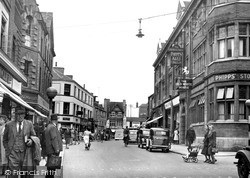
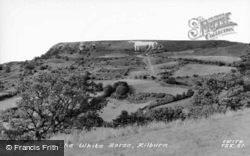
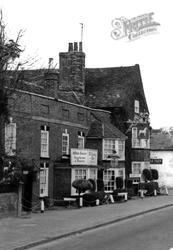
The Old White Horse has gone, and so have the buildings on the left.
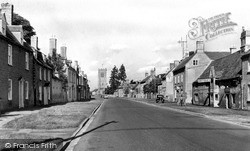
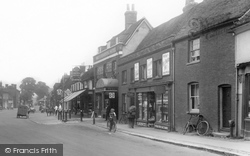
Again, the buildings are the same today - in fact the only difference is the addition of a telephone box in front of Willoughby House on the left.
Again, the buildings are the same today - in fact the only difference is the addition of a telephone box in front of Willoughby House on the left.
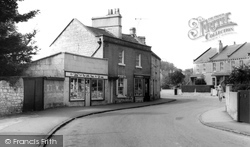
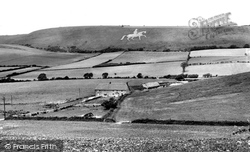
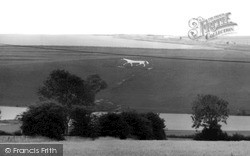
Westbury Avenue, to the right, was named because of its view to Westbury White Horse in Wiltshire. The Little Shop was formerly a stationer's, and Sanders, to its right, was the post office.
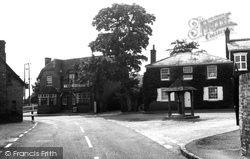
The pub has changed from the White Horse to the Swan, but is still a Tolly house.
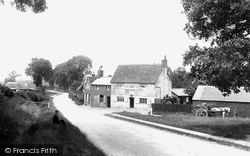
The inn was originally called the Harrow, but changed its name to the White Horse in 1769.
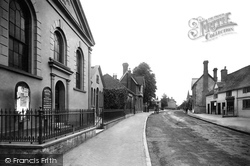
The buildig on the right is part of the White Horse public house, with the cottages of Clementina Carpenter, a tobacconist, and John Fosbury, a boot and shoe maker.
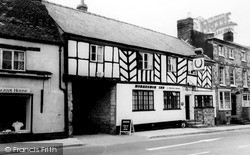
Another was the thatched-roofed Black Horse.
Another was the thatched-roofed Black Horse. In the 1920s the Auto Cycle Union (similar to the AA and RAC) recommended both the George Hotel and Ye Olde White Bear as being suitable for its members.
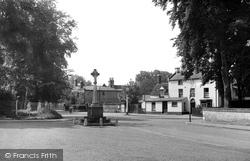
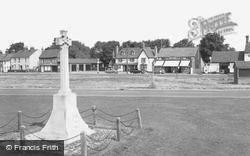
A visitor from 1955 would be rather confused by this view (taken from the gateway of Cotton End House), as the war memorial was moved in 2001 from the centre to the right-hand side of the road and
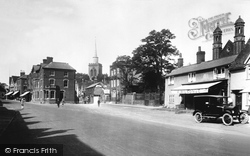
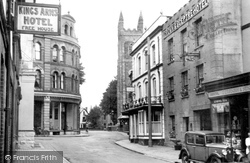
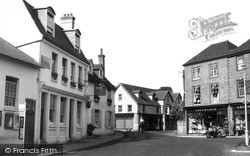
Here we see the junction of White Horse Street and Sun Street, leading to St Mary's Church with its 13th-century tower and prominent spike.
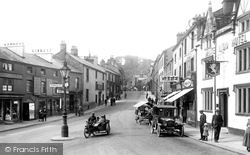
Our photographer is standing in Church Street.The early markets were held in this area of the town.The White Lion Hotel on the right is still there today, and so is W D Cunliffe the grocers and bakers.Three
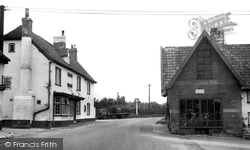
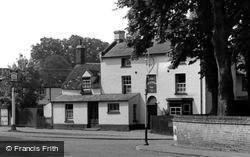
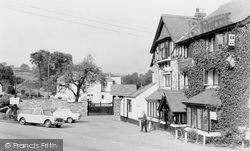
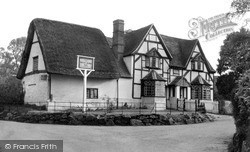
The White Horse is a timber-framed building of 1694, later encased in Victorian brick when the far bay was added. On the left is the corner of the shop, with its penny bubble gum dispenser.
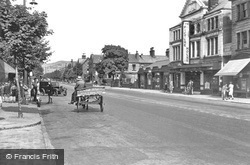
Panama-hatted Tom Roe, 'Dealer in Worn-out Horses' (perhaps a grand name for a rag and bone man), clip-clops his way down the Skipton Road through Keighley.
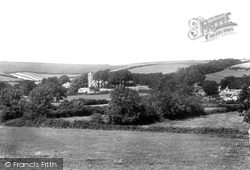
This was half a mile south of Litton Cheney towards the White Horse Inn, which was kept by Henry Watts Greening for half a century.
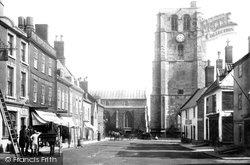
The White Horse (far left), a pub since 1764, was run by William Beckett. The Peoples' Clothier (left) was Morris Sparling, then North's, and is now Coe's.
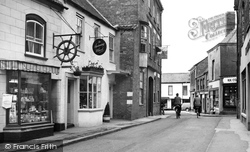
The arched entrance to The White Hart (centre) reminds us that this inn, along with others in the town such as The Berkeley Arms, rang to the clatter of hooves in the days of horse- drawn coaches.
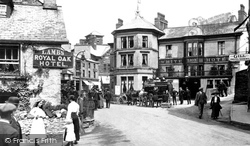
As we move further down the main street, no less than three hotels are now in view: the Queen's peering round the corner (centre left), the impressive White Lion and the more humble Royal
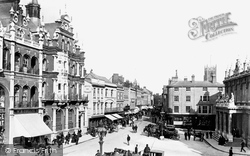
On the left is the red brick and stone Lloyds Bank building, with its fretted skyline, while to the right is the neo-classical Post Office, built in 1881.
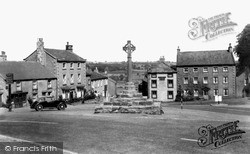
It is now famous for its race horses and historic castle, once the home of Richard, Duke of York and later King Richard III.
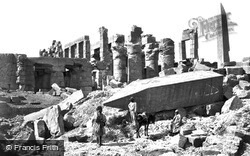
The Late 19th to the Early 20th Century Forget six counties overhung with smoke Forget the snorting steam and piston stroke, Forget the spreading of the hideous town; Think rather of the pack-horse on
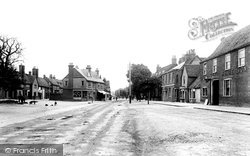
The White Lion, on the left, was, along with the Cromwell Hotel, the Two Diamonds, and the Yorkshire Grey, among a series of coaching inns spread along the spacious High Street.
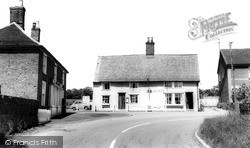
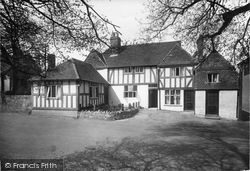
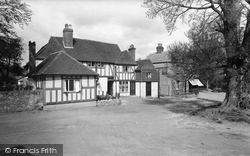
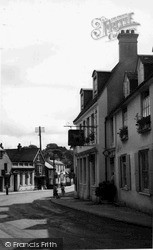
Ahead is the 17th-century timber-framed White Horse and the Victorian South View Cottage. The road to the left leads to the former Independent Chapel of 1750.
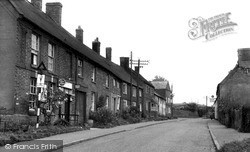
Beyond is the White Horse, still in business, though the Northampton Brewery, with its NBC Star trademark, has long since passed into history.
Places (2)
Photos (232)
Memories (469)
Books (0)
Maps (34)