Places
Sorry, no places were found that related to your search.
Did you mean: north ness or na h ness or nook ness ?
Photos
12 photos found. Showing results 601 to 12.
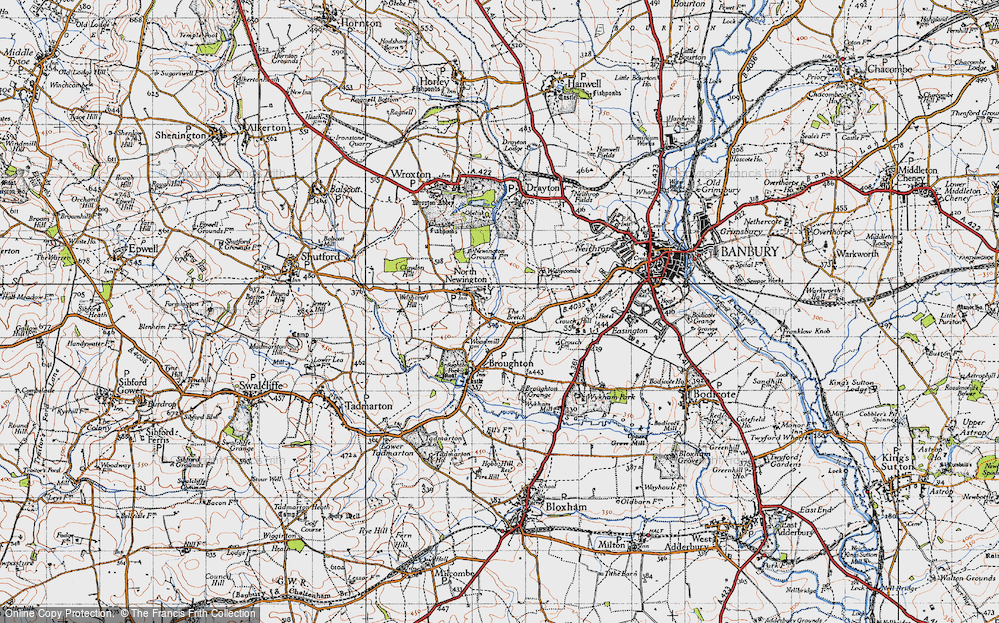
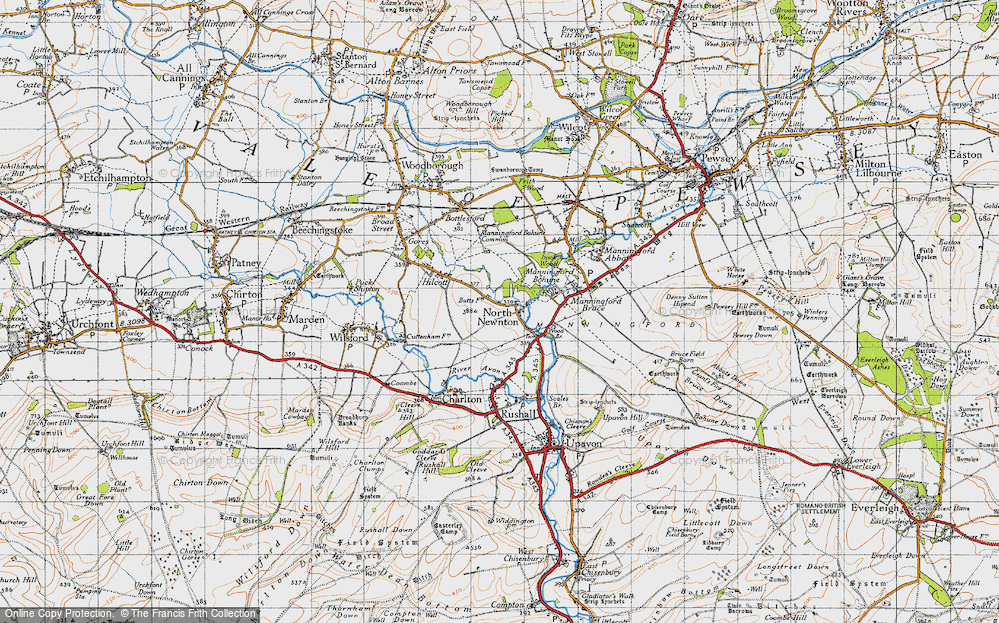
Maps
9,582 maps found.



Books
30 books found. Showing results 721 to 744.
Memories
4,597 memories found. Showing results 301 to 310.
Old Redding Both Famous And Notorious !
Old Redding is a hilly rural lane connecting Hatch End with Harrow Weald. It is notorious for its connection with The Grimsdyke Hotel where Gilbert of Gilbert and Sullivan fame met his death in a drowning ...Read more
A memory of Hatch End in 1963 by
Growing Up Miss Patricia May
This is another place I rememeber well when I was growing up. My auntie and uncle lived in the village of St Minver, they were called Mr and Mrs worden. My uncle was Ern Worden and he used to dig the the graves, and ...Read more
A memory of St Minver by
My Short Life In Gillingham Kent
I was born in a naval nursing home called "Canada House" on the 18th November 1954. I was the first child and boy - I was spoilt. I went to school at Byron Road Infants school until I was 6 then we moved to ...Read more
A memory of Gillingham in 1960 by
Happy Childhood Holidays
I say 1950 for the year my memory relates to but in fact my memories cover from around 1946 to 196 I've only just found this web site for "Memories" although have looked at the site before and what nostalgia it has ...Read more
A memory of Llwyngwril in 1950 by
Old Port Bannatyne
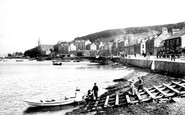
This is a favourite view of photographers taken from McIntyre's Boatyard. In the distance you can see St Bruoc's church which burnt down in 1956. In the foreground is a boat hiring station, one of three in the village. ...Read more
A memory of Port Bannatyne by
St. George's Presbyterian Church
St. George's Presbyterian Church stands in the forefront of this photograph between what was the Co-operative shop and Tommy Jones the fishmongers shop. How long the Presbyterian Church has stood on this site ...Read more
A memory of Little Sutton in 1972 by
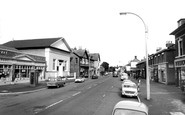
Goldthorpe In The Fifties
I was born in 1946 and lived in Manor Avenue. Cricket with dustbin lids propped up with a house brick in the "backins" were our stumps and we played from dawn to dusk during the summer holidays...except during Wimbledon ...Read more
A memory of Goldthorpe by
Rivacre Baths.
For those who never saw (or may have forgotten), the photo shows the view you had after coming in through the main entrance. The large fountain can be seen in the foreground, and was enjoyed by many children as they ran around ...Read more
A memory of Little Sutton in 1947 by
Kennack
I have been coming to Kennack since I was a toddler. But 1972 was the first of many years that stand out to me. My family met another family and we are still in touch now, 36 years and more later. My memories are so many, borrowing ...Read more
A memory of Kennack Sands in 1972
Fair Green
I lived in that stange area of Mitcham known as Lonesome, situated between the level crossing at Eastfields and the bottom of Streatham Vale. It was a sort of 'No Man's Land'. My schooling from 1951- 1957 took place first at the wooden ...Read more
A memory of Mitcham in 1958 by
Captions
1,673 captions found. Showing results 721 to 744.

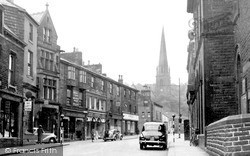
For many years, Todmorden (or 'Tod' as it is always known locally) straddled the border between Yorkshire and Lancashire, and this busy, bustling little town has always had a foot in both camps, although
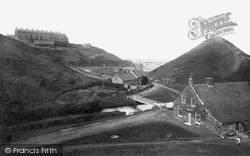
Another view showing Cat Nab, with Saltburn's Marine Parade standing high on the opposite side of the valley.
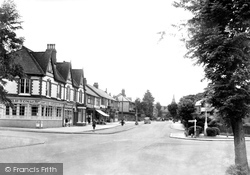
Another famous visitor to the town was Lawrence of Arabia, who frequently visited the White Cottage in the Eastgate area.
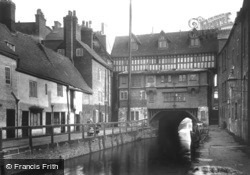
All the cottages on the left were demolished by 1910. Both sides of the water were reached by stairs from the High Street.
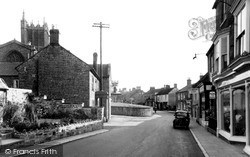
St Mary's Church, which rises behind the Dolphin Hotel, is renowned for its lavishly-decorated tower and impressive tie beam roof, both of which date from its rebuilding in the 15th century.
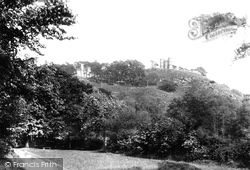
As is the way with legends, one story has obviously become muddled with another.
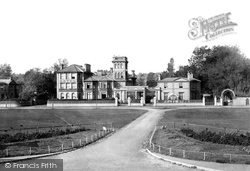
Because of the flat roads, bicycles were in abundance both on the streets and greens, so much so that they caused problems for pedestrians.
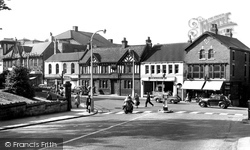
Another lost chapel is one thought to have been dedicated to St James at Lord's Mill Bridge, of which no trace remains.
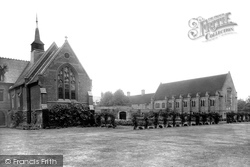
But while these red-brick buildings offered women a higher education, it was to be another twenty years before women became entitled to receive degrees.
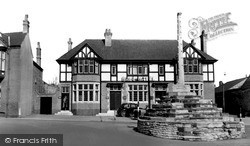
Another view of the Market Cross, this time looking north, shows its knobbly crockets to their best advantage. The cross at the top of the shaft was lost many years before.
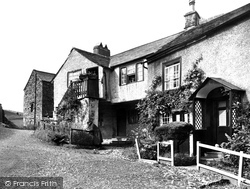
The rather unusual construction of the front part of this old cottage, which stands beside the slope leading up to the church, is not entirely apparent from this picture, which groups it with an adjacent
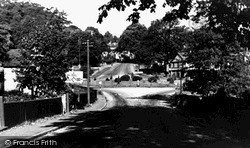
Only 30 years later, it has become just another branch of suburbia. Some picturesque cottages were destroyed to widen these roads and create the roundabout, which now dominates the view.
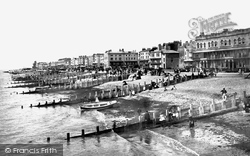
Worthing, yet another fishing village turned seaside resort, developed in fits and starts with little overall coherence but some attractive accents.
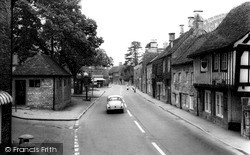
Here we see yet another half-timbered inn, the Red Lion, bearing testimony to the importance of the town in medieval and coaching days.
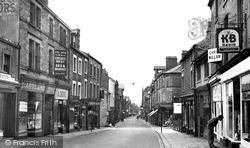
The sign above Dent's shop, advertising bed and breakfast for cyclists highlights another difference in lifestyles.
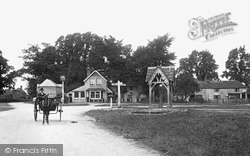
Another iron-making village, situated on a tributary of the River Mole, Leigh (pronounced 'Lye') is centred on this demure, triangular village green with its covered pump.
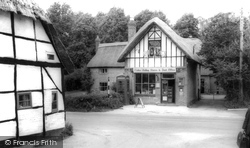
Another classic English village, Nether Wallop assumed a 1950s feel during the 1980s when it was chosen as one of the key locations in the BBC series Miss Marple.
Here we see yet another half-timbered inn, the Red Lion, bearing testimony to the importance of the town in medieval and coaching days.
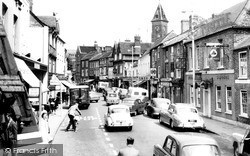
Bartholomew Street, on the southern side of the town centre, was originally called West Street. This general view shows the street about 40 years ago.
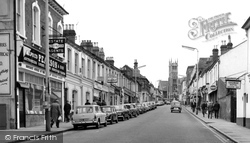
Another generation has passed since 79622 (above), and the scene has changed to one where the motor car now dominates, forcing pedestrians onto the pavements.
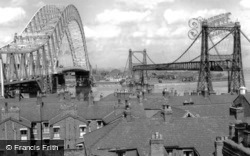
It is interesting to compare this photograph with another taken a few years later (R67049 below) after the Transporter Bridge had been demolished.
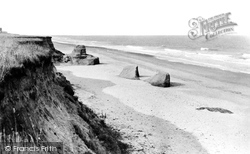
Such was the concern in 1791, that two beacons were erected, illuminated by lanterns holding many candles; one became the lighthouse, and another stood about 400 yards north of Cart Gap.
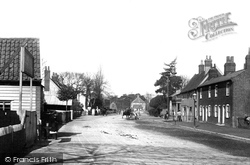
At this time, Felixstowe enjoyed popularity as a seaside resort, but the dream of eccentric local landowner Colonel Tomline to transform the town into a major port had not yet materialised - that was to
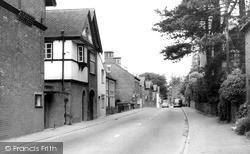
The Lamb and Flag Hotel, on the left beside the car, was another old inn which catered for travellers.
Places (0)
Photos (12)
Memories (4597)
Books (30)
Maps (9582)