Places
8 places found.
Those places high-lighted have photos. All locations may have maps, books and memories.
Photos
77 photos found. Showing results 401 to 77.
Maps
49 maps found.
Books
Sorry, no books were found that related to your search.
Memories
1,425 memories found. Showing results 201 to 210.
The Marque
Roughly in 1932 there was a religious group which was called the Assemblies Of God Pentecostal Church. Albeit they had been going on since 1900-14 they were a relatively unknown church - as of today they are unknown to many of us even ...Read more
A memory of Sheffield in 1930 by
Grandparents In Service
My paternal grandparents used to work in service at Wonham while my father was a young boy in the years before WW2. I believe my grandmother was a cook and my grandfather was a driver/handyman. I think my father told ...Read more
A memory of South Godstone by
Postwar Childhood In Knypersley
Born in 1940 at Tunstall Rd, I spent hours of my childhood at the edge of Cowlishaw Walker's pool, reached through our neighbour, Mrs Sargent's garden, which sloped steeply up to the railings round the pool. I only ...Read more
A memory of Knypersley in 1940 by
What A Fright
If you have read my account as a child at Felkirk Church, I as a grown man and with some time on my hands, visited Felkirk Church on many occasions. It was on the last occasion where I went there around 15.00 hours. I recall that the ...Read more
A memory of Ryhill in 1976 by
Downshall Secondary School
I have very fond memories of Downshall Secondary where I was between 1958 and 1962. I used to live in Downshall Avenue, and we used to walk everywhere, to school, to Seven Kings Park and the park up Meads Lane. We ...Read more
A memory of Seven Kings in 1960 by
Trevelyan Road Tooting
I was born on 8th May 1945 (the day the war ended) at 61 Trevelyan Road Tooting. My mum told me that there was a heatwave on the 8th May and whilst she was trying to get some rest there was a street party going n which she ...Read more
A memory of Tooting in 1945 by
Boynton Hall Yorkshire
Boynton Hall, near Bridlington During the war (1939-1945) the French Convent school, run by Catholic nuns, was evacuated from Hull to Boynton Hall. I remember the day war broke out - my sister was sent to Boynton - she ...Read more
A memory of Boynton in 1940 by
Nefyn Primary School, War Memorial, Doctor's Surgery
This is a photo of all three named "institutions" with the Red Garage and Church Hall just off to the left. I thought this was an ENORMOUS road and we never crossed it by the Memorial! That is Nefyn ...Read more
A memory of Nefyn in 1960 by
Working At The Bakery In The 1950,S
I was born in my grandma's house in Church St, didn't have a number in those days, when it did it was #13, which was good because I was born on the 13th. I enrolled at the Gamlingay Old School in 1946 in Miss ...Read more
A memory of Gamlingay in 1957 by
Farndon Ferry
the ferry was run by Charles Edward Saxby until his death in 1959. It was then taken over by Sidney Clarke until approx. 1968. In the floods of 1963/4 we couldn't cross the river and had to row across the fields to Rolleston to ...Read more
A memory of Newark-on-Trent
Captions
876 captions found. Showing results 481 to 504.

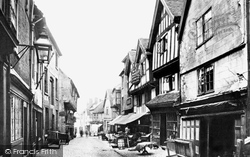
Few streets still follow their original medieval plans, though not all have been lost since 1945. Butcher Row went long ago.
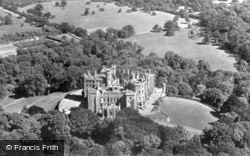
The bulk of the present castle dates from its rebuilding following a fire in 1816.
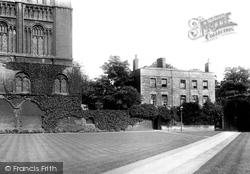
Here Miss Gibson followed the Bishop's suggestion to open a school for high-class girls, and here Nurse Edith Cavell taught.
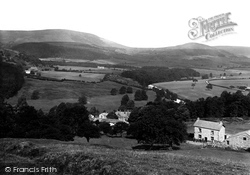
The hills at the back are Mellor Knott and, to the left, Totridge Fell, along which the old border looped, climbing from the river to follow the watershed.
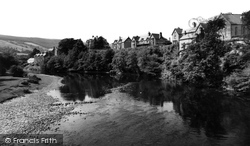
Following a land dispute with Reginald de Grey, Owain proclaimed himself Prince of Wales and rose against the English in 1400.
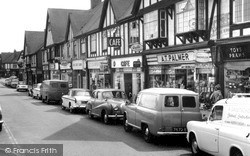
Its rapid development followed the opening of the railway station on the Epsom to Waterloo line in 1932.
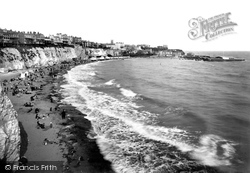
This is Main Bay, which changed its name to Viking Bay following the arrival in 1949 of a replica Viking ship, the Hugin.
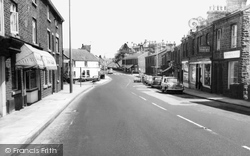
When the canal was built and linked the town with Manchester, new industries soon followed.
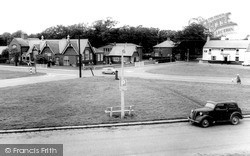
Thought to have been used since the Bronze Age, the track through the valley was one of several routes followed by packhorse drivers, who carried goods across the moorland hills between Lancashire
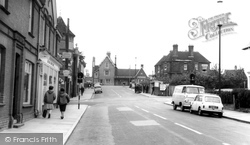
The pitched roof to the tower has gone and street lighting shows an advance on the following picture (p. 60-61), here it is fluorescent!
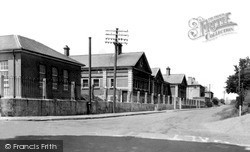
The village has recently grown enormously following the building of a dual carriageway linking the area with Wrexham and Chester, and many people from here now commute to those towns.
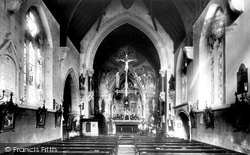
No attempt was made to match the original chapel — the addition followed the Gothic Revival style.
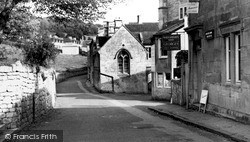
Back across the river, via the Batheaston toll bridge, follow the Avon south before turning right to Monkton Combe, a delightful village nestling in the valley of the Midford Brook.
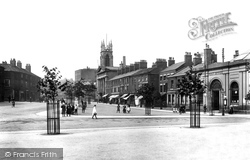
It was here and on the Market Place that local people met to protest about unemployment and hardship in the years following the defeat of Napoleon.
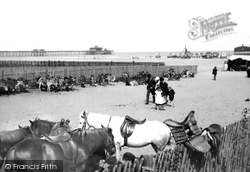
This last chapter follows on geographically from where the fourth chapter finished, at Burgh le Marsh four miles west of Skegness.
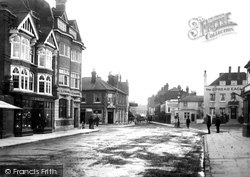
Once the village of Ebbisham, its immense popularity as a spa resort after the Restoration, followed by its emergence as a racing centre, brought Epsom to national prominence.
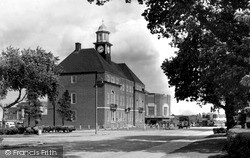
It opened on 26 August 1936, and the first film to be shown was 'Follow the Fleet' starring Fred Astaire and Ginger Rogers.
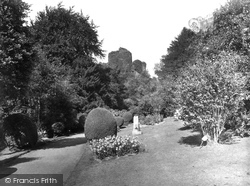
Following the move of the gaol and assizes to Bodmin in 1842, the grounds were landscaped and turned into a pleasure park by the Duke of Northumberland.
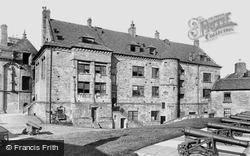
Following their defeat at the Battle of Dunbar, Major General David Leslie and several thousand survivors of his army took shelter in Stirling. The town eventually fell to General Monk.
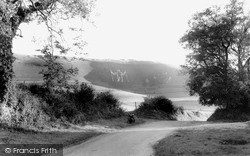
'Discovered' in 1873 and restored the following year, its origin is still unknown. It may represent a pilgrim, and this may link it to the medieval Wilmington Priory nearby.
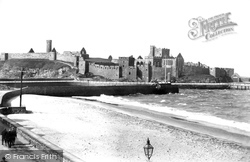
At the height of the season, Peel harbour was often full of fishing boats - Manx, Cornish, Irish and Scottish - as they followed the migrating herring into Scottish waters.
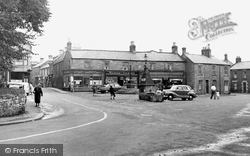
There was a time when Corbridge held a weekly market, but this petered out as the town declined following the Civil War.
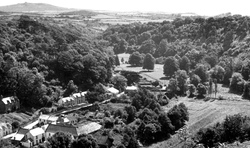
This was finally implemented in Britain in 1752, whereupon the 2nd September was, somewhat abruptly, followed by the 14th.
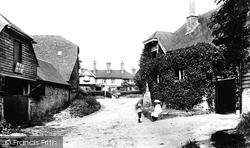
These buildings were once part of the large estates belonging to the Middleton, Horne and Norney families, which were broken up and sold in the years following the Second World War.
Places (8)
Photos (77)
Memories (1425)
Books (0)
Maps (49)