Places
8 places found.
Those places high-lighted have photos. All locations may have maps, books and memories.
Photos
77 photos found. Showing results 81 to 77.
Maps
49 maps found.
Books
Sorry, no books were found that related to your search.
Memories
1,425 memories found. Showing results 41 to 50.
Lightning Strikes
This is August 1953, I was 10. We were playing cricket on the clay field with some older lads, the stumps were iron and came from Spencers steel works which was nearby and stuff like this was easily got. Anyway I remember it was ...Read more
A memory of Newburn in 1953 by
Happy Times In Maldon
My family and I moved from London in 1955 to Maldon, following a visit the year before with our Sunday School outing, and we moved near to the Prom. We had such happy times living there and as children my friends and I used ...Read more
A memory of Maldon in 1955 by
A Butcher's Lad
Mr Purvis the butcher, whose shop stood on the corner of Talke and Audley Roads, was my Saturday morning employer. He always wore a striped apron and a straw boater hat and sported a rather slick moustache. His manner with the ...Read more
A memory of Alsager in 1954 by
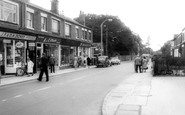
Growing Up In A Small Village
My parents moved to Twycross from London in the early 1960s. We lived on Sheepy Road next door to Mr Charlie Brooks and Louie Jones. On the opposite side were Stan and Ilma Jones and Len Gibbs and his daughter Joan. ...Read more
A memory of Twycross by
River Row
My family lived in the end cottage in River Row,our garden backed on to the river and railway line beyond.My brother and I were aged 3 and 4 years old and I can remember waving to my father as he went to work in the pits, the train ...Read more
A memory of Treherbert in 1951 by
The Farnborough Puddle
I used to love The Puddle, I used to go there every weekend during term time from when it opened at Easter every year, until in closed in October. I would try to go every day during the summer holidays, but I didn't ...Read more
A memory of Farnborough in 1964 by
The Rone Clarke Family Rose Cottage Bristol Road Bournbrook Birmingham
My great-great-grandfather was CHARLES RONE CLARKE born 6 March 1837 at 13 Court, Smallbrook Street, Birmingham. He was a master woodturner and sixth great-grandson of Henry ...Read more
A memory of Bournbrook in 1860 by
Blue Gems Chinese Restaurant
I remember many enjoyable Friday evenings at 'The Plough' on the corner of Gooseacre Lane (usually with too much beer!) and the following visits to the 'Blue Gems' in Kenton Road for some Chinese food at pub closing ...Read more
A memory of Kenton in 1962 by
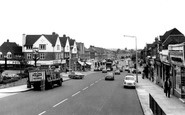
School Holidays At Abington Park
I was born in 1951 in Lutterworth Road, Northampton just a 5 minutes' walk from one of the most beautiful parks in the country - Abington Park. Originally part of the Wantage family estate, it boasted a ...Read more
A memory of Little Billing in 1959 by
A Gentlmen From Amblecote
A Gentlemen from Amblecote, Staffordshire By The Oracle | April 16, 2009 This public voice, dos not usually, print obituaries. However, three persons have signed their names to a tribute to Samuel Kinnear from ...Read more
A memory of Amblecote
Captions
876 captions found. Showing results 97 to 120.

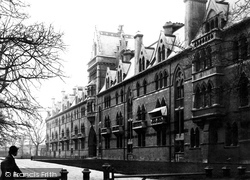
Robert Peel, William Gladstone and W H Auden were among the college's more distinguished students, and when John Fell was dean here, one of his scholars based a famous Latin epigram on him following a
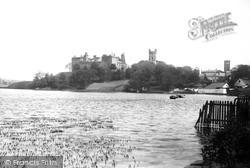
The last Scottish national parliament was held here in 1646.Oliver Cromwell lived at the palace for several months following the Battle of Dunbar in September 1650.
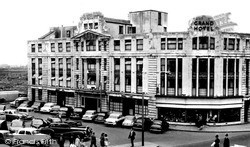
The Grand has recently undergone a complete refurbishment and modernization, so this photograph reveals a little of its former tarnished glory following its heyday in the 1930s.
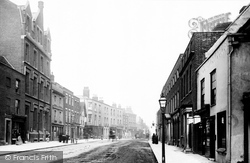
The road follows the line of the old Roman road which linked North Gate and Head Gate, both entrance points to the original Roman walled town.
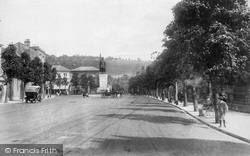
Broadway and its continuation, the High Street, almost certainly follow the line of an ancient trackway that crossed the River Itchen during the Iron Age.
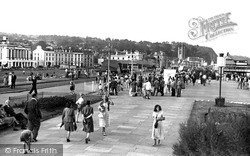
Now the tower of St Michael`s Church is more obvious, following the destruc- tion of numbers 1 and 2 Esplanade (the Berkeley and Esplanade Hotels) in September 1942.
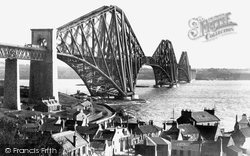
Following the opening of the Forth Bridge, the North British Railway Co decided that they could dispense with their ferry services.
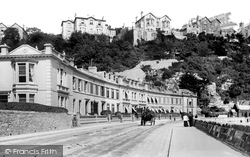
The elegant Abbey Crescent was built in 1858 in anticipation of the opening of the nearby railway station the following year.
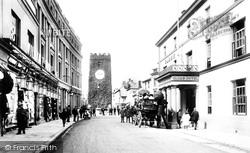
A great deal of building took place during the years that followed; the population increased three-fold during Queen Victoria's reign.
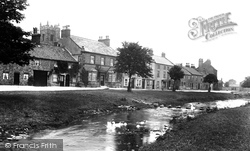
It was at Catterick in AD 625 that Paulinus, first Bishop of York, baptised converts to Christianity, following the marriage of King Edwin of Northumbria to Ethelburga of Kent.
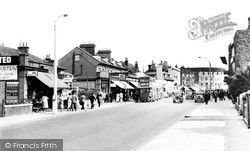
Slough began to expand following Slough Estates' acquisition of 700 acres of derelict land in 1920.
Demolition of the Grammar School began in June 1998, and by the following January plans were approved for the building of these modern homes.
The elegant Abbey Crescent was built in 1858 in anticipation of the opening of the nearby railway station the following year.
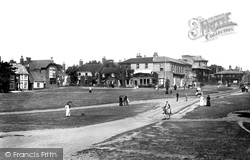
The rebuilding which followed left nine greens - effective firebreaks against any future catastrophe - and it is these which give Southwold its unique character.
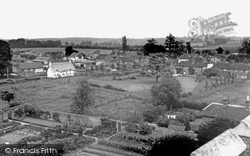
In October 1644, during the Civil War, Cromwell's men camped in the fields surrounding the village of Chieveley before doing battle at Newbury the following day.
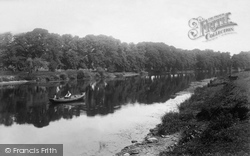
After taking a tram or trolley-bus ride to Wilford Bridge, a walk to Clifton would perhaps be followed by tea at a cottage on the Green.
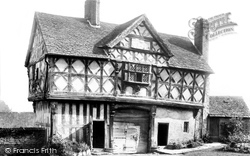
Following the castle's capture in the Civil War, the original stone gatehouse was destroyed. This timber gatehouse therefore dates from the late 1600s.
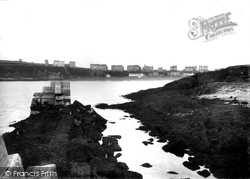
Work began in 1864, but in 1868, while still under construction, it was badly damaged by a storm; it was not until the following year that Tynwald voted funds for repairs and completion.
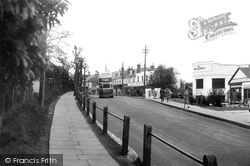
There were a whole range of shops along the Broadway, ranging from a chemist's, a sweet shop, a gentlemen's outfitter's, a garage, a bank and the gas showroom, but competition was to follow from
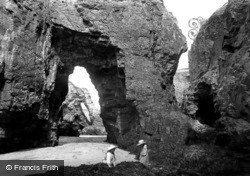
The cliffs to the south of Perranporth are riddled with the adits of old mine workings, which followed the rich veins of tin and copper that ran from the granite intrusion of Cligga Head into the surrounding
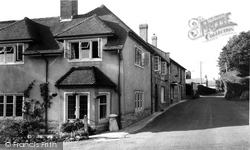
A good introduction to Dorset would be to follow the course of the River Piddle from its source to the sea, passing through some delightful villages along the way.
A great deal of building took place during the years that followed; the population increased three-fold during Queen Victoria's reign.
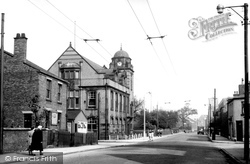
Howe Bridge was closed by the NCB in 1957; Gibfield followed in 1963, and Chanter in 1966.
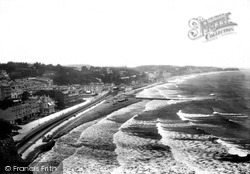
Brunel, showing considerable foresight, did not cut Dawlish off from the sea when he built his railway, but incorporated its walls into a splendid promenade which can be followed all the way to Dawlish
Places (8)
Photos (77)
Memories (1425)
Books (0)
Maps (49)