Places
Sorry, no places were found that related to your search.
Photos
Sorry, no photos were found that related to your search.
Maps
7,034 maps found.
Books
163 books found. Showing results 1,369 to 1,392.
Memories
22,912 memories found. Showing results 571 to 580.
Custom Cars And Mrs Beeton!
I lived in Chelsea when Mr. Beeton was still alive and running his bakery on the King's Road. I worked there for a while after leaving college and I feel very privileged to have done so. He dressed like a Victorian ...Read more
A memory of Chelsea in 1975 by
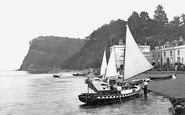
Dancing In The Street By The Ferry Boat Inn
The two Shaldon ferry boats were at anchor when our Morris Dancers performed in front of the Ferry Boat Inn this week. They looked just like this photograph - although there were no sails! It was a ...Read more
A memory of Shaldon in 2009 by
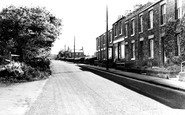
High Street
I worked in Wheatley village in 1963 in John Bull's butcher's shop opposite Sam's butchers with Ted! and a lady bookkeeper. After living in Waterstock on John Bull's farm during the terrible winter of 1963 we moved into his bungalow at ...Read more
A memory of Wheatley in 1963 by

Summer Of 1965
I have happy memories of a summer spent with my Nannie and Grandad Gibbs. I remember walking down this street, passing 'Auntie Martha's' to the post office every day with Grandad. He used to buy me chocolate cigarettes every day. I ...Read more
A memory of Moorsholm in 1965 by
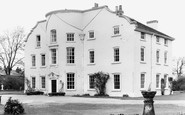
Childhood Holidays
I have happy memories of visiting Croston in the late 1940s-early 1950s. My aunt and uncle, Margaret and Bob Chisholme, lived in part of the Rectory for a few years before moving to a large, rambling house in Station Road next to ...Read more
A memory of Croston in 1947 by
Innocent Happiness
I was born just after the Second World War and like many people came from a fairly poor working class background. I was, however, blessed in many areas of my life and one of them was having an aunt who lived at 8 Hamilon ...Read more
A memory of New Brighton by
Pilgrims Wood Sandy Lane
Hello, my name is Fred Clarke, I was at the orphanage called Pilgrims Wood, in Sandy Lane, in 1945/46. I remember the searchlights and the barrage balloons on the Hogs Back. We used to play in the woods, and go to the ...Read more
A memory of Guildford in 1945 by
Burrow Hill School
My name is Roger Hibbard from Staveley, Derbyshire, I was at Burrow Hill School from Easter 1952 to Easter 1953. I went there because at that time I suffered from severe asthma but I was never ill once during the wonderful ...Read more
A memory of Frimley Green in 1952 by
Growing Up In Earl Shilton
I have fond memories of Earl Shilton around the 1950s. My first school was in Wood Street where I lived in a little old cottage, now knocked down. I remember celebrating Queen Elizabeth II's coronation at the school, ...Read more
A memory of Earl Shilton in 1950 by
Walsh Manor
l too was a pupil at Walsh Manor, unfortunately my memory of the school was not such a happy one. After l left l also went to St Michael's in Uckfield, which wasn't much better, although l made some life-long friends there, who l ...Read more
A memory of Crowborough in 1964
Your search returned a large number of results. Please try to refine your search further.
Captions
9,654 captions found. Showing results 1,369 to 1,392.

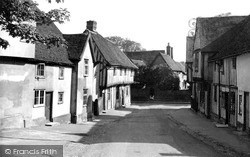
On the left is a high-quality Tudor house, with arched windows for a shop at the far end. Opposite is the 15th-century Wool Hall, originally the Guild of Our Lady, with an open hall and cross-wings.
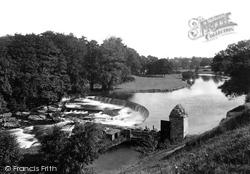
Along the Ribble Way, before reaching Gisburn, the river cuts through a deep gorge, perhaps the most spectacular part of its length; but at this point we see the river harnessed.
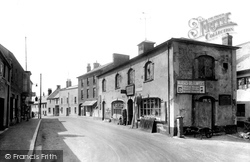
At the centre of the town is the old Market House with its shallow arched openings and weather-vaned bellcote.
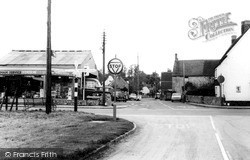
From the Hanneys the route heads along the A338 road towards Oxford, turning right onto the A415 at Frilford; heading back towards Abingdon, our last stop is in Marcham village.
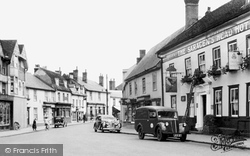
The Saracen's Head—on the right of this picture—was a famous coaching inn at Great Dunmow, a town associated since 1949 with the Dunmow Flitch ceremony.This had originated at Little Dunmow in 1140
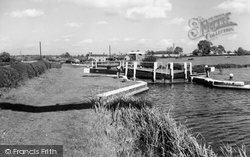
The locks at Fleckney are a part of the descent of the canal from its high point at Foxton into the Soar Valley.
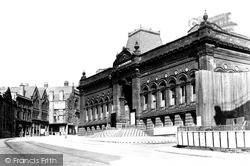
A view of Leeds Mechanics' Institute. This imposing Italianate building, with its lofty round-arched windows, was built by Cuthbert Brodrick in the late 1860s. It later became the Civic Theatre.
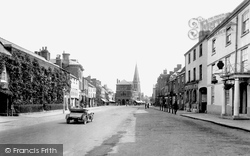
The High Street, earlier called the Great Street, is lined either side with Georgian buildings which sit at the head of earlier burgage plots, much the same as at Uxbridge, Middlesex or St Ives, Huntingdonshire
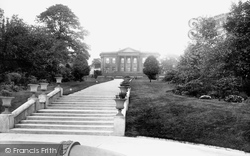
Once a hunting estate for John of Gaunt, the land was purchased in 1803 by Thomas Nicholson, who created the two lakes and the parkland. Mansion House dates from 1826.
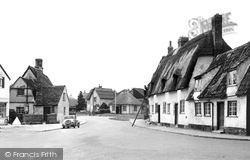
A thatcher is at work repairing the thatch around a deep-cut dormer window. The poet Rupert Brooke lived in this picturesque village.
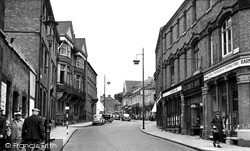
Looking up the High Street from the direction of Silver Street and Oxford Street shows a quiet street scene with little traffic.
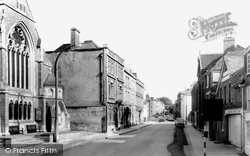
Next to St Andrew's Methodist and United Reformed Church (left of photograph) is No 8 Long Street, originally the home of Joseph Needham, a surgeon who was described in his obituary as 'perhaps the most
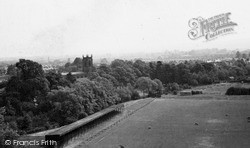
Towards the north-west lies the mound of Beacon Hill. The earliest origins of Loughborough may be here.
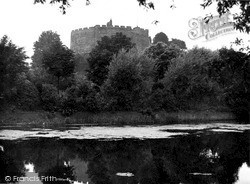
Soon after the Conquest, the Normans built a wooden motte and bailey castle at Tamworth on the site of the Mercian fortifications of 913.
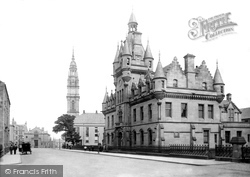
A busy place at times, considering that imprisonments for being drunk and incapable were running at 300 a month in Glasgow alone.
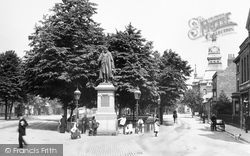
At the south end of the High Street the road widens to a pleasant green, formerly a market place.
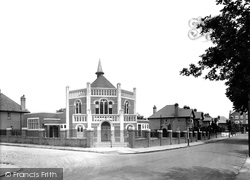
The road on the left is Southern Road.
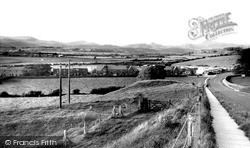
Formerly, a railway line from the station to the slate quarries ran across by the mound (centre).
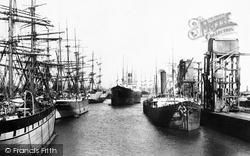
SS 'Margaret Jones' is loading coal at one of the moveable tips on the vertical wall side opposite the mole on No 1 Dock.
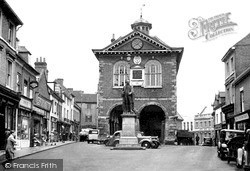
Soon after the Conquest, the Normans built a wooden motte and bailey castle at Tamworth on the site of the Mercian fortifications of 913.This was replaced by the shell-keep and tower, which still
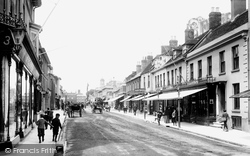
At the time of the Domesday Book there were already 21 houses in Christchurch, and 24 canons attached to the priory church.
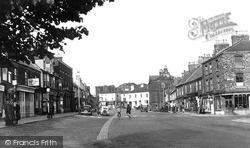
Here we have a clearer view of the tall Town Hall building to the right, and beyond it lies the premises of the National Provincial Bank.
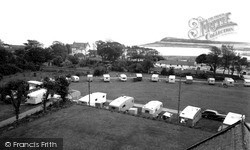
Situated to the right, beyond the low white building (later to become the Captain's Wife public house) is Sully Island.
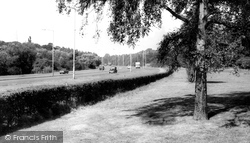
The A1 sweeps north between Moat Mound Recreation Ground and Mill Hill Golf Club, and is little changed since it was built, apart from the introduction of high level lighting standards.
Places (0)
Photos (0)
Memories (22912)
Books (163)
Maps (7034)