Places
36 places found.
Those places high-lighted have photos. All locations may have maps, books and memories.
- Shanklin, Isle of Wight
- Ventnor, Isle of Wight
- Ryde, Isle of Wight
- Cowes, Isle of Wight
- Sandown, Isle of Wight
- Port of Ness, Western Isles
- London, Greater London
- Cambridge, Cambridgeshire
- Dublin, Republic of Ireland
- Killarney, Republic of Ireland
- Douglas, Isle of Man
- Plymouth, Devon
- Newport, Isle of Wight
- Southwold, Suffolk
- Bristol, Avon
- Lowestoft, Suffolk
- Cromer, Norfolk
- Edinburgh, Lothian
- Maldon, Essex
- Clacton-On-Sea, Essex
- Felixstowe, Suffolk
- Norwich, Norfolk
- Hitchin, Hertfordshire
- Stevenage, Hertfordshire
- Colchester, Essex
- Nottingham, Nottinghamshire
- Bedford, Bedfordshire
- Bury St Edmunds, Suffolk
- Aldeburgh, Suffolk
- St Albans, Hertfordshire
- Hunstanton, Norfolk
- Chelmsford, Essex
- Bishop's Stortford, Hertfordshire
- Peterborough, Cambridgeshire
- Brentwood, Essex
- Glengarriff, Republic of Ireland
Photos
11,145 photos found. Showing results 3,781 to 3,800.

Maps
181,031 maps found.
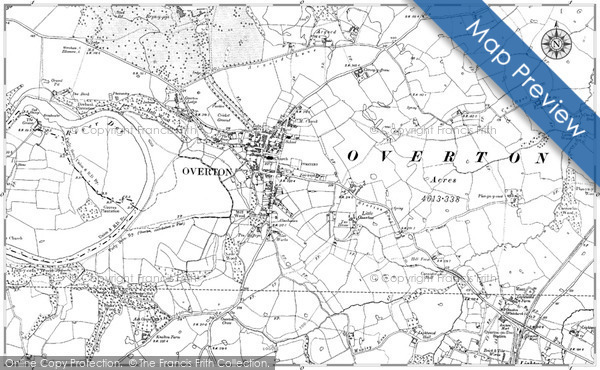
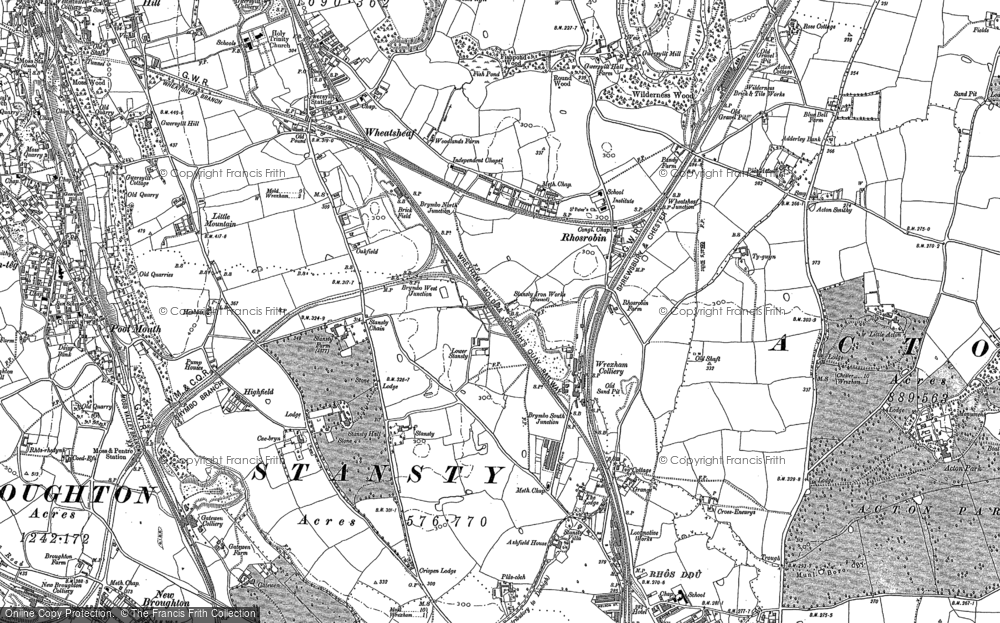
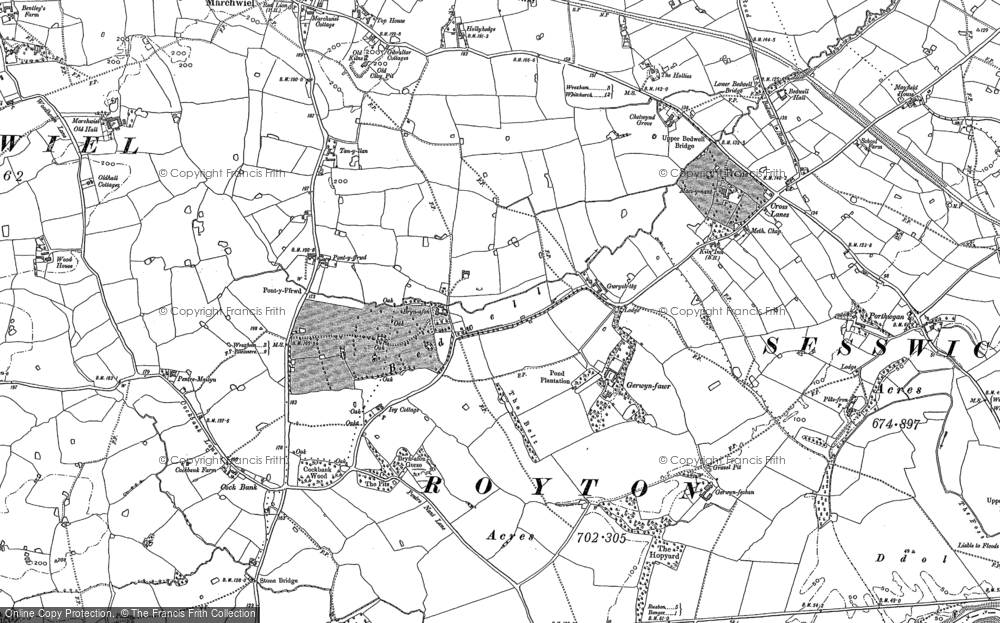
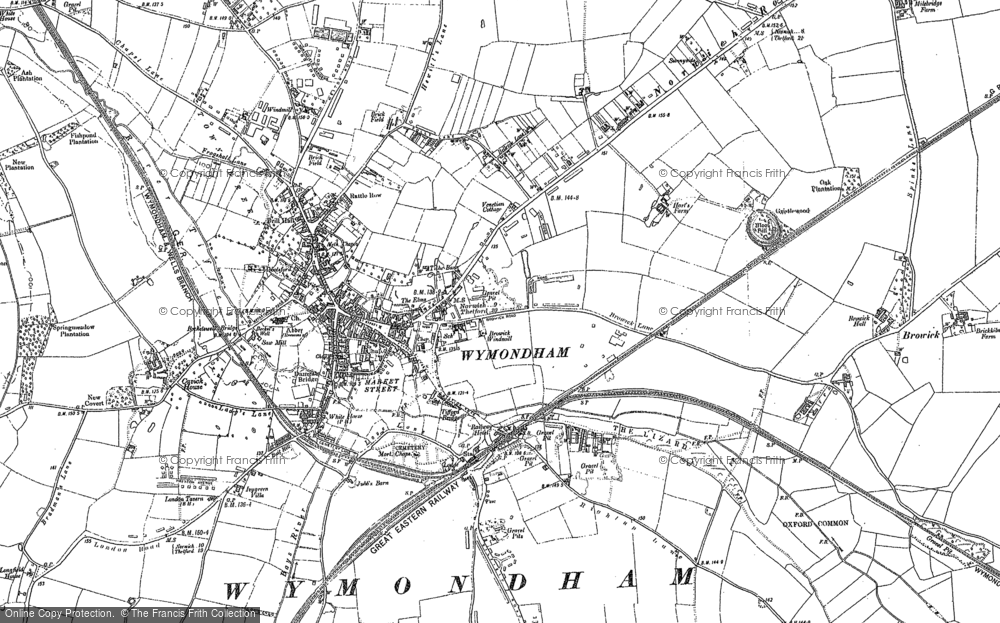
Books
442 books found. Showing results 4,537 to 4,560.
Memories
29,069 memories found. Showing results 1,891 to 1,900.
A Tour Around Prehistoric Stones At Avebury
Avebury is an interesting place to visit for history, archaeology and garden interests. My wife, Elizabeth, and I saw it on Sunday 24th April in bright hot sunshine when the stones are at their best; ...Read more
A memory of Avebury in 2011 by
Forgotten Children
My mother (Doris Daye) was married to a Canadian, Robert Lennox, at this church in January 1941. I was born in July. We lived at 8 The Terrace, Sunning Hill. Aparently he was AWOL and was sent back to Canada some 4 years ...Read more
A memory of Sunninghill in 1941 by
Bligh Family
I have recently lost my uncle David James Bligh and I am trying to find some details with regard to his paternal family. I understand that his Grandfather William Frederick Bligh and his mother Elizabeth Rosey lived in Upper ...Read more
A memory of Westmarsh in 1940 by
Jennie Wren
My Godmother, Jennie Wren, lived in the Easneye Gatehouse, as shown, at around this time, possibly slightly later. This gateway was also used in one of the St Trinian's films, which featured a racehorse which was being hidden ...Read more
A memory of Stanstead Abbotts in 1964 by
My Memories Of Chandler's Ford, Approx. L934/5
In the spring/early summer of 1935 I was admitted to Chanderr's Ford Sanitorium for treatment of tuberular glands in the neck. I spent six months there and have some happy memories of feeding ...Read more
A memory of Chandler's Ford in 1930 by
Purchase
Seeing an advert for sale of The Old School Lower Hartshay began an exciting voyage of discovery. 1884 now anchors my hold on local history and family research. Many have been the times when passers by have been invited in and have ...Read more
A memory of Lower Hartshay in 1980 by
My Memories Of Weymouth
I enjoyed the photos of Weynmouth and other memories - I used to visit my aunt and uncle through the 1950s when they ran a hotel right on the quay called The Edward Hotel, now made into apartments I believe. It was right ...Read more
A memory of Weymouth in 1950 by
Sindlesham
Does anyone have memories of Sindlesham from the 1950s till the late 1960s? It would be nice if someone has. It was such a pretty place.
A memory of Sindlesham by
Church Farm
My father Kenneth Walker and his father once owned the farm across the road from the parish church. We have photos of the farm before houses were built on fields behind the farm house.
A memory of Barton-under-Needwood in 1956 by
Growing Up
my memory of living in "God's Village" is of days roaming round the grange, going down the fields to the beck, getting to the top of the "Red Ash Pit Heap", coming back round the coke works and spending loads of time messing around the TMS garage, most week nights and all day Saturday and Sunday.
A memory of Trimdon Grange in 1959 by
Your search returned a large number of results. Please try to refine your search further.
Captions
29,395 captions found. Showing results 4,537 to 4,560.
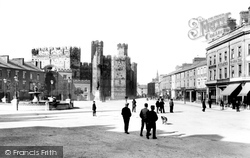
Dominating Castle Square ('Y Maes' in Welsh) at the west end of the town, stands the great bulk of the castle. The structure covers two and a half acres and is in the shape of an irregular oblong.
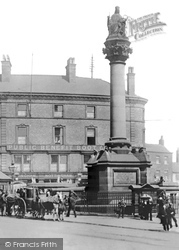
Sheffield was once described by Horace Walpole as 'one of the foulest towns of England in the most charming situation'.
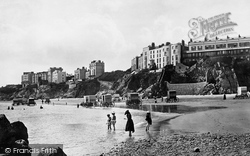
Tenby stands on a tongue of limestone rock, ending a green promontory, which is crowned by the ruins of the old castle, and is now pleasantly laid out with walks which serve at once as pier and promenade
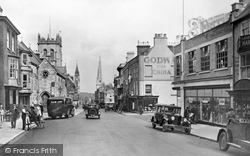
The tower of the medieval St Peter's Church, seen here on the left, dominates much of Dorchester's High Street.
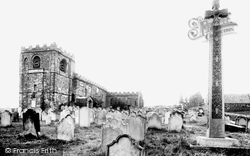
It is a replica of the ancient Ruthwell Cross, and was placed here in 1892 by the efforts of Canon Rawnsley, one of the founders of the National Trust.
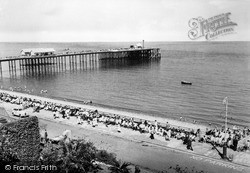
The introduction of 'No Parking' markings along parts of the Esplanade was inevitable. The trend for day tripping and the increase in car ownership were to prove a bane for the council.

Initially commissioned to honour those of the parish who fell in the First World War, the simple Celtic cross of the war memorial was to be sadly amended in the aftermath of the Second World War with the
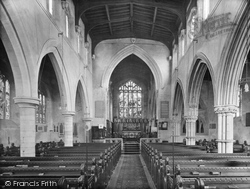
The rebuilding of All Saints' church in the 15th century was largely funded by the Brownes, a family of wealthy wool merchants.
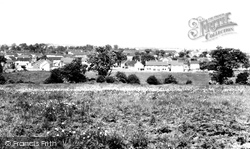
We are standing on what is now the golf course, above The Dell and Swallowdale. In the distance, right of centre, is the long, pale form of the recently-completed Keay House.
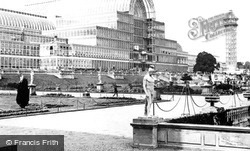
This monumental glass pleasure dome was created in Hyde Park by Joseph Paxton for the Great Exhibition of 1851. 2,000 workers erected it at high speed, bolting and welding together 3,300 iron columns
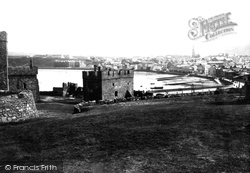
Magnus Barefoot built a timber fort on St Patrick's Isle in about 1098-1103; the bulk of the surviving fortifications date from the time of Thomas, First Earl of Derby, and were constructed in 1460-1504
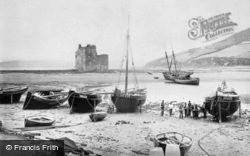
Lochranza dates from the late 13th century to mid 14th century with 16th-century additions, and features one of the earliest examples of an added jamb or wing which was built on to increase the castle's
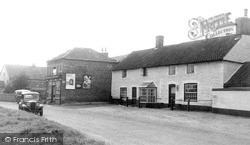
The inn and the post office (and general stores) were at the heart of most villages until very recent times.
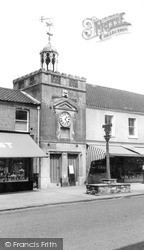
The coat of arms of Watton is a hare and a barrel: they can be seen above the clock and again on the weather vane. ('Wat' is a dialect word for a hare, and 'tun' a word for a barrel.)
The redevelopment of Botchergate is just the latest stage in the long-term rebirth of the great border city, continuing the process begun in the late 20th century.
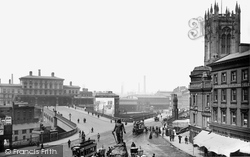
Over on the left is Manchester Exchange station, opened by the London & North Western Railway in 1884 and famous for the long platform which linked it to Victoria Station.
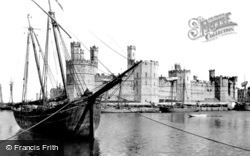
Known today for its massive castle, one of Edward I's chain of fortresses built to subdue the Welsh, this town on the shore of the Menai Strait at the mouth of the River Seiont is now staunchly Welsh-speaking
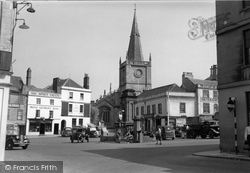
At the corner of the Market Place is the main entrance into St Mary's churchyard, to the left of the church. No 35 Market Place was the King's Head, which is first mentioned in a deed of 1770.
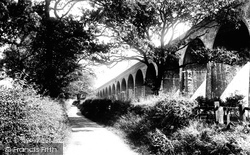
Here we have a grand view of the railway arches heading out of Whalley.
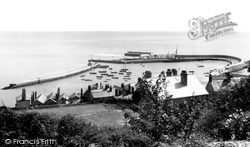
The Tennis Ground (near left) and the Royal Standard (left) are prominent; the Bonded Store of His Majesty's Custom and Excise was the biggest building (centre right).
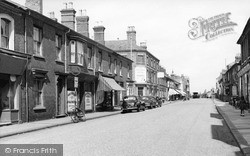
Parallel to Stratford Road and to the south of it is one of the grid of streets that were laid out for the town from the 1840s, starting at the east and then expanding westward as land was released
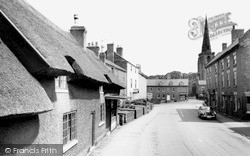
The arrival of framework knitters heralded a dour expansion of red brick housing and hosiery factories, but some nice examples of vernacular architecture are to be found in the village.
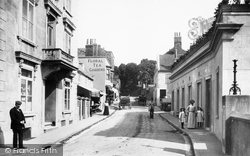
On the right is the old Belle Vue Tavern dating back to the 1760s, which was an earlier haunt for smugglers.
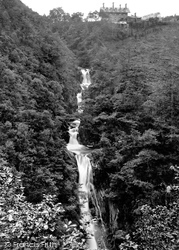
This view shows the 'sublime horrors' of the waterfall that the first visitors came to see.
Places (6814)
Photos (11145)
Memories (29069)
Books (442)
Maps (181031)