Places
36 places found.
Those places high-lighted have photos. All locations may have maps, books and memories.
- Pentre-cwrt, Dyfed
- Pentre Halkyn, Clwyd
- Pentre, Mid Glamorgan
- Ton Pentre, Mid Glamorgan
- Pentre, Powys (near Llangynog)
- Pentre, Powys (near Guilsfield)
- Pentre, Powys (near Bishop's Castle)
- Pentre, Dyfed (near Pontyates)
- Pentre, Powys (near Newtown)
- Pentre, Clwyd (near Mold)
- Pentre, Clwyd (near Ruabon)
- Pentre, Shropshire (near Chirk)
- Pentre, Clwyd (near Hawarden)
- Pentre, Clwyd (near Chirk)
- Pentre, Clwyd (near Ruthin)
- Pentre, Clwyd (near Mold)
- Pentre, Shropshire (near Oswestry)
- Pentre, Powys (near Welshpool)
- Pentre, Clwyd (near Mold)
- Pentre, Shropshire (near Forton)
- Pentre Broughton, Clwyd
- Pentre Gwynfryn, Gwynedd
- Pentre Maelor, Clwyd
- Pentre-clawdd, Shropshire
- Pentre Galar, Dyfed
- Pentre Llifior, Powys
- Pentre-cefn, Shropshire
- Pentre-Gwenlais, Dyfed
- Pentre-Poeth, Dyfed
- Burntwood Pentre, Clwyd
- Pentre Berw, Gwynedd
- Pentre Hodre, Shropshire
- Pentre Llanrhaeadr, Clwyd
- Pentre-celyn, Clwyd
- Pentre Cilgwyn, Clwyd
- Pentre Morgan, Dyfed
Photos
98 photos found. Showing results 2,821 to 98.
Maps
316 maps found.
Books
2 books found. Showing results 3,385 to 2.
Memories
1,253 memories found. Showing results 1,253 to 1,253.
Captions
3,593 captions found. Showing results 3,385 to 3,408.

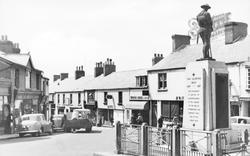
The Triangle is at the centre of Cinderford.
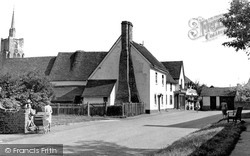
Tommy Dennis's butcher's shop (centre right) was renowned for its ornate topiary and for the life-like bull's head mounted on the board across the building.
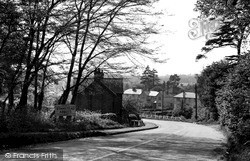
In the 1600s it would not have been the horse-drawn wagons that the visitor first noticed, but more likely the smell, for Stanstead Abbots was a centre for the manufacture of woad.
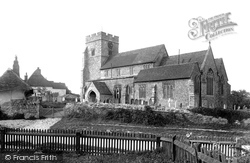
By the gate leading into the churchyard are the overhanging eaves of the old priest's house, later to become the centre of the local Girl Guides troop.
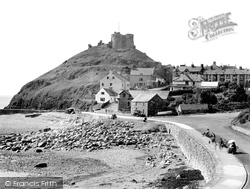
It fired a heavy, hard-hitting bolt that could penetrate armour at ranges up to 250 yds.
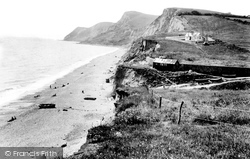
This view shows Eype Mouth, looking westwards to what is now a National Trust skyline, with Ridge Cliff and Doghouse Hill rising into the 508-feet summit of Thorncombe Beacon (centre).
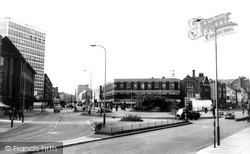
It becomes difficult to imagine what was said at the council's Planning Committee Meeting when it granted consent to the three-storey eyesore in the centre of the shot, and even more so when it is
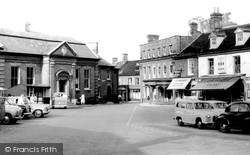
Some fine buildings stand in this part of the town centre; there are many other good ones - the Black Boys Inn and the Old Hall are the best examples.
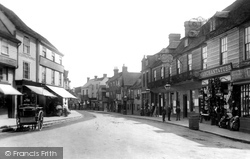
Queen Elizabeth also definitely stayed here, when Cranbrook had become a rich centre of the cloth trade as a result of the arrival of émigré Flemish weavers.
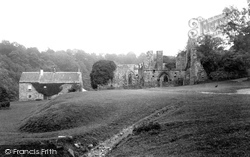
A large amount of building work was undertaken during the 13th and 14th centuries, and it appears that Finchale was used as a holiday centre by the monks of Durham. It was dissolved in 1538.
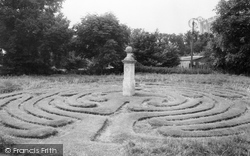
.` One of only eight mazes surviving in Britain, it of the unicursal type - there are no dead ends, and the narrow grass track leads circuitously to the centre without any deviation.
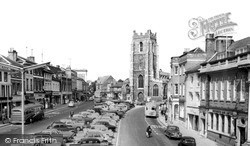
Traffic is parked solidly in the centre of the Market Hill; the sides are reserved for buses, and we can make out two single-deckers and a double-decker.
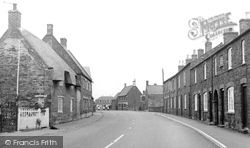
The White Hart pub (centre right) sits at right angles to the street, but the inevitable 20th-century interloper of considerably lesser architectural merit can be seen in the distance.
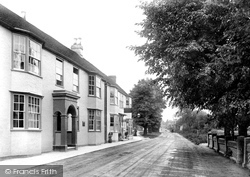
This view looks back towards the town centre. These Georgian buildings with their refined sash windows have gone.
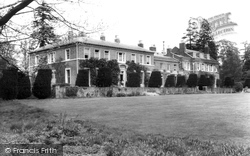
stages of the Great War, it was used for billeting soldiers of the London Scottish regiment; but at the time this picture was taken, it was being used by the local hospital group as a Rehabilitation Centre
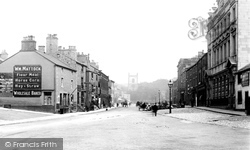
Skipton was a centre for sheep and cattle rearing, as we can see from this busy market day scene.
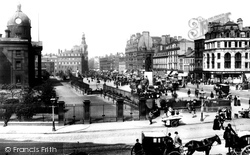
The dome of the Infirmary is on the left, and Lewis's tower is in the centre.
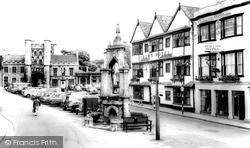
In the background (centre) is the Market House, erected in 1836, which was converted to the post office in 1923 by building between and behind its open colonnade.
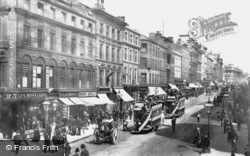
The Arndale Centre now replaces all the shops that we see in our picture, except for Rylands at the top of the street.
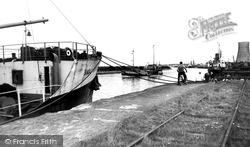
The thirty-five mile long Manchester Ship Canal works as one great harbour, and ships moving up and down the canal have to register each movement with the control centre at Eastham.
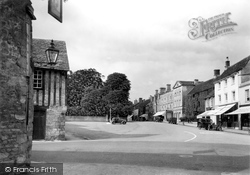
The Market Place, shown here, has fine 17th- and 18th-century buildings; the 3-storey ashlar-faced house right of centre is a fine example, with its rusticated ground floor stonework, fine pediment
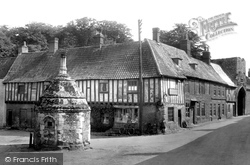
The village shop (centre) does a good trade in cycle parts, but at certain times in the religious calendar, pilgrims arrive on foot from all over Europe.
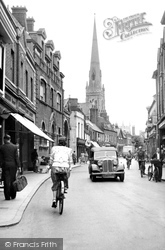
The planners of the new town centre had no place in their design for this beautiful building, and it was swept away in 1965-66 and replaced by a branch of Tesco.
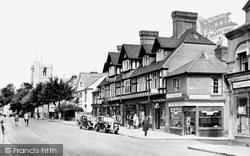
Pilkingtom Manor, mostly hidden by the trees on the left, was demolished in 1959, and today only the Dower House (the white gabled building in the centre of the photograph) survives.
Places (57)
Photos (98)
Memories (1253)
Books (2)
Maps (316)