Places
4 places found.
Those places high-lighted have photos. All locations may have maps, books and memories.
Photos
6 photos found. Showing results 461 to 6.
Maps
65 maps found.
Books
1 books found. Showing results 553 to 1.
Memories
4,591 memories found. Showing results 231 to 240.
Memories Of Padiham
I was born in 1947 to Betsy and Leonard Mcgough on Railway Terrace, which I believe is now called Russell Terrace. My mother worked in the cotton mills all her life and retired in a mill at Read. We moved to Moor Lane where we ...Read more
A memory of Whalley in 1957 by
East View And Munich
I lived at East View, Number 31 with Edgar and Myfannwy Howells from 1955 onwards. They were my aunt and Uncle. They looked after me when my parents died when I was 5 years of age. East View was a great street to be brought up ...Read more
A memory of Bargoed by
My First School
My very first memory is in 1934 when my parents, sister and I came to live in rooms over a private school in The Mount (from memory) near to a new Fire Station that had just been built. I was four years old and my mother was ...Read more
A memory of Chingford in 1930 by
Egg And Chips???
I have a strange but lovely memory of Forest Coal Pit. Mum and Dad worked shifts when we were kids so dad would often take the four of us out and about on his own, but being a 70's dad wasn't so good at cooking or organising ...Read more
A memory of Forest Coal Pit in 1973
Balidon Fond Memories
I was born on 15th August 1954 at Balidon. I am sure my father told me they had a fishpond as you came into the driveway at the front of the building. When he first came to see me, he went to open the door of a car he must ...Read more
A memory of Yeovil in 1954 by
Great, Great Grandfather
My great great grandfather came from Hayes Rd, Callington. He was a stone mason. His name was Thomas James. I know my great grandfather came to Merthyr Tydfil for work in the coal mines. I'd like to know if I've any ...Read more
A memory of Callington by
Oh For Thing Past.
I was born in 1941 in St Augustine's Rd at the top of Chalk Pit Ave. The memory I have are, the Bull Inn at the corner of Sandy Lane next to Nashes Paper Mills. Ridge ways ? the all one shop, {things past}. Doing paper ...Read more
A memory of St Paul's Cray in 1950 by
Childhood Freedom
My brother and I spent very important years in Theydon Bois. We were only there for 5 years but they were probably the most formative. It was a very simple village. There was the school, far too small for the many children ...Read more
A memory of Theydon Bois in 1953 by
Lawrence Weston Comprehensive School
I attended Lawrence Weston Comprehensive School from September 6, 1963 until February 1969. Although I had passed my 11 Plus examination very highly (highest in the southwest of England) and wanted to ...Read more
A memory of Lawrence Weston in 1963 by
Level Crossing
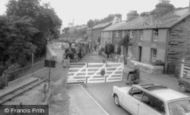
I spent many a summer at this level crossing as my grandmother, Kate Griffiths, lived in the house at the far end of the terrace. In fact the man you can see in this photo of 1965 standing in his garden is my grandfather, ...Read more
A memory of Penrhyndeudraeth by
Captions
925 captions found. Showing results 553 to 576.

Now it is a valuable habitat for wild birds, but before piped water came, this pool was a better water supply than some of the town wells.
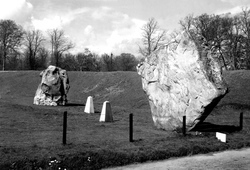
The impressive lozenge-shaped stone came from a surface outcrop of sarsen stones (the word sarsen derives from Saracen, and means stranger) which can be found on the Marlborough Downs about two miles away
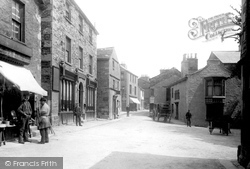
In the 1880s the railway came, and the town grew yet more hectic as the London to Scotland expresses roared by.
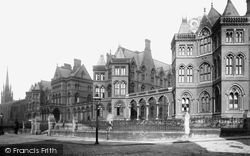
Advice on the interior design of the Infirmary came from Florence Nightingale, and it was acclaimed as being the best among European hospitals.
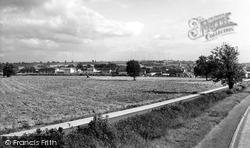
British Timken came to Daventry and Northampton in 1954, and was one of the major employers for many years. Both the factories have recently closed, sad to say.
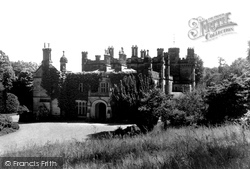
The influx of population into the area that came with the growth of the mining industry from the late 18th century and the demands for ostentatious houses by the new landowners caused
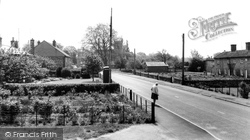
Opposite is Victoria Place, dated 1837, the year Queen Victoria came to the throne. The single-storey cottage has been converted to changing rooms for the sports field.
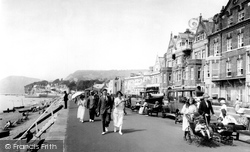
In the early years of the 19th century the impoverished Duke of Kent came to live at Woolbrook Glen.
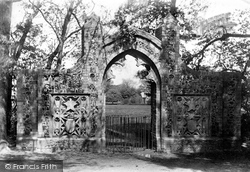
The re-used stones feature the de Vere star, and came from Earl's Colne Priory.
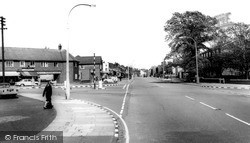
There was once a pub in this area which was called the Ball which may be where the name Ball o' Ditton comes from.
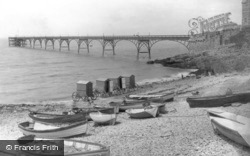
Among its distinguished visitors were Tennyson, Thackeray, Sir John Betjeman and Samuel Taylor Coleridge, who came here on homeymoon.
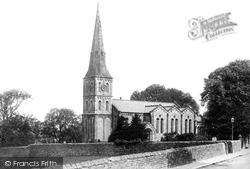
Its parish church, Christ Church, was erected in 1837, shortly after Queen Victoria came to the throne.
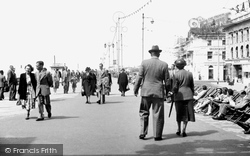
Comic genius Peter Sellers probably came here many times during his childhood. It is seemingly a hot summer's day in Southsea, yet there is just one child wearing shorts.
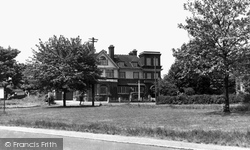
This is an Edwardian building, but there has been a house of this name here since at least the 18th century.
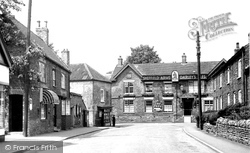
For the pub to be advertising a 'large car park' at this date suggests that the clientele came from outside the village, and that they were somewhat up-market to be car owners in the '50s.
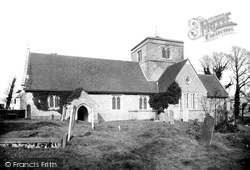
When a new rector came to Chipstead's church of St Margaret in 1809, he got something of a shock. It had become quite dilapidated and very unholy indeed.
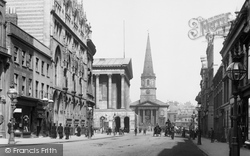
The institute, which offered a range of evening classes for workers, and was famed for its penny lectures, was one of the earlier projects linked with a major redevelopment of the town centre
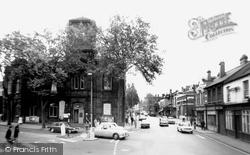
As at Tipton and Wednesbury, the 30 ft seam of Thick Coal was near the surface at Bilston.Though there is evidence for coal pits at the time of Edward I, Bilston came into its own during the 19th century
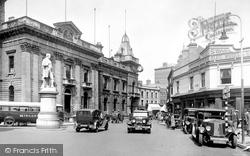
Kidderminster owes its fame to the manufacture of carpets, but had prospered from the weaving trade long before that.
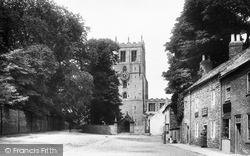
There is a room on the first floor, reached by a stair and guarded by a portcullis, which suggests that this was a defensive position for use when the Scots came on one of their cattle raids.
There is a room on the first floor, reached by a stair and guarded by a portcullis, which suggests that this was a defensive position for use when the Scots came on one of their cattle raids.
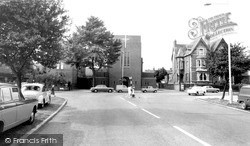
It is thought that their stone came from buildings in Gold Street which were demolished in 1887.
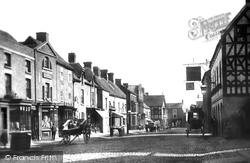
The two claimed to be going hunting, but came instead to Eccleshall; here they were baptized by Bishop Chad.
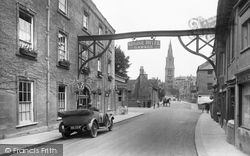
Much of 18th-century Stamford's trade came from its location on the Great North Road, and it had numerous coaching inns.
Places (4)
Photos (6)
Memories (4591)
Books (1)
Maps (65)