Places
Sorry, no places were found that related to your search.
Photos
3 photos found. Showing results 1 to 3.

Maps
5 maps found.
Books
Sorry, no books were found that related to your search.
Memories
88 memories found. Showing results 1 to 10.
Growing Up In Barnes 1950s
We moved to Glebe Road in 1952 (Cousland) and it was a wonderful place for children. We had a back gate opening on to the common and made full use of it. The grass was cut every year and baled for hay and we used to rush ...Read more
A memory of Barnes by
Straining The Memory
I attended primary school at Horstead Keynes briefly until it changed location a few miles away. (I went there as well but can't for the life of me recall the name of the place.) The head mistress was the tall and ...Read more
A memory of Horsted Keynes in 1953 by
Dunsmore People And Happenings Remembered
PREFACE TO THE SECOND EDITION In 1995, when the first edition of this history was published, it seemed incredibly optimistic to have had three hundred copies printed for a market which ...Read more
A memory of Dunsmore by
A Beautiful Place
I arrived in 1953 to live with my father and stepmother in Marbury. I have very mixed feelings of my life here. The countryside was beautiful, my love of nature and animal life has never left me. Bill's lawns (our name for the ...Read more
A memory of Marbury in 1953 by
My Time In Harlow Wood &Nbsp;
I was in Harlow Wood Hospital on and off for about 3years, first in Ward 1 which was a boys' and men's ward, it was also called Portland Ward, and Sister Langton was in charge. I was about 10 and when I first went in I ...Read more
A memory of Mansfield in 1953 by
What A Scare
It was a cold and wet evening when I had arrived in Peterborough, and having little money on me certainly not enough to pay for some hotel. I had been thumbing lifts from various towns, but as it was teeming it down with rain, I did not ...Read more
A memory of Eye in 1971 by
Those Were The Days
I was born in the home of my grandparents John and May (nee Hulse) Yeomans in Mere Road, my mother being the former Kathleen Yeomans. My immediate neighbours on either side were Jack and May Platt and ...Read more
A memory of Weston in 1940 by
Hubert Terrace
I often wondered who Hubert was. Other road names around were obvious. Bank Street was on a bank; School street had a school at the end of it. But Hubert Terrace? One side of my street was brick and the other was stone; something ...Read more
A memory of Bensham in 1964 by
Born On The Graig
"It's only wind or powder on the stomach"my Mam had said as she walked home from the ammunition factory on a cold Autumn evening. The "wind" or "powder" was born on the 2nd December 1942. I, Colin Gronow, ...Read more
A memory of Graig in 1940 by
Tooting Forever
What a delight to find this site. It reminded me of so much. My grandparents did a moonlight flit from Bethnel Green, walking to Tooting with four boys, one girl and a pram carrying Gran's pride and joy, a mangle. Three weeks ...Read more
A memory of Tooting by
Captions
87 captions found. Showing results 1 to 24.
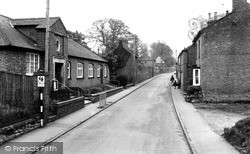
West Street is quieter than the High Street and this view looks south-west past the village hall with its somewhat ungainly porch 'perched' on the roof.
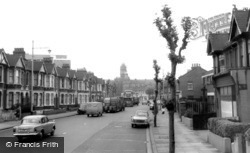
Here we approach East Ham's town centre along the busy North Circular Road, which seems in places merely a casual linkage of suburban roads.
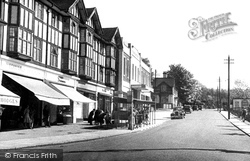
Beyond the bus stop on the left-hand side is the Perrymount cinema, which also housed a dance hall and a café.
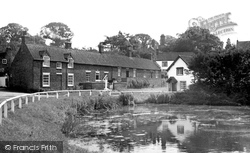
Another impressive residence, High Hall, was demolished in 1869, and was later rebuilt before passing to the ownership of the County Council in 1951.
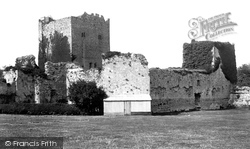
The original Norman fort at Porchester was merely a corner of the old 3rd-century Roman Saxon Shore fort defended on the two open sides by the building of a wooden palisade.
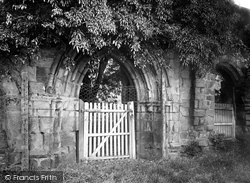
Merevale Abbey was founded in 1148 by Robert, Earl Ferrers. Only fragments of the abbey survive, mostly in the grounds of Abbey Farm, next to the church.
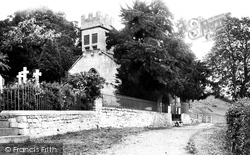
A total contrast is Charlcombe, a tiny hamlet on a minor road a mere half mile north of the Bath suburb of Fairfield Park.
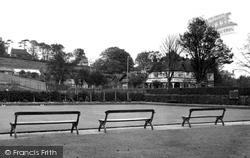
Sited imperiously overlooking the bowling green is the fine Victorian residence Merevale; its foundation stone is dated 7 September 1893.
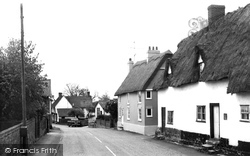
The farmhouses and cottages all have steps down to the street because the old unmetalled road to Cambridge had been gradually lowered by use.
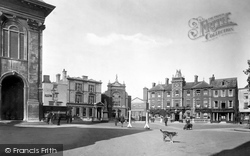
We are looking across the Market Place from the corner of Bridge Street, past the Town Hall.
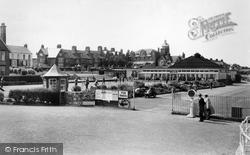
In the early 18th century, visitors were attracted here because of the three springs in the area, one very near this hall. Spa water was considered very therapeutic.
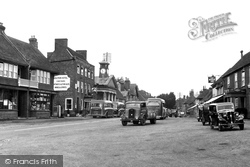
Little has changed here today. There is a car park to the right, and traffic lights with a pedestrian crossing where the buses are in this photograph.
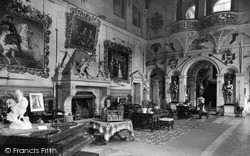
This view in Anthony Salvin's towering Great Hall was taken just before the last Earl Manvers, the sixth earl, died in 1955.
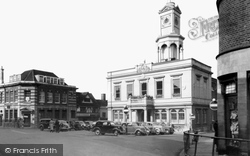
George Formby made a film here in 1944.
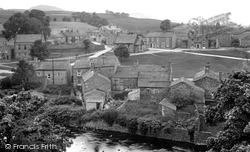
Here, next to the Ure, are mill cottages. Around the charming green we can see the old school (centre), later a billiard hall, now restored as a private house.
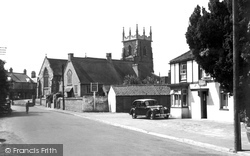
Alford is a most attractive small market town on the eastern edge of The Wolds, noted for its thatched Manor House in West Street, a 16th-century hall house with crosswings, all encased in brick in 1661
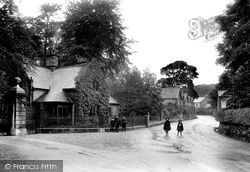
Standing by the gatehouse to the 'Big House'—Holker Hall—these four schoolchildren from Holker pose for the camera on a wet day.
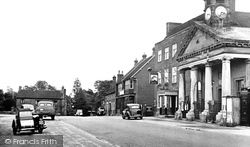
This is another picture of Botley Square, with a good view of the Market Hall. It was built in 1848, and some fifty years later the clock turret and the Tuscan columns were added.
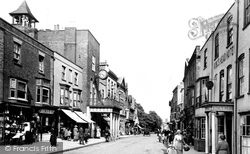
This famous and picturesque town is situated on a hill above the River Blackwater.
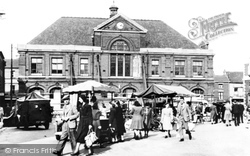
He also died and was buried here in February 1014. Here we see the 1891 Town Hall with its tottering facade shored up. A year later, in 1956, it received its present insipid Neo-Georgian frontage.
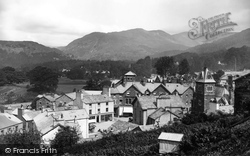
Here we have a fine overview of the town centre against a backdrop of the Fairfield Horseshoe group of mountains.
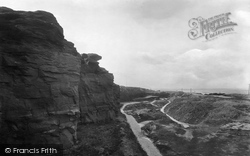
Stone from here was used to build the docks at Liverpool, Holker Hall in Cumbria and Tatton Hall in nearby Knutsford.
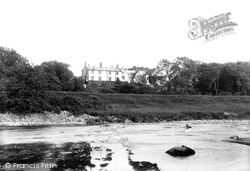
Today, Little Mitton Hall is an hotel. Mitton means 'the village where the streams meet'. The Hodder and the Ribble meet here, and that is what gave the area its name.
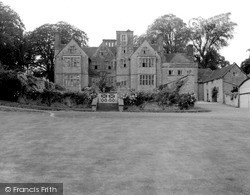
Built in 1587, Shipton Hall was a wedding present from Richard Lutwyche to his daughter, Elizabeth, when she married Thomas Mytton. Another Elizabeth, the Queen, stayed here soon afterwards.
Places (0)
Photos (3)
Memories (88)
Books (0)
Maps (5)