Places
8 places found.
Those places high-lighted have photos. All locations may have maps, books and memories.
Photos
77 photos found. Showing results 101 to 77.
Maps
49 maps found.
Books
Sorry, no books were found that related to your search.
Memories
1,425 memories found. Showing results 51 to 60.
Bombing Raids In 1940
Bristol's premier shopping centre was turned into a wasteland of burned out buildings after major bombing raids in 1940, during the Second World War. Bridge Street Summary Bridge Street ran from High Street, rising up a ...Read more
A memory of Bristol by
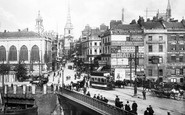
St John's Gate Broad Street
St John's Gate in Broad Street in Bristol is the only surviving medieval city gateway, at one one time there were seven gates into the old city. Fortified gateways pierced the town wall at intervals. St John's Gateway, ...Read more
A memory of Bristol by
Betton A Rural Idyl
I literally stumbled upon this website and have been interested to read the memories of people who lived in Betton, a place well known to me. I lived there as a wartime evacuee in the 1940s, and Marc Chrysanthou's ...Read more
A memory of Market Drayton in 1940 by
Rescue Of 5 Small Children From A Bombed Flat
I have traced a newspaper report telling of the rescue of myself and my four siblings when houses in Ryefield Avenue, Hillingdon were bombed in 1943. The report tells of one of the rescuers being a ...Read more
A memory of Hillingdon in 1943
Childhood Memories.
I was born at 50 Nancy Road, Grimethorpe on the 12 December 1944. At this time this address was the White City police house and had the West Riding police crest attached to the front of the house. My dad, Robert Cox, had come down ...Read more
A memory of Cudworth in 1944 by
When We Were Kids: Part 2
My Name is William Speirs, in the 1940's we moved from Bellshill Lanarkshire to live in Fishcross, Alloa, Clackmananshire, Scotland. This is a short story about when we were kids in Fishcross from about 1946 till I left in ...Read more
A memory of Fishcross in 1950 by
#11 Station Road Family 1916 Till Present
My family, the Wicketts, were the first family to move into #11 Station Road, just after it was built. I believe not long before my father, Wilfred, was born in 1916, or prehaps just after his birth(?). My ...Read more
A memory of Totnes by
Zeals House, Preparatory School 1948 1952
After the War, after the Royal Air Force had vacated the property, Zeals House became home to Stroud School. A history of the school written by the Headmaster can be found on the following website: ...Read more
A memory of Zeals by
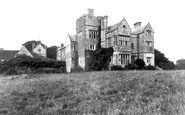
Hospital In Eastham, Can You Help?
I am trying to help a vicar in the USA trace his gt.gt.gt. grandfather - Rev James Galloway, he died aged 44 yrs old. He was the minster of St. Georges Prestbyterian Church, Little Sutton, which is still there. ...Read more
A memory of Eastham by
Coronation Year
I moved to Holme on Spalding Moor, just after Easter 1953. My gran had a pub in Hull called The Black Boy, and she retired to Holme to run the Railway Inn in Holme and as I then lived with her I moved too. I was very excited ...Read more
A memory of Holme by
Captions
876 captions found. Showing results 121 to 144.

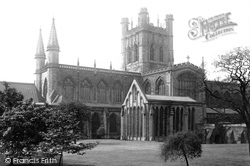
Featured here is the adjoining Chapter House built in the late 13th century; it follows the classic Early English style for monastic chapter houses and vestibules by being rectangular in shape.
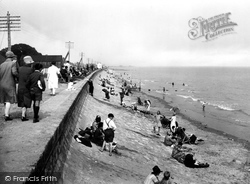
The defensive wall runs for three miles, and had to be repaired following the tidal surge in 1953.
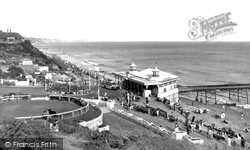
The structure was severely damaged during the Second World War, though it had been sympathetically restored by the time this photograph was taken during the following decade.
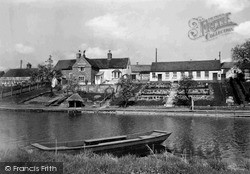
It is an unforgettable experience to follow Worcestershire's rivers on foot or on a slow-moving boat.
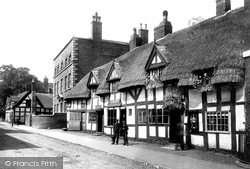
Shropshire towns have long had a reputation for their displays of hanging baskets and window boxes, a fashion that the rest of the country seems only recently to have followed.
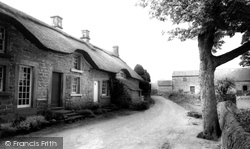
Thatched cottages are comparatively rare in this part of Derbyshire; to see Baslow's examples, you have to follow the signposted path for Chatsworth, which starts at the car park.
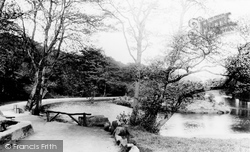
Weston Park was purchased in 1873 for £18,000; Firth Park was given by Mark Firth in 1875; Endcliffe Woods was bought in 1885, followed by Meersbrook Park in 1886 and Hillsborough Park in 1890.
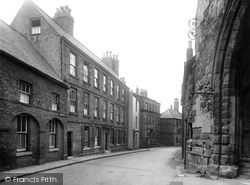
This is located just 50m from the cathedral; it fronts onto the Bailey, a mediaeval street that follows the spine of the peninsula from the historic Market Place to Prebends Bridge.
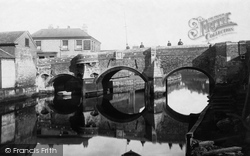
In 1549, John Kett led his rebel peasant army from its camp on Mousehold Heath over this fine 14th-century bridge, only for his followers to be cut to pieces in the city.
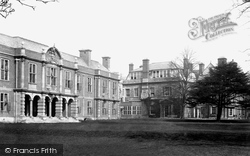
The hall opened the following year with 12 students—initially as Somerville Hall, then from 1886 as Somerville College.
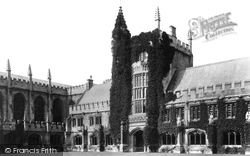
When John Fell was Dean of Christ Church, one of his students based a famous Latin epigram on him following a reprimand.
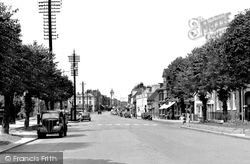
Forming a boundary with the original Augustinian priory site established by Henry I, the High Street follows the route of the Watling Street ancient trackway.
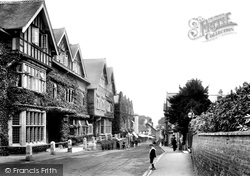
Artists such as Millais and Leighton sought inspiration in local scenes, and a host of Victorian and Edwardian amateurs followed their example.
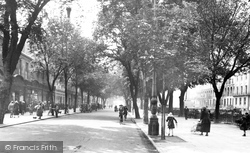
During the great building boom that followed Cheltenham's development from the 19th century onwards, much of the earlier medieval settlement was overwhelmed.
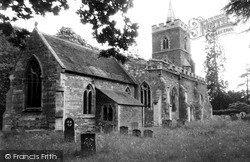
Dedicated to St Mary Magdalene, Westoning's parish church closely follows other church architecture in Bedfordshire villages, being in the Early English style with battlements and buttresses and a tower
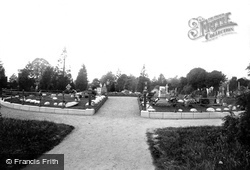
Parnell was a great Irish patriot, a Protestant landowner from Wicklow and MP at Westminster, whose career was ruined by scandal following the disclosure of his long-term affair with a married woman, Kitty
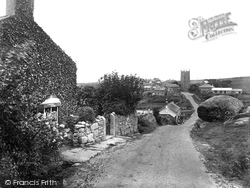
On hearing her sing in the church, one Matthew Trewhella fell in love with her, followed her to the sea and was never heard of again.
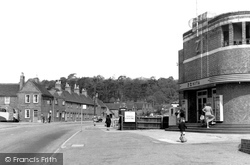
The Zonita Cinema has followed 'Adventures of Quentin Durward' into obscurity, but the pub across the road still provides a service for thirsty residents and travellers.
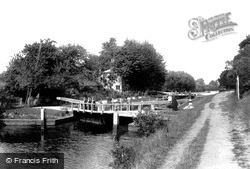
A small child perches precariously on the lock gate balance beam: one wriggle and disaster could follow. To the left, a huge ladder is in place, seemingly to pick the fruit hanging from the branches.
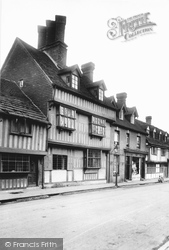
It suffered a disastrous fire in December 1928 but was skilfully rebuilt the following year.
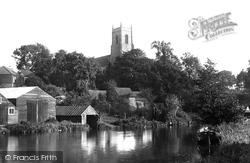
Following in the Norfolk tradition of fine churches, St Peter's is a noble if diminutive edifice, with a fine old traceried screen and Norman font.
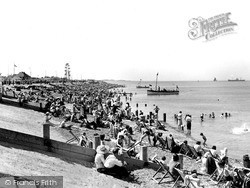
It was to Sheerness dockyard that Nelson's body was brought, preserved in a barrel of spirit, following his death at Trafalgar.
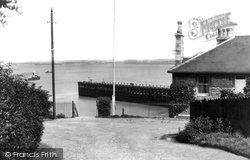
The following year the pier was commissioned; it was soon extended so that vessels could use it at low water.
He died in France in 1934, but a year later his body was brought back to England and laid to rest here following a torchlight funeral oration.
Places (8)
Photos (77)
Memories (1425)
Books (0)
Maps (49)