Merry Christmas & Happy New Year!
Christmas Deliveries: If you placed an order on or before midday on Friday 19th December for Christmas delivery it was despatched before the Royal Mail or Parcel Force deadline and therefore should be received in time for Christmas. Orders placed after midday on Friday 19th December will be delivered in the New Year.
Please Note: Our offices and factory are now closed until Monday 5th January when we will be pleased to deal with any queries that have arisen during the holiday period.
During the holiday our Gift Cards may still be ordered for any last minute orders and will be sent automatically by email direct to your recipient - see here: Gift Cards
Places
4 places found.
Those places high-lighted have photos. All locations may have maps, books and memories.
Photos
68 photos found. Showing results 121 to 68.
Maps
70 maps found.
Books
Sorry, no books were found that related to your search.
Memories
713 memories found. Showing results 61 to 70.
The Blake
The following information relates to the opening of the Blake school in Hednesford. The Blake school was built to replace the Central Secondary school for boys which was in Burns Street Chadsmoor (where Chadsmoor junior school is now ...Read more
A memory of Chadsmoor in 1961 by
Brian Tutt
This should be of interest, I hope. I attended Roper Street C of E Primary School from 1944 to1947, Head teacher, Mr Hatt and class teacher Miss Sexton. Brian Tutt was in this class. Sadly he contracted Polio in 1947 and was kept alive in ...Read more
A memory of Eltham in 1940 by
Growing Up
I was born in the former Mechanics Institute in Derwent Street, Blackhill in 1946 where my grandfather was the caretaker. My name was Ann Wall and my grandparents' name was Redshaw. My mother lived with my grandparents in the ...Read more
A memory of Blackhill in 1946 by
Dunsmore People And Happenings Remembered
PREFACE TO THE SECOND EDITION In 1995, when the first edition of this history was published, it seemed incredibly optimistic to have had three hundred copies printed for a market which was ...Read more
A memory of Dunsmore by
Netherthong In The First World War Part 3
Private John Henry Hoyle was born in Wilson Square in 1879 and he joined the Royal Welsh Fusiliers (Teacher Battalion) in January 1916. He was reported as missing and his body was found on March ...Read more
A memory of Netherthong by
Drayton Jottings
Drayton Jottings. Auntie Alice, in Kings Avenue, regularly seen, out on her front doorstep, she kept it clean, the 'raddled' red stone was buffed to a shine, 'Old fashioned traditions', here continued,so fine. one day, from ...Read more
A memory of Market Drayton by
Where I Was Born
My Beginning, at Sole Street near Cobham Kent. (9th March 1946 - 2nd January 1951) I was born on Saturday March 9th 1946 at 3.29pm at Temperley, The Street, Sole Street, Kent. I was delivered at home by the ...Read more
A memory of Sole Street in 1946
Evacuation At The Time Of The V1 And V2 Attacks On The South East And London
I am adding to my brother's memory written today about our evacuation to North Wales in 1944. A fuller description has been written by myself on BBC North East Wales web ...Read more
A memory of Coedpoeth in 1944 by
My Beloved Bonk
I have loads of memories of village life as a kid. I was born in 1961 and still live on the Bonk. I will probably die here as well. There were many old characters back then. Iron Bates the vegetable cart man (did some boxing ...Read more
A memory of Cheslyn Hay in 1969 by
Walk About
Now living in Australia - Arriving back to visit relatives, a previous life time of my walk about ways seems so dream-like. Living at The Greig Farm above the Wier Farm (The Wier which had been in my family forever) was the best ...Read more
A memory of Ewyas Harold in 1965 by
Captions
788 captions found. Showing results 145 to 168.

The iron gates are still in place; they are a delightful ornament provided by our Victorian forefathers.
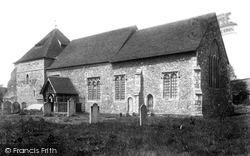
The south door is notable, too, for its iron scrollwork. One of Heybridge's main industries, an ironworks, surrounded the church and vicarage on three sides.
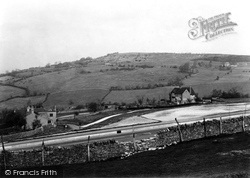
There are many hill forts that punctuate the western escarpment; the majority of them belong to the Iron Age, and date from about 600 BC.
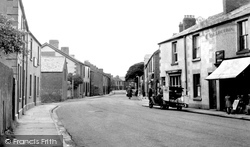
Haverigg is perhaps best known today for the nearby Hodbarrow Point RSPB reserve, which has been developed on a former iron mining site on the Duddon Estuary.
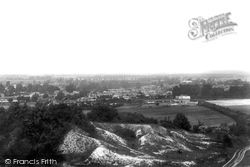
Various Iron Age sites and encampments illustrate the area's wealth of history.
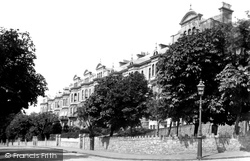
Notice the particularly fine, cast-iron gas lamp on the corner just outside the grounds of St Faith's private school.
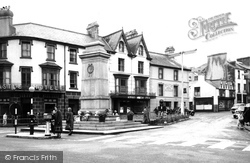
The population increased during the first half of the century with the discovery of an abundant supply of coal and iron ore.
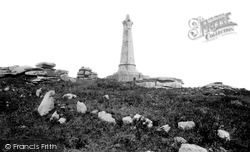
It subsequently became home to Iron Age inhabitants, who left behind their circular huts and fort ramparts.
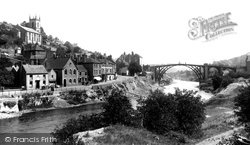
Darby chose the location with care; supplies of coal, iron ore, and water were readily available, and there was access to the Bristol Channel ports by way of the Severn.
The population increased during the first half of the century with the discovery of an abundant supply of coal and iron ore.
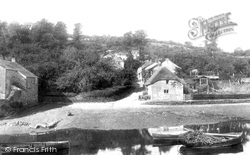
In 1863 a railway was constructed along the bank for transporting iron from the mines at Restormel. However, it was soon carrying visitors, keen to savour the joys of the waterside life.
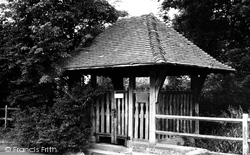
The iron machinery for raising water is still intact.
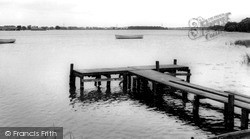
All along the Nene valley hereabouts are flooded iron ore pits, some of which have been turned into fishing or boating lakes.
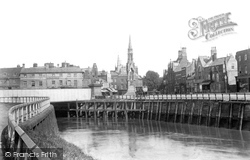
Beyond the unsightly iron bridge can be seen the offices of the Great Northern Railway: later occupied by the Trustees Savings Bank.
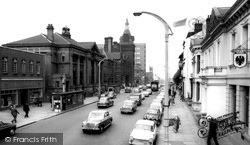
Between 1801 and 1901 West Bromwich’s population rose from 5,600 to over 65,000 owing to its becoming a centre for iron-making.
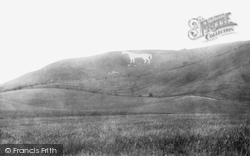
Immediately above it is the outline of the ancient Bratton Camp, an Iron Age fortification.
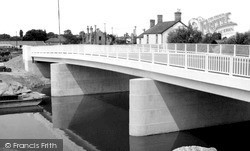
This concrete bridge replaced the earlier iron bridge in 1959 as part of the flood prevention scheme that started in the late 1950s.
Immediately above it is the outline of the ancient Bratton Camp, an Iron Age fortification.
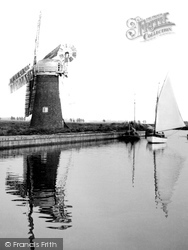
On the west bank of the Ant stood Ludham Mill, a tower mill nearly 50ft high to the iron curb, with a base diameter of 12ft 4in, including 18in thick walls.
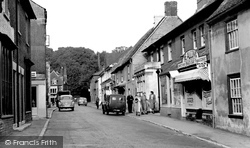
Not far away at Castle Hill is a hillfort dating back to the Iron Age. Roman, Anglo-Saxon and Danish warriors would all have known this neighbourhood.
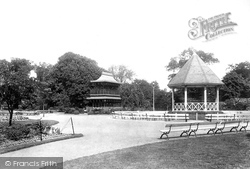
Beyond the bandstand is the Pagoda, a cast iron structure designed for the international Philadelphia Exhibition of 1876. It survived the war, but was removed in 1949.
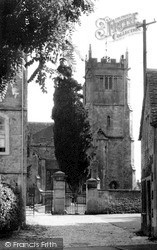
The church of St Michael and All Angels is entered through a picturesque iron gate with lamp.
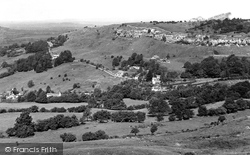
Crickley is an important archeological site, where an extensive Iron Age promontory hill fort has been under excavation since the 1960s.
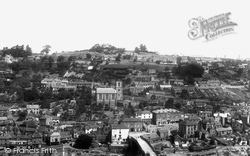
The iron bridge is in the foreground. Immediately opposite is a Georgian building - the Tontine Hotel. When the bridge was built, people came from all over the world to see it.
Places (4)
Photos (68)
Memories (713)
Books (0)
Maps (70)