Merry Christmas & Happy New Year!
Christmas Deliveries: If you placed an order on or before midday on Friday 19th December for Christmas delivery it was despatched before the Royal Mail or Parcel Force deadline and therefore should be received in time for Christmas. Orders placed after midday on Friday 19th December will be delivered in the New Year.
Please Note: Our offices and factory are now closed until Monday 5th January when we will be pleased to deal with any queries that have arisen during the holiday period.
During the holiday our Gift Cards may still be ordered for any last minute orders and will be sent automatically by email direct to your recipient - see here: Gift Cards
Places
4 places found.
Those places high-lighted have photos. All locations may have maps, books and memories.
Photos
68 photos found. Showing results 461 to 68.
Maps
70 maps found.
Books
Sorry, no books were found that related to your search.
Memories
713 memories found. Showing results 231 to 240.
Ealing Road Wembley.
I Moved to Wembley in 1948 at age of 2 and lived there for 22 years. We lived in Ealing Road opposite Lyon Park Ave. My friends and I used to go up Lyon Park Ave to the Iron Bridge which crossed over the railway lines and do ...Read more
A memory of Wembley in 1960 by
Christmas Is Coming
Still on my travels on Memory Lane I browsed past St Helens. This was always a place of seasonal visits: Christmas, Easter and Harvest Festival. I must admit that Easter visits do not live long in my memory, and Harvest ...Read more
A memory of Ashby-de-la-Zouch by

My Early Chidhood
I was born at 32 Pisgah Road which was the bottom end cottage of a row of three opposite Pisgah Chapel. The cottages had no back entrances. There was a pathway running in front of the three cottages with an outside toilet opposite ...Read more
A memory of Talywain in 1945 by
Holidays In Grainthorpe
Many holidays were spent by me and my brother in Grainthorpe during the 50's and 60's with my grandparents. They lived in Buttgate, Ben and Bertha Barfield and my auntie, Winnie Barfield. Many happy memories, walking to ...Read more
A memory of Grainthorpe in 1950 by
They Were The Days
I grew up in eccles between 1963 and 1985. For those that check these memories or who have already contributed to them, i have attatched a link ...Read more
A memory of Eccles by
Memories Of Ann Marilyn Carey
The Carey's were one of the first families to move into Clay Green. Dad was in St. Wulstan's T.B. Hospital (it was an American Army Hospital during the war). Mum, Billy, Sheila and myself moved into No 5. A brand new ...Read more
A memory of Alfrick in 1950 by
Wandle Park
I grew up in Lower Church Street, next to the Pitlake ph. As kids we used to play all summer long in the park. By then the boating lake had been drained and it was just a big circular ditch with the island in the middle. The river was ...Read more
A memory of Croydon in 1965 by
Gaslight 1954
In the early 50's many streets in Uxbridge were still lit by gas. So "lighting up time" had a whole different meaning. The iron lampposts were much lower than the lighting masts of today and were more widely placed along the streets. ...Read more
A memory of Uxbridge in 1954 by
The Providence Congregational Church 1956
"The Providence", as it was commonly known, stood at the corner of Laundry Yard and The Lynch. Built in 1795 with a later facade it was a gem of late georgian "chapel" architecture. You entered through a ...Read more
A memory of Uxbridge in 1955 by
Great Days
I think it was about 1967, we moved down from Wallasey, Merseyside to number 7 Williams Row, miners cottages at the top of Guest Street. I remember my first day at Fochriw Infants, it was like a whole new beginning, made some new friends. ...Read more
A memory of Fochriw in 1967 by
Captions
788 captions found. Showing results 553 to 576.

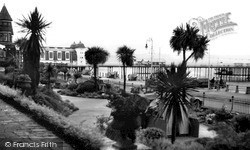
The original iron railings seen here skirting the lowest terrace were removed during the Second World War – chains eventually replaced them in 1948.
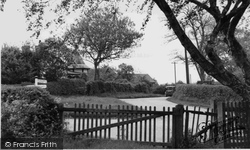
This curious name apparently comes from the Latin for a tenth or ten, the ten being iron rods or 'dickers' which a medieval ironmaster paid as his rent for the land hereabouts.
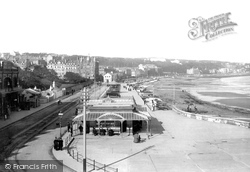
Had this picture been taken just a few years earlier it would have featured the Douglas Iron Pier, erected opposite the Central Hotel in 1869; it was dismantled in 1892.
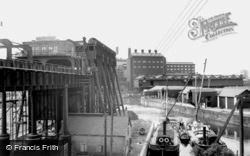
The Trent & Mersey was connected to the upper level by means of a 162ft wrought-iron aqueduct; the Weaver was connected by a small basin.
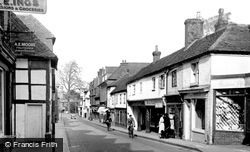
On the credit side, however, the car park wall incorpo- rates excellent modern wrought iron sculptures, and lying as it does opposite the municipal offices, the car park looks like a town square.
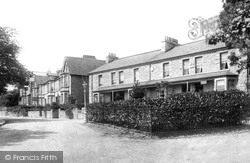
The iron fence and bushes in the foreground at the junction with Meathop Road have now gone, and the old street lamp at its end has been replaced by a modern one by the side of the road
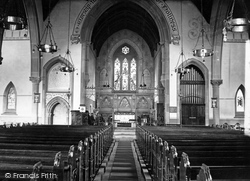
The wrought iron screen is particularly fine; it was erected in 1911 in memory of the Rev George Lomax, vicar for fifteen years. In 1992 the Accrington Pals Memorial Chapel was dedicated.
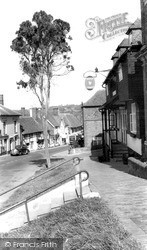
An iron-smelting furnace, controlled by the Churchill family, made cannon in 1754. The Seven Stars Inn, a picturesque 15th-century timber-framed building, is seen on the right, with a temporary sign.
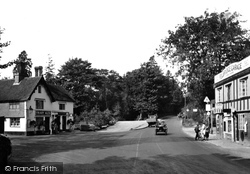
The Roman engineers used a mixture of iron slag, sandstone and stones for their solid construction on this part of the route.
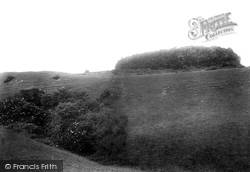
Now a tree-clad hilltop fort, this is another example of the many forts built by the Iron Age people. To date it has never been excavated.
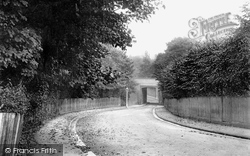
The bridge now has a metal mesh balustrade, but the cast-iron spans are unchanged.
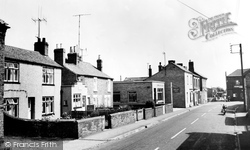
It now serves as a garage for an ice cream van, and it still has the iron bars over the windows.
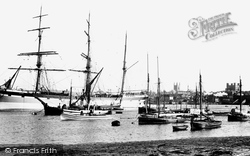
By the 1890s it was not just the hulls of merchant sailing ships that were being constructed of iron or steel; many also carried steel masts, spars and fittings.
It now serves as a garage for an ice cream van, and it still has the iron bars over the windows.
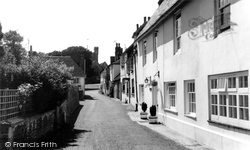
Harrow Hill is an archaeological site with traces of an Iron Age hill-fort, a group of Neolithic flint mines and a Bronze Age farm enclosure. The scene today is little changed.
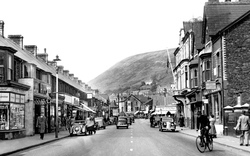
The steel industry used the docks to import iron and other materials that are part of the steel-making process.
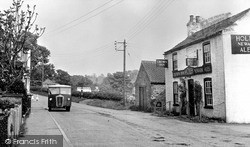
All Saints church, higher up the village, has a massive Norman tower, and the church is built in the local iron-rich brown limestone.
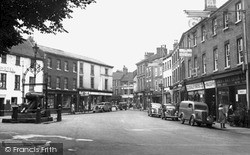
During World War II it and the distinctive iron railings were dismantled and stored, thus escaping being melted down for Spitfires, and reinstated in 1949.
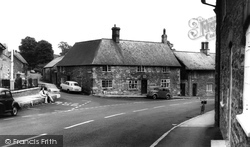
Both are built of local iron-stained oolitic limestone.
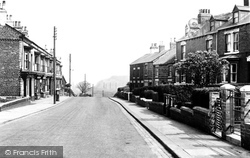
We are looking eastwards from the end of Brotton High Street, and the chimneys of the Skinningrove iron and steel works can be seen in the distance.
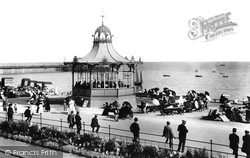
Worthing's was a good example, with screens to protect the band from the sea breezes and an elegant wrought iron openwork cupola to its ogee roof.
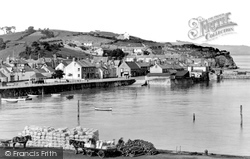
Watchet was one of medieval Somerset's most important towns, and its harbour remained important into the 20th century, exporting iron ore from the Brendon Hills to the south.
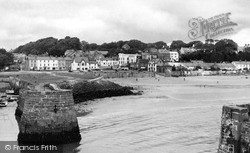
It was constructed after 1829, and it exported coal and iron from seven collieries in the vicinity which ceased production in the 1930s. Coal may have been extracted here since the 14th century.
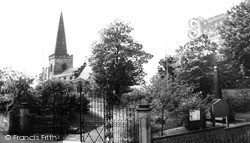
The iron gates in the foreground came from Wellington College in 1922.
Places (4)
Photos (68)
Memories (713)
Books (0)
Maps (70)