Places
8 places found.
Those places high-lighted have photos. All locations may have maps, books and memories.
Photos
77 photos found. Showing results 201 to 77.
Maps
49 maps found.
Books
Sorry, no books were found that related to your search.
Memories
1,425 memories found. Showing results 101 to 110.
Kitkburton Primary School
I attended Kirkburton First School (School Hill), prior to this I was sent to a Catholic school in Huddersfield, although living in Burton at the time, there was no comparison, Kirkburton School was like heaven following ...Read more
A memory of Kirkburton in 1958 by
My Childhood Garden Part Ii
Some months later, how long I cannot remember for the passing of time means little to a child, except that it always seemed so long for things to happen; but I found myself again seated in the back seat of another ...Read more
A memory of Shamley Green in 1954 by
My Childhood Garden Part V
Beside the strawberry bed grew a large cooking apple tree that produced enormous green apples. We had a variety of both eating and cooking apple trees in the garden, the fruit from which was harvested and then stored ...Read more
A memory of Shamley Green in 1954 by
I Stayed At St Briavels Castle Youth Hostel
In the early 1970's I was a Scout Leader in Riverhead - near Sevenoaks in Kent - and we decided to spend our 1974 summer camp in the West Country or South Wales. I remember my fellow leader, Squadron ...Read more
A memory of St Briavels in 1974 by
6th Northwood Scouts Go Hostelling
I remember staying at the youth hostel in Greens Norton with the patrol leaders of the 6th Northwood Scout Group. I was an ASL (Assistant Scout Leader) with the troop for several years and as I had always ...Read more
A memory of Greens Norton in 1980 by
Old Bull Morris Men Dance At The Old Guinea Pub
The Old Bull Morris Men were based at the Old Bull Arts Centre in nearby Barnet and would regularly turn out to perform at pubs in south west Hertfordshire around 1979 - 1981. Originally ...Read more
A memory of Ridge in 1980 by
Childhood In Benham Valence
It was in April 1950 that I was born in the Victorian wing of Benham Valence - actually in the flat above the garages - a very primitive dwelling with no bathroom or indoor toilet. Unfortunately the whole wing was ...Read more
A memory of Benham Park in 1950 by
The Ship Inn At Axmouth.
The Ship Inn can be seen to the left of the photograph; just beyond the wall. My great-great-grandparents, John and Mary Real (born in Axmouth in 1821 and 1824 respectively) were licensees of The Ship Inn, Axmouth, at the time ...Read more
A memory of Axmouth in 1960 by
Memories Of War Years 1939 45 Newport
Memories of War years 1939 -1945. By John Beal. Little did I realise that I would be involved in the army when war broke out in 1939. I was attending Hatherleigh Central School in Newport at the time and as a ...Read more
A memory of Newport in 1940 by
Willingdon
My grandparents lived near the British Queen on Eastbourne Road near the tiny grocers store and I have happy memories of spending summer holidays on the downs and Donkeys Hollow picking bluebells. I would love to hear from anyone who ...Read more
A memory of Willingdon in 1951 by
Captions
876 captions found. Showing results 241 to 264.

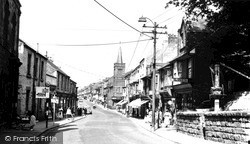
This attractive view taken during one summer around 1960 shows that many of the shops followed the fashion of the day in using sun blinds over their shop fronts.
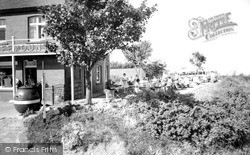
Originally built in 1924 as a three-bedroomed house, the building was added to over the following six years to become a hotel. The pavilion to the right is a café that was operated from the garden.
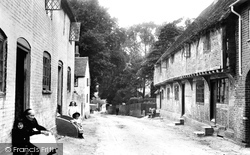
It later reopened following major restoration
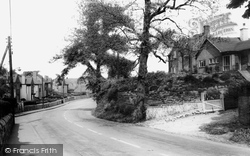
After the Norman Conquest, the lands belonging to those theyns who had either fought for Harold or were implicated in the Northern rebellions were confiscated and awarded to William's followers.
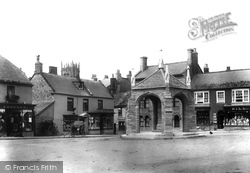
Hardy drew a very accurate picture of Beaminster, and it is possible to follow in his heroine's footsteps.
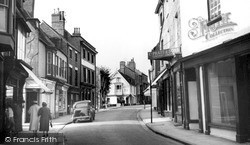
Turning left out of Castle Hill, Bailgate follows the course of the Roman Ermine Street towards the old Roman north gate from the city, the Newport Arch.
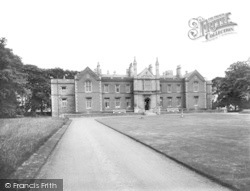
Following a bequest by a local surgeon in 1828, the Infirmary was built in Tudor-Gothic style on the historic Greyfriars site.
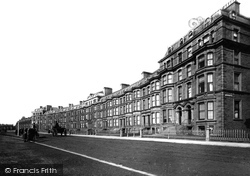
The following year, a Fylde girl, Lucy Morton, won the Olympic swimming race in Paris.
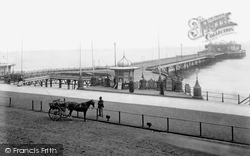
In the following years many buildings were added to it with major reconstruction in the 1930s.
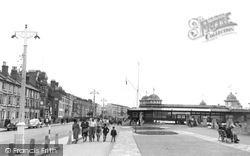
It has acquired even greater prominence following the loss of the Pier Pavilion and the pier itself.
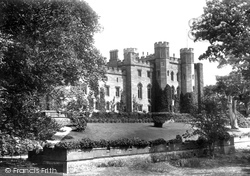
Following the forfeiture of his lands in 1600, it passed into the ownership of Sir David Murray of Gospetrie.
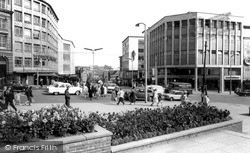
The High Street was one of the principal shopping areas of the city to be damaged during the air raids of December 1940.The front of the C & A store collapsed into the street following three direct
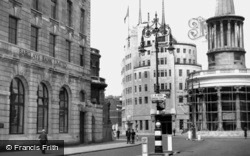
All Souls' is still in scaffolding following bomb damage.
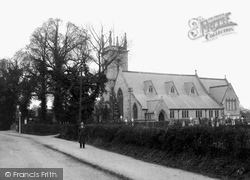
A primary school followed in 1846, hidden by the trees to the left.
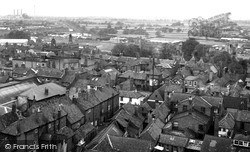
Following Newark's surrender, the Parliamentarians smashed the bowl of the 15th-century font in St Mary's; it was eventually replaced around 1660.
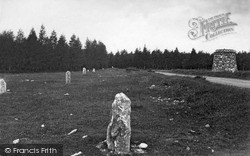
Following the battle, 300 clansmen were herded into Inverness town jail and left without food or water for two days. Those that died were thrown into unmarked trenches.
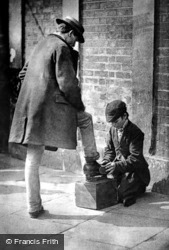
The Ragged Schools, Saffron Hill, set up the first society, and nine others followed. The aim was to educate orphan boys and to give them a good start in the world.
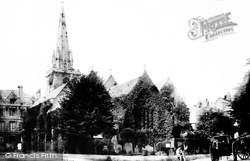
Following the Dissolution of the Monastries, it was acquired by the Crown before becoming part of Pembroke College. Its members worshipped here until the college built its own chapel in 1732.
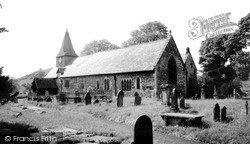
Constructed by local workers, the church does not conform to standard architectural styles; the Welsh refused to follow the fashions of the age.
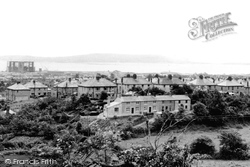
This general view shows typical houses of the time; the terrace in the foreground is followed by 1950s semis leading down to the waters of the inlet of Carmarthen Bay, with the Gower peninsular just visible
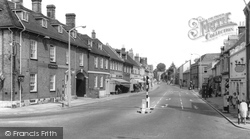
Its streets, North, South, East and West, follow the pattern laid down by the Romans.
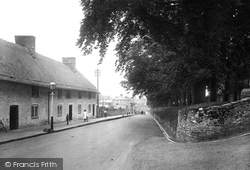
The cottages are outside the line of the old walls, and may not have been subjected to the ban on thatch which followed the fires of the 17th century.
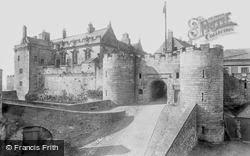
One of Scotland's greatest royal fortresses, Stirling Castle was taken by William Wallace in 1297 but was surrendered to Edward I in August 1305 following a siege.
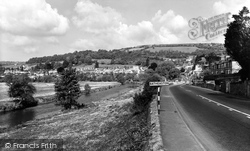
The Fosse Way runs down from the right of this picture to meet the Avon and follow it to Bath, three miles away.
Places (8)
Photos (77)
Memories (1425)
Books (0)
Maps (49)