Places
4 places found.
Those places high-lighted have photos. All locations may have maps, books and memories.
Photos
6 photos found. Showing results 101 to 6.
Maps
65 maps found.
Books
1 books found. Showing results 121 to 1.
Memories
4,591 memories found. Showing results 51 to 60.
Honeymoon
We spent our honeymoon (1951) in Guernsey, and we had a lovely time. Even though it was only six years since the end of the war and the Islanders had suffered badly from the German occupation, we had as much butter and milk as we wanted, ...Read more
A memory of Guernsey in 1951 by
Stanley Road, South Harrow
I lived with my foster family in Stanley Road South Harrow, during the war. Our house backed on to the gas works and I always wanted to climb the gasometer which I did eventually with a friend from across the road. At ...Read more
A memory of South Harrow in 1940 by
Our Home For 30+ Years
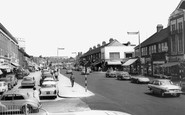
Mam and Dad, Lizzie and Edwin Ridley, moved into Slaghill (the cottage on the right of the picture) in 1948 when I was 3 years old. Dad died there in December 1978 and Mam moved up to Chapel Cottages soon afterwards. There ...Read more
A memory of Allenheads in 1948 by
Town Hall
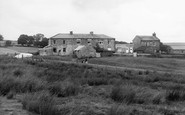
I think this a picture of Abergavenny Town Hall, but am not sure. When we were staying in Abergavenny we lived outside, in Albany Road, on the way to the Rholben and the Deri, which we often climbed and as we didn't go into the town ...Read more
A memory of Abergavenny in 1940 by
New Home
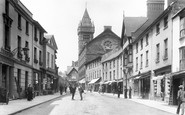
Upton has many happy memories for me. I was only 15 years old at the time we moved to Upton from Aintree. I spent many happy times in Upton those days. I remember the village so well. And in particular The Stone House Bakery! Where my mum ...Read more
A memory of Upton in 1959 by
Good Times
We came down from Scotland to Stoke in 1953 as my dad had got a job in the newly opened Pit Hem Heath. As children we used to stay at the house which is sitting in front of the pit . We used to go across the brook on the pipe what ran ...Read more
A memory of Hem Heath in 1960 by
Shotley Bridge Hospital
My father was deputy head porter at the hospital, he worked there for 40 years. When I came out of the Royal Air Force in 1959 I did not work for a few months until early 1960 when my father gave me a job as a porter at ...Read more
A memory of Shotley Bridge in 1960 by
Growing Up In Barnes 1950s
We moved to Glebe Road in 1952 (Cousland) and it was a wonderful place for children. We had a back gate opening on to the common and made full use of it. The grass was cut every year and baled for hay and we used to rush out ...Read more
A memory of Barnes by
Happy Days
I came to live in Ardpeaton Lodge at the age of 2 when my father was transferred from Wales to Coulport. At that time the Lodge was owned by the MOD along with Ardpeaton House which was further up the drive. Two years later the House was ...Read more
A memory of Ardpeaton in 1947 by
Grandmother And Grandfather, Also Aunts & Uncles Lived In The Village
My grandmother and grandfather had the general store and post office. Their name was Cridland. One of my aunties and uncle Charles had a house down by the church, their name was ...Read more
A memory of Old Cleeve in 1930 by
Captions
925 captions found. Showing results 121 to 144.

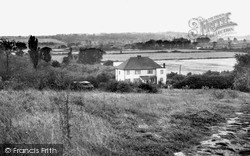
The bungalows along Church Road are fairly representative of the kind of housing to be seen in Laindon before the New Town came. Several of them are still there.
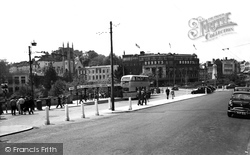
Public transport came early to Bournemouth, making the town a superb central location for visitors wishing to explore the locality.
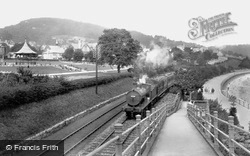
When the railway came to Grange-over-Sands in 1857 it signalled the town's rapid expansion as a seaside resort for visitors from the industrial mill towns of Lancashire.
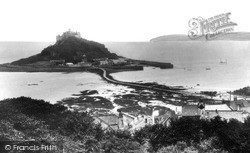
Legend has it that Mediterranean traders came here to Ictis (as the place was called then) to trade for tin.
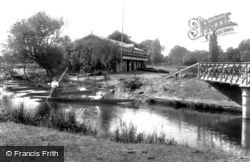
Punting became very much a ladies' pastime, and the fame of the 'English Punt Girl' spread far and wide. In 1908 there was even an article describing her in the Travel magazine of New York.
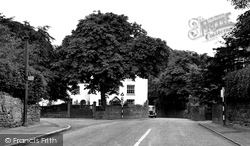
Its claim to fame is the Barn Stone - a huge granite boulder swept down from Scotland during the last Ice Age.
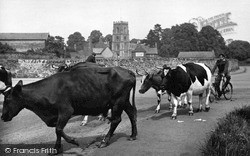
Thomas became the Whig MP for Calne, Leeds, but it was his masterpiece - 'A History of England', that brought him fame.
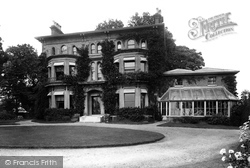
The Havering manor was a crown manor from the time of Harold, of Hastings fame, until 1828.
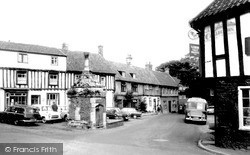
The town of Little Walsingham grew up to serve the many thousands of pilgrims that came to the priory; it has more early 17th-century houses than any other town in Norfolk.
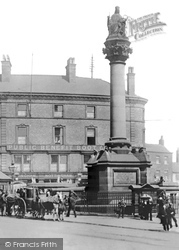
The monument was erected to commemorate the Crimean War; as with most of such things, it came complete with captured Russian cannon.
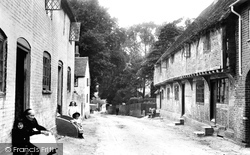
Odiham's houses are a mixture of Georgian and Tudor; some are timber-framed, which was common before local bricks came into general use in the 18th century.
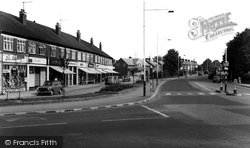
The village of Eastham is about one mile inland from the River Mersey, but one of its claims to fame is that it has the largest canal locks in the country - these give entry to the Manchester Ship Canal
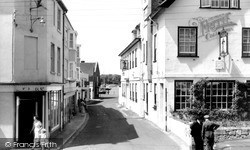
The George Hotel, here on the right, offered popular accommodation to Victorian visitors and those who came this way throughout the 20th century.
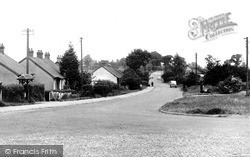
The bungalows along Church Road are fairly representative of the kind of housing to be seen in Laindon before the New Town came. Several of them are still there.
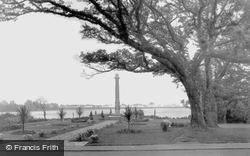
Shortly after it was dedicated in 1927, the Prince of Wales (the future Duke of Windsor) came from Bournemouth to lay a wreath in the presence of schoolchildren.
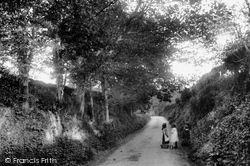
Its steep banks and overhanging trees would have provided protection for travellers when the winter storms came.
The bungalows along Church Road are fairly representative of the kind of housing to be seen in Laindon before the New Town came. Several of them are still there.
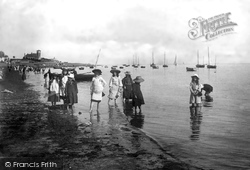
Then the railways came, and brought humbler people to the resort as well.
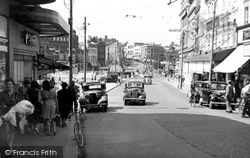
Many shoppers came to the town every week from distant places to do their weekly shopping.
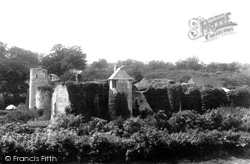
This site has been in constant habitation since earliest days, and there was a moated village here before the Romans came. In Tudor times, the castle became the home of the Wyatt family.
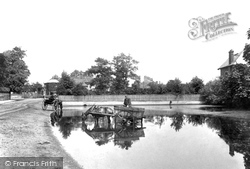
This Thames-side town was once famed for its abbey, now almost entirely vanished; its stone was used for the building of Hampton Court.
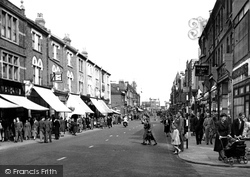
Charles Lamb, the essayist, came to live in the country town of Enfield two centuries ago.
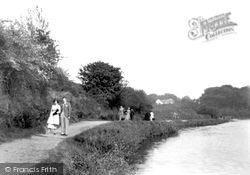
It could also have been so quiet because Belfast residents had so much choice when the time came for the essential walk.
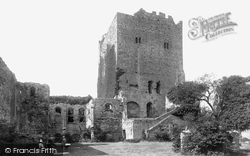
Henry VIII came here with Anne Boleyn.
Places (4)
Photos (6)
Memories (4591)
Books (1)
Maps (65)