Places
8 places found.
Those places high-lighted have photos. All locations may have maps, books and memories.
Photos
77 photos found. Showing results 541 to 77.
Maps
49 maps found.
Books
Sorry, no books were found that related to your search.
Memories
1,425 memories found. Showing results 271 to 280.
My Days In Rosedale Abbey
My Life in Rosedale Abbey - Raymond Beharrell During the last war my brother and I lived in York very near to the main railway yards. The area was always on the target for the German bombers, being railway sidings. ...Read more
A memory of Rosedale Abbey by
Granada! I Am Under Your Spell
I was born in Battersea in 1938. We lived at 28 Forthbridge Rd near Clapham Common. With my mum and sister, I went to the Granada cinema loads of times on a Saturday night. Often you had to line up to get in and they ...Read more
A memory of Battersea by
Mr George Baker, Wooburn Green
My Great Grandfather George Henry Baker (1880 -m1947) was the owner (following his father also George Henry) of the Blacksmith and Scrap Metal Dealer later known as Slades Scrap Yard In Wooburn Green. My Great ...Read more
A memory of Wooburn Green by
More Memories Of Bredbury
I was born at 83 Kingsway in August 1952 at my grandparents' home. My mother was Joan Carter (nee Harrison) who was born in Bennett Street, Ardwick, Manchester and my father was Brian Carter who was born in Rotherfield ...Read more
A memory of Bredbury by
School Days And Beyond
Having just stumbled on this website I felt compelled to add my recollections of living in Fenham in Cheeseburn Gardens from circa 1961 to 1980. I lived 2 streets down the hill from the first contributor who lived in Ovington ...Read more
A memory of Fenham by
I Was There Ron Jackson
In 1949 the Royal Links which had hosted Royals and the glitterati of the day was the first to fall to the contagious bout of fires which mysteriously began to sweep the area. Imagine that wonderful central staircase (with no ...Read more
A memory of Cromer by
I Was There
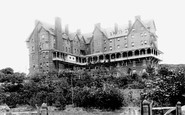
After being de-requisitioned and restored at the end of WW2, the Overstrand Hotel was a massive building standing only yards from the cliff edge, it opened, then closed, then re-opened with a new bar called “Bubbles Bar” to cater for ...Read more
A memory of Overstrand by
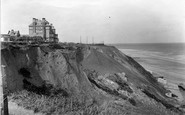
Always In Trouble..
I attended Orange Hill between 1963 and 1969..best recall... Patricia Ranger...now Leary. My first year was at the school in Burnt Oak..I lived at the Spur Road estate and took the train from Edgware to Burnt Oak, then later walked ...Read more
A memory of Burnt Oak by
Booths/Sadler St/Princes Road.
I tried to post on the board earlier, but may have botched up. But if it appears twice. Whoopsie! Now, I'm going back a bit... My grandparents Annie and Arthur Booth and their daughter (my mum) Barbara lived on Sadler ...Read more
A memory of Widnes by
Captions
876 captions found. Showing results 649 to 672.

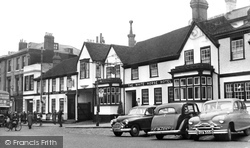
'The one desire of every true Briton on first coming to Dorking is to follow Sam Weller as he descends from the Arundel coach to the Marquis of Granby.
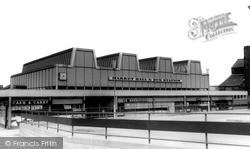
There has been a great deal of concern locally following the severe decline of old Runcorn that resulted from all the investment in the new town development around Halton Lea.
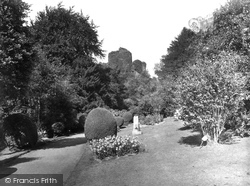
Following the move of the gaol and assizes to Bodmin in 1842, the grounds were landscaped and turned into a pleasure park by the Duke of Northumberland.
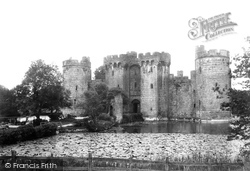
The castle, at the medieval limit of navigation for the River Rother, was presumably licensed in 1385 following French raids on Rye and Winchelsea.
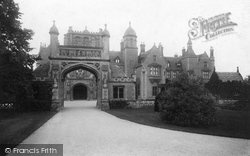
The Victorian Gothic mansion of Tortworth Court, with its distinctive welcoming gatehouse, was built in the mid 19th century following the elevation to the peerage of the first Earl of Dulcie
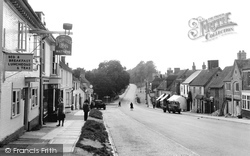
In 1644 the Royalists set the town alight following the nearby Battle of Cheriton. In 1689 most of the town was again burned to the ground when another fire swept through it.
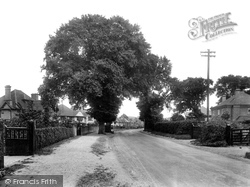
These splendid trees had already overseen the widespread development of substantial suburban houses south of the village and the station which had begun in the years following the First World War.
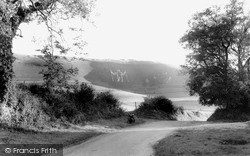
'Discovered' in 1873 and restored the following year, its origin is still unknown. It may represent a pilgrim, and this may link it to the medieval Wilmington Priory nearby.
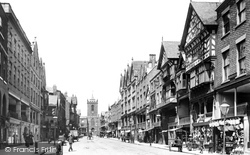
Bridge Street is one of the main streets of the city of Chester, and still follows the original street plan laid down by the Romans.
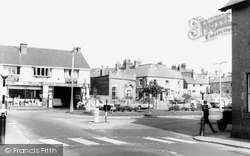
The National Provincial Bank, as banks do, took advantage of this 'additional wealth', followed later by Doug Taylor's garage and the inevitable council roundabout.
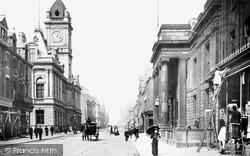
This part of Sunderland developed into the commercial and civic heart of the town following the opening of Fawcett Street Station by the North Eastern Railway.
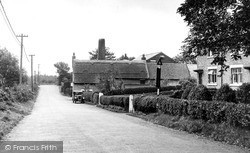
Charles Ashton from Thornton-le-Fylde post office had to walk from there to Inskip on most days, and in snow he followed the telegraph poles.
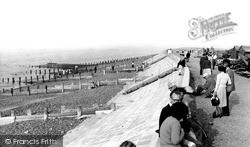
Wing Commander Gibson won the Victoria Cross following the raid.
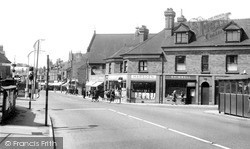
The second section of this chapter starts to the west of the city in Stapleford, close to the Derbyshire border, which follows the River Erewash southwards to the River Trent.
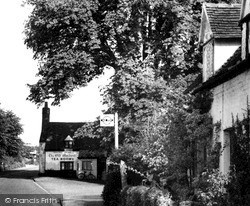
Waterford lies along the North Road from Hertford towards Stapleford and Stevenage - the road follows the course of the meandering River Beane.
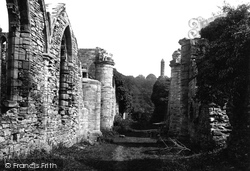
Following Godric's death, Finchale passed into the hands of the priors of Durham Cathedral. A Benedictine priory was built here around 1196 by Henry Pudsey, son of Hugh, Bishop of Durham.
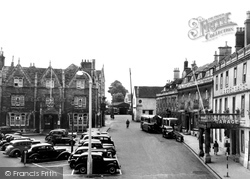
It has re-opened following renovation and cleaning.
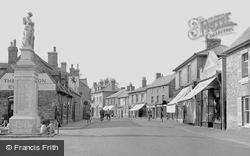
They include the names of several Soham men who died in captivity in the Far East following the capture of Singapore by the Japanese in 1942.
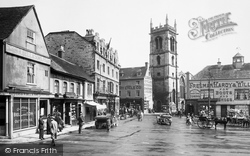
It is clear that Finlay's is under competition following the arrival of the chain store in the form of Freeman Hardy & Willis. To the left of the tower of St John's is the Curry Cycle Co.
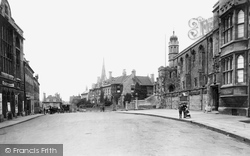
The building on the left, with the large window facing the street, is the Corn Exchange, then acting as a cinema — we see it as it was before the alterations that were made following a 1925 fire.
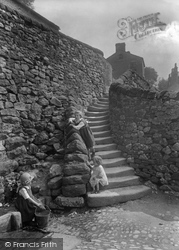
Two railways touched the town: the North West line was followed by the famous Settle-Carlisle line in 1876.
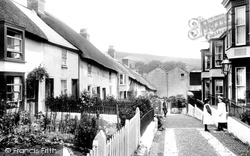
Opposite are Apple Tree Cottage (far left) and Providence Place, followed by Sandpiper, Little Tern and April Cottage (centre), with the latter still thatched.
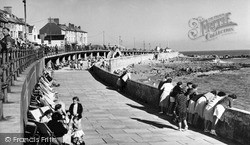
The town has its share of Victorian and Edwardian hotels, but the trend has followed the pattern of many such seaside towns, in having to decide what its market was and never quite succeeding in doing
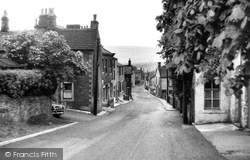
The rest of the village follows the high road above the River Ribble.
Places (8)
Photos (77)
Memories (1425)
Books (0)
Maps (49)