Places
8 places found.
Those places high-lighted have photos. All locations may have maps, books and memories.
Photos
77 photos found. Showing results 661 to 77.
Maps
49 maps found.
Books
Sorry, no books were found that related to your search.
Memories
1,425 memories found. Showing results 331 to 340.
When I Was 5
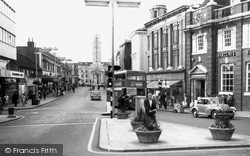
I remember getting off a bus in Upper George Street with my dad and walking down towards George Street and I saw the library and said what's that pointing - my dad said "It's a library and you borrow books from there". I was amazed and ...Read more
A memory of Luton in 1957 by
My Childhood Garden Part Iv
If I remember correctly, a white climbing rose grew up one side of the arch and a red on the other. The path continued straight through the archway, and led up the garden to the two wooden sheds at the top of the ...Read more
A memory of Shamley Green in 1954 by
The House Called Beverley And The 1953 Spring Tide
My father built the square flat roofed house called Beverley on the sand dunes in the late 1920s next to the bungalow by the creek. It has since had two refurbishments, the first of which ...Read more
A memory of Anderby Creek in 1953 by
The Best 53 Years Of My Life
I came to know Drummore when I met my husband in 1957. We married in 1960 and this year is our Golden Wedding. My memories of Drummore include Crawfords shop, The Queen's hotel with the great family feeling you got ...Read more
A memory of Drummore in 1957 by
I Really Hope Someone Can Help Me .
My mum apparently worked in a cafe in Woolwich during 1955/56, it may have been near the market. I really need to know about all the cafes that were there at that time, who owned them? And does anyone remember ...Read more
A memory of Woolwich in 1956 by
Childhood Memories
Being born in a house opposite the Angel pub in 1952, and having a family history going back over 300 hundred years in the village, I think we were a local family. Those memories of the school holiday times will last a ...Read more
A memory of Stanton by
Peterlee In The 50s Early 60s
I was 2 or 3 months old in 1954 when the family moved from Wheatley Hill into a newly built council house on Kirkstone Road at the Horden end. My earliest memory is of sitting on the door step waiting for my brother ...Read more
A memory of Peterlee by
A Ramble In The Dunsford Nature Reserve And Lunch In The Royal Oak
Today I joined a group of friends on an organized ramble through the Dunsford nature reserve run by the Devon Wildlife Trust. My friends are all dancers and musicians with ...Read more
A memory of Dunsford in 2010 by
When I Was A Little Younger
I lived in Goldsithney and used to go fishing with the Allans, Jeff and David and the son of Mr Murray a French teacher at Humphrie Davy. My cousins lived just 50 yards from the Allans and were called Tamblyn. We ...Read more
A memory of Prussia Cove in 1961 by
Holmfirth
I think it was 1976 when our dad took us to Holmfirth. He loved watching 'Last of the Summer Wine' which was filmed there. As we were children we sat in the back and watched the hills coming closer and closer. Dad drove careful up the ...Read more
A memory of Holmfirth in 1976 by
Captions
876 captions found. Showing results 793 to 816.

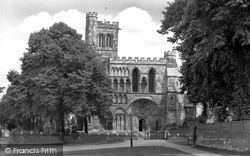
It was at the priory, in the 16th century, that the annulment of King Henry VIII's marriage to Katherine of Aragon was pronounced, followed by the dissolution of the priory itself soon afterwards.
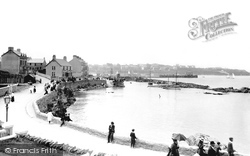
As always, the railway made all the difference; the mansions on the skyline were followed by accommodation for those who could afford to get away from it all for a spell.
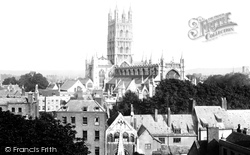
Following his murder at Berkeley Castle in 1327, the King's body was refused burial at a number of places before being accepted by the monks of Gloucester.
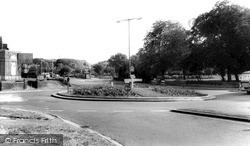
Up to the southern border of Royston, the A10 follows the route of the Roman Ermine Street, but close to the market Ermine Street becomes the Old North Road (which was the A14 and is now the A1198) taking
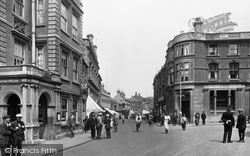
Making the deliveries was the first foot on the career rung, followed by serving in the shop.
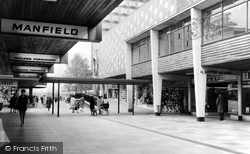
Both the town centre and the High Street in general face increasing competition in the form of 'out of town' shopping, following the creation of the retail park.
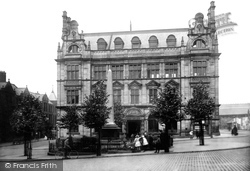
Larger premises followed, and finally this large building was erected opposite the Boer War memorial, seen here behind the railings before its removal to a local park in 1922 to allow the First World War
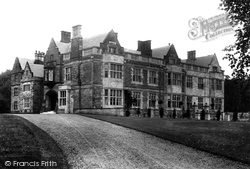
Following the death of Admiral Chaloner's widow, Amelia, in 1902, the Gisborough estate was inherited by Richard Godolphin Hume Chaloner, later created First Lord or Baron Gisborough.
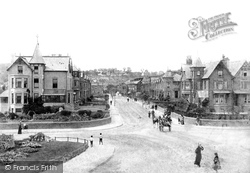
At the top of the road was the Broadmead Hotel, the future site of Paignton's Picture House (the Torbay Cinema) which followed. Today, this delightful cinema is a grade II listed building.
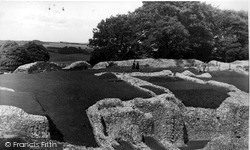
Following King Stephen's annexation of the bishop's castles in 1139, relations between the clergy and the military worsened.
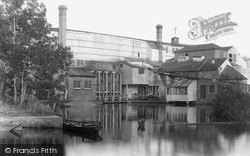
In 1912, a disastrous fire destroyed the building in the photograph, but a new, state-of-the art paper mill was built the following year and the business continued to thrive.
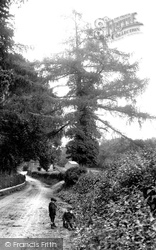
In 1672, following the Declaration of Indulgence, licences to preach in Dorking were issued to James Fisher and John Wood, who formed the Independent Congregational Church.
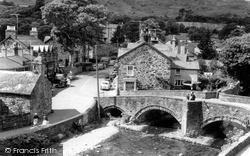
This extremely attractive village lies in the heart of mountainous Snowdonia on the Glaslyn river, and this fine bridge has been a magnet for visitors, who came in increasing numbers following the war.
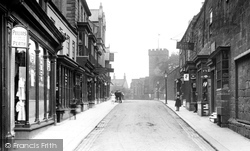
D E Baker's department store (extreme left) flanks the entry to Church Street from the Market Place; the road was very much narrower than today, following the road widening scheme and demolition
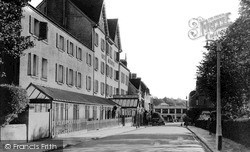
The town has followed suit.
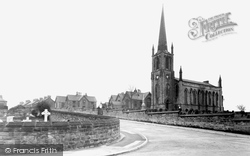
Initially, the Marquis of Rockingham leased out land for a small mine, but the following year he realised the potential here.
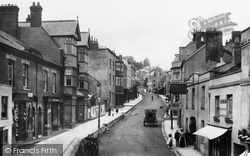
Opposite are the bay windows of Royal Lion Hotel and the flat frontage of the New Inn, where landlady Mrs Sarah Spencer was followed by William G Cornish.
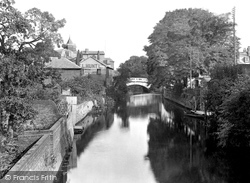
Entering the town, you may see some of the following: several acres of Victorian housing, from railway-side terraces to detached, self-confident villas; a church with a nice green spire; a white
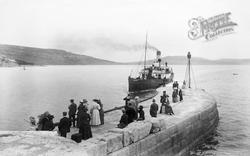
Victoria Pier used to be known as Crab Head until it was renamed following a visit by Princess Victoria with her mother the Duchess of Kent.
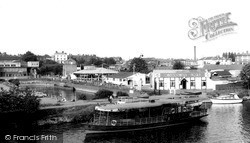
When permission for a canal was refused at Bewdley, James Brindley brought it to Stourport, following the Stour Valley and joining the Severn at this point.
Making the deliveries was the first foot on the career rung, followed by serving in the shop.
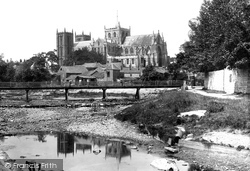
Reconstruction began in 1069, followed by the building we see today from 1180. The west front was added in 1220. The minster finally became a cathedral in 1836.
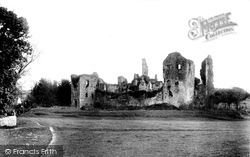
There is a legend of how Payn de Turberville acquired Coity following the Norman conquest of Glamorgan.
Family legend has it that grandfather came home with two left boots from the looting that followed the riot.
Places (8)
Photos (77)
Memories (1425)
Books (0)
Maps (49)