Places
8 places found.
Those places high-lighted have photos. All locations may have maps, books and memories.
Photos
77 photos found. Showing results 321 to 77.
Maps
49 maps found.
Books
Sorry, no books were found that related to your search.
Memories
1,425 memories found. Showing results 161 to 170.
1939 To I960
I moved to Little Brickhill in 1939 when I was 2 years old, my last address in Little Brickhill was 10 Wyness Avenue. We were the first to move to to Wyness Avenue. I also knew Colonel Wyness who Wyness Avenue was named ...Read more
A memory of Little Brickhill by
Black Lion
My parents, Joan & Roger Graham, bought the Black Lion pub in 1963/4? and concentrated on building the business up and making it a large part of village life. With the full co-operation and hard work of my parents and the ...Read more
A memory of Abergorlech in 1964 by
Manor Road Sidcup
I was born in Farnborough hospital in June 1956. My mother is Austrailian and my father grew up in and around Bridgwater in Somerset. From the period of 1956 -1960 we lived in the top flat at 12 Manor Road (now sadly gone), the ...Read more
A memory of Sidcup in 1956 by
Growing Up In Morgans Terrace
I was born in 1932 at 5 Morgan's Terrace and soon thereafter moved to No 18. There were 7 people living at that address, my maternal Grandfather John Lewis, my maternal Uncle Donald Lewis, my mother Greta Emmanuel, ...Read more
A memory of Pontrhydyfen in 1930 by
Thomas Barwick
Perhaps you would like to know more about Thomas Barwick. Sarah Goodborn was Thomas' s second wife and was possibly the sister of his first wife, Eliza Goodborn, who appears to have died in childbirth. He had three children with Eliza: ...Read more
A memory of Deal by
Village Road, Finchley
I was born at number 7, Village Road, Finchley in 1932 and lived there until October 1939 when my dad's businesses in London were requisitioned. Lots of memories. Milk was delivered by United Dairies and the horse would ...Read more
A memory of North Finchley in 1930 by
The Derbyshire Family Park Villas
My cousin Eileen Vera Derbyshire was born in Blackburn in 1905 and was adopted by the Derbyshire family, when she went by the name of Nelly / Nellie Swales Derbyshire. She was apparently taken in by Nuns at a ...Read more
A memory of Whalley in 1900 by
Opera
A friend of mine (Len) said we should go to Hanslope one weekend to meet a girl he used to go out with when she lived in Kensington in London. We drove up to Hanslope one Saturday morning to see her. Her family lived in a massive white house ...Read more
A memory of Hanslope in 1964 by
Walton Colliery
My name is Roland Mitchell. I worked at Walton colliery as a haulage hand. I worked alongside Percy Heckles, Alan Jennings, Phillip Casgoin and Phillip Redmond and a young lad by the name of George Bernard Shaw. We ...Read more
A memory of Walton in 1971 by
Twelve Happy Months
I was born in Nant Gwynant in 1925 and lived there for the first 20 years of my life. In 1944 I was drafted into the army and served in German and Italy. Upon release in 1947, I decided to try and make a career in agriculture ...Read more
A memory of Nantgwynant by
Captions
876 captions found. Showing results 385 to 408.

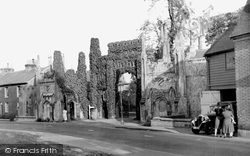
Demolition was begun in 1951, but was almost immediately stopped following protests by the local artist Bernard Hailstone.
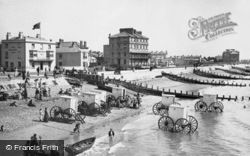
Bognor's growth from a tiny fishing village started in the 1780s, with Sir Richard Hotham's grand scheme inland (modestly named Hothamton) aimed at the nobility and gentry being followed by
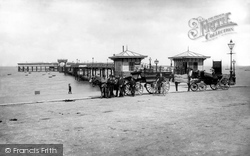
The Central Pier was the older of Morecambe's two piers: it opened in 1869 and was enlarged during the following decade.
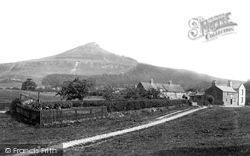
To this day it continues to provide a much welcomed place of rest and refreshment following an expedition to the top of Roseberry Topping and back.
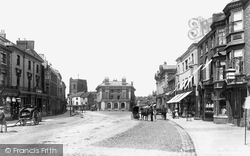
Today's buildings still follow the lines of the original burgage plots laid out all that time ago.
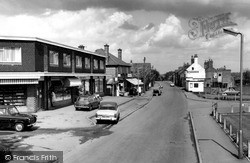
Kirby was the most blitzed English village during the last war: a lone bomber came over following a raid on the Midlands and destroyed many buildings.
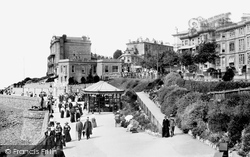
As the following pictures show, this part of the seafront underwent numerous changes over the next few years, gradually increasing the amount of entertainment on offer.
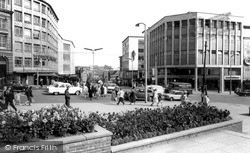
The front of the C & A store collapsed into the street following three direct hits, and around seventy people died in the Marples Hotel when it too took a direct hit and was destroyed.
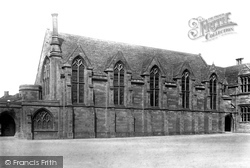
Following bomb damage in the 1940 air raid, the building was altered in 1956; its outward appearance took on an Elizabethan style in contrast to this austere Gothic design.
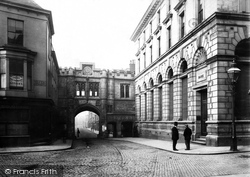
This wonderful atmospheric view looks through Stonebow into the continuation of High Street which follows the line of the Roman road to London, later known as Ermine Street.
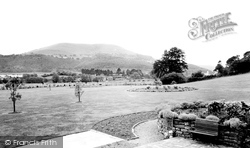
The landscaping of these gardens was only completed in 1964, following the purchase of Linda Vista House and gardens by the council in 1960.
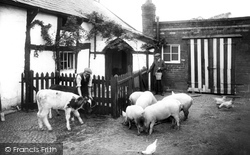
Following the New Towns Act of 1964, 37 farms and 7,500 acres of land were taken over and absorbed as the new town developed.
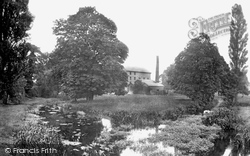
This particular mill, built in 1850 following a fire, was driven by water and steam. It ceased working shortly before the Great War, and has recently been converted into five flats.
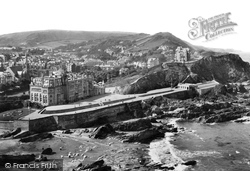
Decades of genteel decline followed, and in 1976 the hotel was demolished, despite a 16,000-signature petition and a letter from Sir John Betjeman bemoaning its loss.
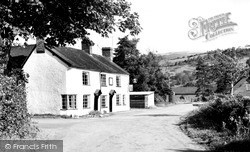
First local schools have closed, and then shops, post offices and pubs have followed suit. Sometimes the only way to retain these facilities has been to combine them under one roof.
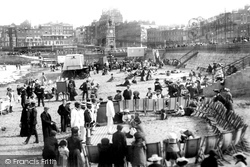
His legendary performances won him a huge following, and he has been described as 'a Margate institution'.
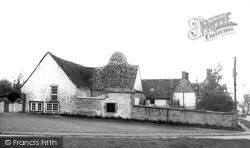
The maltings were part of the development that followed; the surviving kiln of the maltings would originally have included the malting floors, where the barley was allowed to germinate before being heated
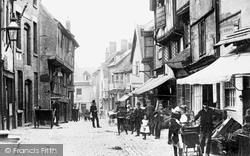
Few streets still follow their original medieval plans, though not all have been lost since 1945. Butcher Row went long ago.
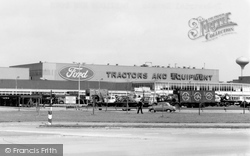
Built in the mid 1950s, it was followed into the town by the Ford Engineering Research Centre at Dunton.
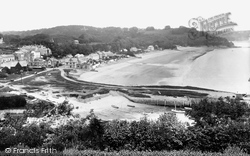
Following a fire in 1913, the building was reconstructed. It is now the Tourist Information Centre.
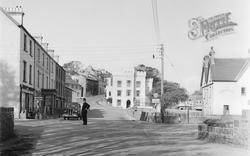
Following a fire in 1913, the building was reconstructed. It is now the Tourist Information Centre.
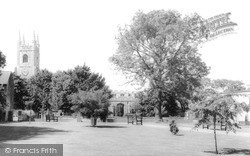
Following the death of the owner, the site was acquired by the town and first opened to the public in 1960.
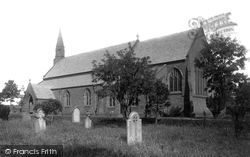
The burial ground closed in 1873 following the opening of Penrith Cemetery.
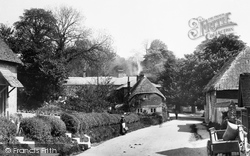
Wherwell is famous for its ruined priory, established by the Saxon Queen Elfreda, mother of Ethelred the Unready, possibly as an act of repentance following several dark deeds.
Places (8)
Photos (77)
Memories (1425)
Books (0)
Maps (49)