Merry Christmas & Happy New Year!
Christmas Deliveries: If you placed an order on or before midday on Friday 19th December for Christmas delivery it was despatched before the Royal Mail or Parcel Force deadline and therefore should be received in time for Christmas. Orders placed after midday on Friday 19th December will be delivered in the New Year.
Please Note: Our offices and factory are now closed until Monday 5th January when we will be pleased to deal with any queries that have arisen during the holiday period.
During the holiday our Gift Cards may still be ordered for any last minute orders and will be sent automatically by email direct to your recipient - see here: Gift Cards
Places
4 places found.
Those places high-lighted have photos. All locations may have maps, books and memories.
Photos
6 photos found. Showing results 441 to 6.
Maps
65 maps found.
Books
1 books found. Showing results 529 to 1.
Memories
4,591 memories found. Showing results 221 to 230.
The Horse And Cart
I had the perfect Job for me when I was 10. John (Jacky) Robinson had me working for him on the horse and cart. Fridays and Saturdays you could hear us walking the streets of Easington - our famous yell was "ANY STICKS ...Read more
A memory of Easington Colliery in 1969 by
Roundabout And Big Tree
I used to live in Lawrie Park Gardens from 1955 until 1962 and the local youngsters used to congregate at the big tree on the roundabout at the end of Lawrie Park Avenue. At times there were around 10-15 of us all sitting ...Read more
A memory of Sydenham by
Happy Little Boy
Hi, I have been looking for a site like this so I could look back at Pinehurst. I was the longest serving boy at the home - went in at 8 and came out at 16. 1979 was when I started a good life there. I have so many great memories ...Read more
A memory of Pinehurst in 1979 by
Waterhouses Bleak Winters
l remember the pit tubs running under the houses to the colliery where my dad worked down the mines, and when we used to chuck his snap over to him when the tub ran past. Also remember the bleak cold winters when ...Read more
A memory of Waterhouses in 1860 by
My Memories Of New Road, Chatham
I was 4 years old when my parents moved to 17 New Road, Chatham. It was 1937 - my father had a Radio and Electrical Business (Wholesale) he had been a traveller previously and wanted to have a more settled existance - ...Read more
A memory of Chatham in 1940 by
Visiting Uncle Fred And Auntie Stina Ashfield.
Growing up in the late 40s and 50s, a highlight of my visits to relatives was the trip to Horseheath to see uncle Fred and Auntie Stina at the post-office. I was always drawn to the large greenhouse ...Read more
A memory of Horseheath in 1955 by
School Chums
I was born in Shuttlefield in Freuchie, my maiden name is McKinlay, I went to school there. I'm in Leven now and would love to hear from pupils I was at school with or anyone who came from there too.
A memory of Freuchie in 1940
Lime Grove
I was born in Buchaven in Fife. I stayed in 93 Lime Grove and have great memories of the cul de sac. An old Polish couple, the Rhodes, stayed next door, then there was the Murray's, the Capes, the Livingstones, the Wipers, the Fentons, ...Read more
A memory of Methilhill in 1973 by
Gilwern Boats In The Forties
The boats were owned by a Mr Goodin, he hired them out by the hour and people came from all the valleys to go on the canal. We as teenagers used to make some pocket money by rowing those that could not row up the canal. ...Read more
A memory of Gilwern in 1940 by
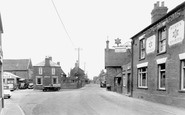
Stocks Hill.
Known as Stocks Hill, on the left of the photo is the Coop Drapery Shop. At the side of the shop was an alley and the Coop Bakery was there. The house facing in the picture was Ted Witneys car repair yard, along High Street was Keffords ...Read more
A memory of Moulton in 1950 by
Captions
925 captions found. Showing results 529 to 552.

Canon Sir James Philipps, rector from 1859 to 1897, paid Blomfield to renew the church of St Denys in 1887- 89.
On the right is the Notre Dame School, founded by two sisters in the mid 19th century. The school closed in 1975, and the building was later demolished.
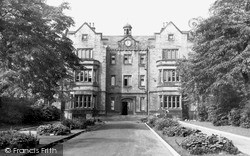
In 1930 the Ecclesall Union Hospital came under local government control and was renamed Nether Edge. The institution had an interesting history.
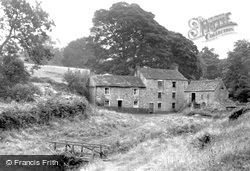
Modernisation came during the 19th century when the mill was equipped with a steam engine.
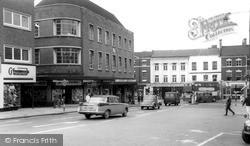
The wide end of the Ironmarket was also known as Butchers' Row; even its supply of water came to the surface courtesy of the Butchery Pump.
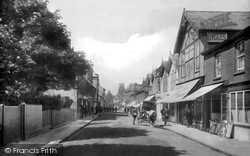
Even the Pre-Raphaelites came. The arrival of the railway in 1867, and the 1872 National Bank Holiday Act, opened Walton up to everybody.
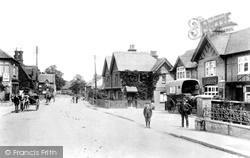
In the church of St John the Evangelist, W S Gilbert, of Gilbert and Sullivan fame, sleeps under the widespread wings of a white angel; Gilbert lived at Grimsdyke, a house designed by the architect Norman
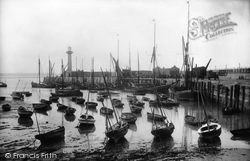
From this came the nautical cry of 'ahoy'. They continued to operate into the 19th century, until ousted by the steam packet service in about 1815.
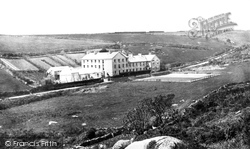
The Eastern Telegraph Co's large cable station was established in the valley just inland from the beach at Porthcurno, where undersea cables came ashore.
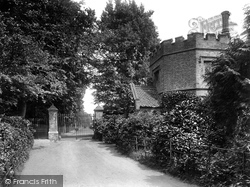
This eastern entrance eventually came to be known as Bellgate, since the Bell public house stands further up the hill to the right.
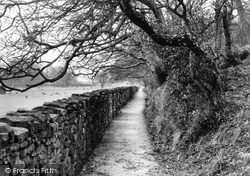
This track could be part of the route along which came supplies of wool for Dolphinholme Mill.
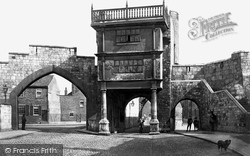
Walmgate came under heavy attack by cannons and mines in the 1644 siege of York.
From this came the nautical cry of 'ahoy'. They continued to operate into the 19th century, until ousted by the steam packet service in about 1815.
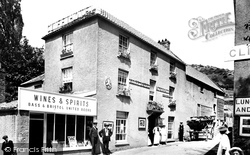
Glen Middle Mill 1908 If Sally Spencer, the lady looking at the photographer, came back today, she would see that almost all in this view (except the rear block of Pavey's Temperance Hotel) has
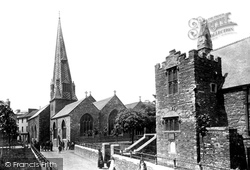
Edward VI dissolved all chantry chapels in 1549 and the building eventually came into corporation ownership. They created a grammar school.
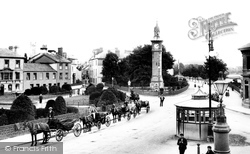
Taw Vale Parade is to the right of the Albert Clock, whose building was started in 1862 and not completed until a decade later; the money came from public subscription.
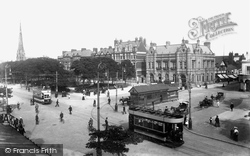
The Southport & Lytham Tramroad Co came up with a proposal to construct a transporter bridge due south of Hesketh Bank at a cost of £183,500.
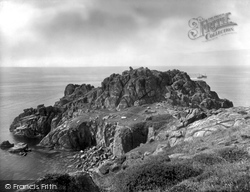
The total bill came to £130 8s 6d, some of which went to '60 men of St Just who did nothing but drink beer to the value of 13s 6d'.
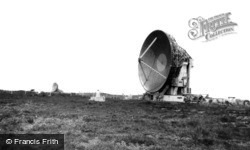
The space age came to Cornwall when this first dish, or antenna, was built in 1962; it received the first live television pictures via satellite from America.
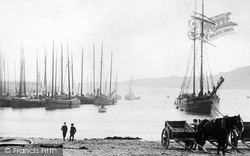
The pilchard drivers came in at around 30ft in length; until the 1890s they had been open-decked. During the autumn the pilchard boats also went after herring.
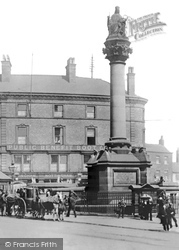
The monument was erected to commemorate the Crimean War; as with many such monuments, it came complete with a captured Russian cannon.
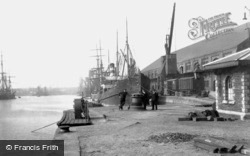
Ship building and repairing gave work to many, and Swansea came sixth in the list of British ship-owning ports. John Vivian opened the first of his copper smelting furnaces at Hafod, Swansea in 1810.
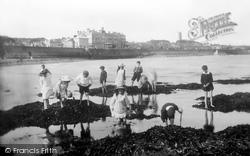
Penzance is frequently enlivened by the departure of the fleet of the fishing-boats for which the district is famed.
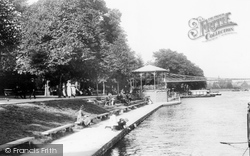
Even so, the city remained the customs port for Rhyl and the Deeside ports, and ships belonging to John Summers & Co were registered at Chester, though it is unlikely that they ever came up the river.
Places (4)
Photos (6)
Memories (4591)
Books (1)
Maps (65)