Merry Christmas & Happy New Year!
Christmas Deliveries: If you placed an order on or before midday on Friday 19th December for Christmas delivery it was despatched before the Royal Mail or Parcel Force deadline and therefore should be received in time for Christmas. Orders placed after midday on Friday 19th December will be delivered in the New Year.
Please Note: Our offices and factory are now closed until Monday 5th January when we will be pleased to deal with any queries that have arisen during the holiday period.
During the holiday our Gift Cards may still be ordered for any last minute orders and will be sent automatically by email direct to your recipient - see here: Gift Cards
Places
4 places found.
Those places high-lighted have photos. All locations may have maps, books and memories.
Photos
88 photos found. Showing results 401 to 88.
Maps
70 maps found.
Books
Sorry, no books were found that related to your search.
Memories
713 memories found. Showing results 201 to 210.
My Childhood
I was born in Cookham in 1952. I attended Holy Trinity Primary School and sang in the church choir. One Remembrance Sunday I was given the honour of carrying the cross at the head of the procession from the church to the war memorial. I ...Read more
A memory of Cookham in 1952 by
The Mining Community
Although I no longer live in Northumberland, I still have a soft spot for North Broomhill. I was born in School Row in 1943. From there we moved to Coronation Terrace in 1947 which was a complex of rudimentary row of two ...Read more
A memory of North Seaton in 1940 by
My Mother's Memories Of Ospringe
After a time Mother married Charles Gamble, we called him Pop. He left the Merchant Navy and went to work on the Estate for my Grandfather. We got a house at Ospringe it was next door to a water mill. The water used ...Read more
A memory of Ospringe in 1910 by
Tracing My Roots
I traced my ancestors to Eckington - they were the Littlewood Family and date back to 1798. The males were all named Joseph in each generation and they worked as first a farmer and then they worked in Applebys Foundry as iron moulders ...Read more
A memory of Eckington in 2006 by
Clog Dancing At The Two Rivers Folk Festival
I went to this folk festival for the first time this year and got some memories that I will never forget! Exciting music and dance memories at the entertainment venues around Chepstow plus a never to be ...Read more
A memory of Chepstow in 2008 by
Memories Of A Youth
I remember when there were two fishmongers in Earlestown, Lyons's fishmongers in Bridge St. and one whose name I can't remember in Legh St., now we have none. We also had two picture places, the Rink where the Police Station ...Read more
A memory of Earlestown in 1960 by
Westgate School
I was in the very first class to attend the brand new Westgate School. My class moved from Haymill Annex on Elmshot Lane. We were all so excited. The 1A students were in Mrs. Evans class and was she strict. She ruled with an iron ...Read more
A memory of Cippenham in 1958 by
Glasgow Agency Of The Bank Of England
"The Old Lady of Threadneedle Street" as the Bank of England is known maintained a small office in Glasgow fir many years. It was on the north side of St VIncent Place and I worked there between 1975 and 1978. ...Read more
A memory of Glasgow in 1975 by
Summers In Blackhall
My Grandma - Bertha Lanaghan - lived in Third Street for over 50 years. She made hookey rugs as big as a room from old blankets, coats, etc whatever she could get, to sell for extra money. She dyed the wool three ...Read more
A memory of Blackhall Colliery by
My First Fish!
With a borrowed rod, I caught my first fish in Stouts Hill Pond. The fish took my hook quite deeply and after dis-gorging the hook, we assumed that the fish was dead and my friend Reg Thomas took the fish home to Dursley to feed it to the ...Read more
A memory of Uley in 1954 by
Captions
796 captions found. Showing results 481 to 504.

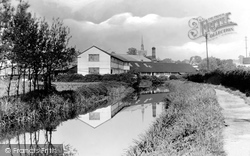
Out of view to the right are the railway line and the Suffolk Iron Foundry.
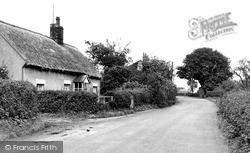
When thatch had to be replaced with corrugated iron, it was not unusual to find hidden objects: swords from Cromwellian days, chalices, contraband and coins, or precious items from shipwrecks.
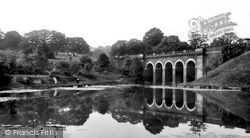
It is a pity that the stone balustrade has given way to a plain iron railing.
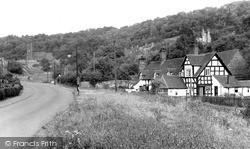
This is the main road that links Ironbridge with Coalbrookdale, the place where the Industrial Revolution really did start in 1709 when Abraham Darby I discovered a method of smelting iron
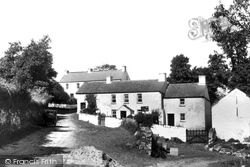
The remains of an Iron Age hill fort (the Bulwark), dating from 700BC-100AD, may be seen on Llanmadog hill. Allegedly a ghost may be seen in Llanmadog churchyard.
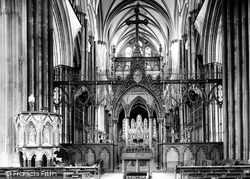
The Iron Choir Screen which separated the entrance to the choir from the nave was removed in 1959 by order of the Dean and Chapter, presumably to give an uninterrupted view from the western entrance
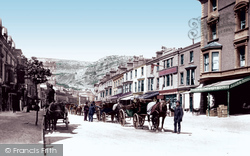
Mostyn Street is one of Llandudno's main shopping streets; we see it here pictured in bright sunlight.
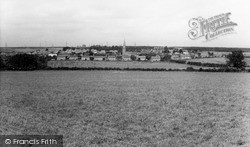
The woods conceal former ironstone quarries that fed the iron making industry of Corby.
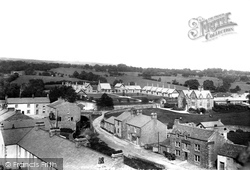
Ribble Valley archaeological finds are on display at Ribchester Museum, including the replica of a Romano-Celtic head and metal objects from the Iron Age hill fort at Portfield, Whalley.
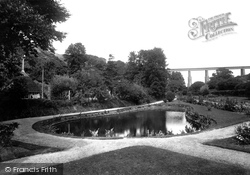
Its iron girders were replaced in 1939 with stone arches.
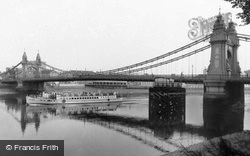
at the Embankment in central London; seen here from the Barnes bank towpath, his suspension bridge has a 420-foot main span, and the towers are finished with French-style pavilion roofs, all in sheet iron
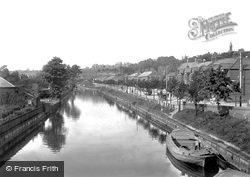
The tall iron posts support the power wire. Amongst this modernity, there are still gas-fuelled street lights.
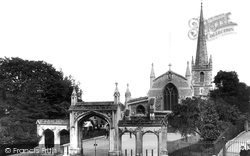
The iron gates and railings were later removed to fuel the war effort.
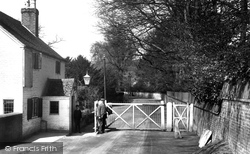
It replaced a ferry by means of a 1792 Act of Parliament, and is still in use (10p for a car, pedestrians free).The present late Victorian iron bridge replaced the original timber one.
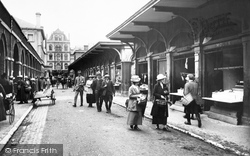
The pilasters are in Bath stone, with elegant wrought iron roof supports.
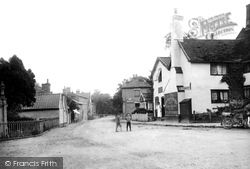
Outside St Peter's church, an ornate cast iron signpost erected in 1830 has hands pointing to London, Yarmouth and Framlingham.
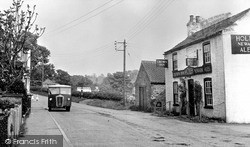
Almost everything in the church - the pillars, the window frames, the font and the tombs - is made of Blaenavon iron.
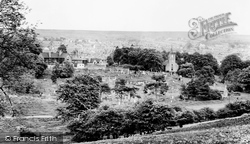
All Saints' Church, higher up the village, has a massive Norman tower, and the church is built in the local iron-rich brown limestone.
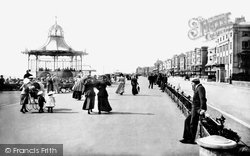
Worthing's was a good example, with screens to protect the band from the sea breezes and an elegant wrought iron openwork cupola to its ogee roof.
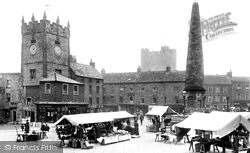
By 1440 the town was trading in dairy produce, wine, fish, garlic, silk, iron, coal, copper and lead.
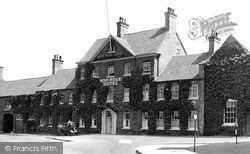
There is also a working watermill with an iron water wheel powered by the River Maun, and an accompanying tea room.
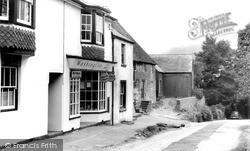
Washington is on the main London to Worthing Road at the foot of the Downs.There are fine views of Chanctonbury Ring, a ring of beech trees planted on the site of an Iron Age hill fort 800 feet up
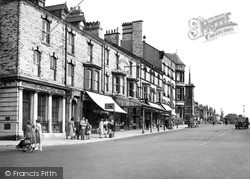
Again on the left we can see a good example of the typical Saltburn glass and cast iron canopies to keep pedestrians sheltered.
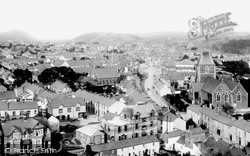
Unlike many other Welsh towns, whose growth was based on coal or iron and steel, Carmarthen had long been a market town and the centre for an age-old agricultural tradition.
Places (4)
Photos (88)
Memories (713)
Books (0)
Maps (70)