Places
Sorry, no places were found that related to your search.
Photos
Sorry, no photos were found that related to your search.
Maps
670 maps found.

Books
4 books found. Showing results 625 to 4.
Memories
1,789 memories found. Showing results 261 to 270.
Football Matches Between Port&High Clarence
I happened upon this site purely by accident, but it brought back some great memories. I am Pete Boland, young brother of Owen, a keen & very good footballer. I remember as a kid the matches ...Read more
A memory of Port Clarence by
My First Memory
I was sitting in a tall pram outside my grandfather's pie shop (Pyburns') and men were herding cattle down the High Street to some abattoir, I put my hand out and felt the side of one the cows and to this day can feel the scratchie ...Read more
A memory of Sunderland in 1947 by
Heeley
I am trying to find Photographs, Drawings, or Paintings of the houses and if possible the Old Farm Cottages opposite the Heeley Parish Church on Gleadless Rd. Heeley. They consisted of a block of 4 bay windowed terraced houses, numbered from ...Read more
A memory of Heeley in 1956 by
Memories
HI, Colin Smith.does anyone remember my mum and dad .Alice Mary and Teddy Smith.I remember the good old times in St,Helens going fishing in spoggy brook for stillte backs.and the old Taylor Park and Victoria park when you go ...Read more
A memory of St Helens by
The Kidd's Alright
THE KIDD IS ALRIGHT The daylight had faded away and dusk was now dim enough to coax the streetlights to pop on, their vague orange light slowly getting brighter as their bulbs warmed. Meanwhile inside the Hamblett ...Read more
A memory of Moston in 1972 by
Hillcross Avenue
I was born at 163, Hillcross Avenue in 1946. Went to school over the road from my home just behind the alleyway behind my grandparents house opposite (Dwyers) Hillcross Primary School. I loved to run (no not from the school!) but on ...Read more
A memory of Morden in 1946 by
18+ Club
I can remember being a member of this club at around that time. We used to meet up and have days out etc. I had a girlfriend for a short time who lived in Shirley and used to drive a Morris Minor. Another girl there who was quite outgoing and ...Read more
A memory of Croydon in 1970 by
St. Leonards 1950's
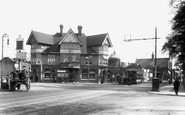
Does anyone remember a girl named Mary Jones - her brother was Jimmy Jones and cousin was James Barnard. She was my best friend for such a short time and then had to leave infants/junior school as her dad remarried (her mum ...Read more
A memory of Streatham in 1950 by
Palmerston Road In Kilburn
I was brought up in Kilburn in the 1960's. Our flat was 29a Palmerston Road. Our garden looked onto Grange Park and we just about lived there. My memories of that time were so happy. We went on holiday to ...Read more
A memory of Kilburn
Birkenhead In The 1950s
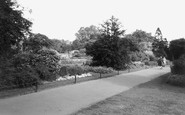
Birkenhead in the 1950s – it bears no resemblance to how it is today – it does’nt even look the same. Most of the places I remember are gone. The streets where I grew up have gone – the geography of the place has changed – ...Read more
A memory of Birkenhead by
Captions
1,058 captions found. Showing results 625 to 648.

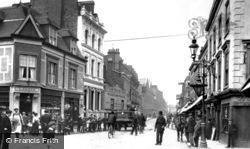
It is remarkable that until the Eastern Avenue arterial road was built in the 1920s, the main trunk road from London to the port of Harwich and East Anglia passed through the narrow confines
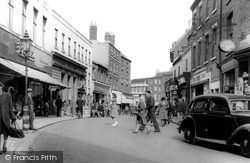
Silver Street led from the Market Place to the river, which was lined by the warehouses and factories of this once busy inland port, including my grandfather's Rose Brothers, a packaging machinery
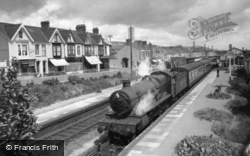
The pride of the stationmaster at Burry Port is typical of the time - it was considered the stationmaster's duty to make the platform as attractive as possible.
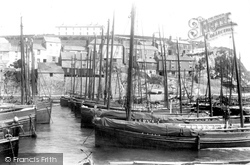
In 1740 Mevagissey ranked fourth among the Cornish pilchard ports, which between them had built up a lucrative trade exporting millions of pilchards each year to places like Italy.
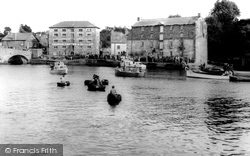
The quay and the large warehouses in the background are evidence that the port was one of the most important in Wales during the early 19th century.
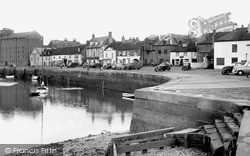
Wells was a port long before it became a tourist town, as the functional harbour and large warehouses make clear.
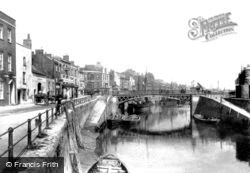
The main port lay north of this point, since a medieval three- arched stone bridge blocked the further passage of tall craft upstream along the River Parrett; even in the early 20th century,
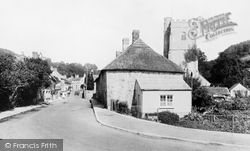
Axmouth, the last coastal community wholly in Devon, was an important port until its river entrance silted up.
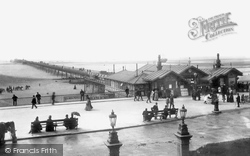
When it opened in 1860, it was 1,200 yards long and had a landing stage where steamers from the Isle of Man, North Wales, and several west-coast ports made scheduled stops during the season.
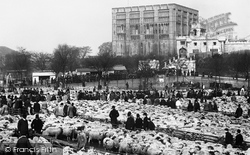
A motte and bailey castle, one of the earliest in England, was erected here soon after the Norman Conquest, for at that time Norwich was an important town and a major port.
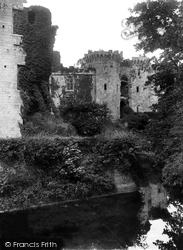
Note the ornate machicolations adorning the tops of the gatehouse towers; there were also gun-ports at the base of the walls, obscured by bushes in this photograph.
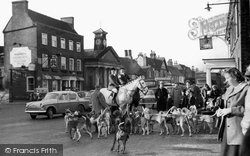
Botley, once a small inland port, stands at the head of navigation on the River Hamble, and barges travelled upstream for corn, coal and timber until the early 20th century.
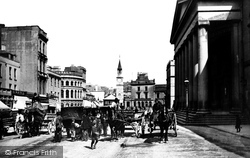
Serving both a rural area round about, and hundreds of overseas ports by way of trade, Plymouth reached its mercantile heyday in Victorian times.
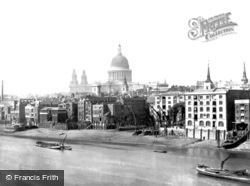
In early days Queenhithe on the north bank of the Thames was a significant port for the landing of fish and corn.
In early days Queenhithe on the north bank of the Thames was a significant port for the landing of fish and corn.
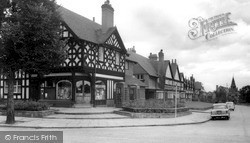
The earlier houses built at Port Sunlight were a mixture of styles. The village had a pub, the Bridge Inn, which was designed to look like an old coaching inn, but opened as a temperance hotel.
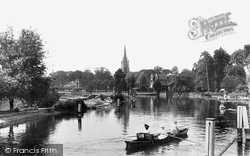
Marlow, and Henley further up river, were important inland ports handling mainly the corn, malt and timber of the Chiltern Hills behind them.
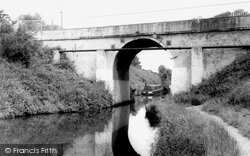
The main canal ran from Whitby, now Ellesmere Port on the Mersey, to Autherley near Wolverhampton, through 46 sets of locks.
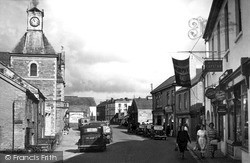
This medieval port stands at the head of the Camel estuary. Sailing ships from Bristol once plied up and down its channel and berthed at the town wharves.
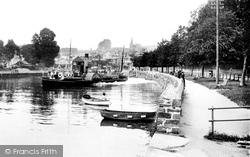
Until the 19th century Kingsbridge was an important port for the shipping of wool and foundry products.
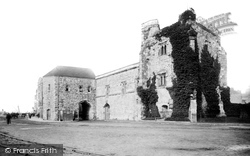
The vessel was not a regu- lar visitor to the port and could have been here on charter.
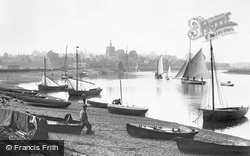
It was a significant port, too, handling corn, coal, chalk and hay. The boat in the foreground looks distinctly like a pleasure-craft, though, to judge by that slatted seat.
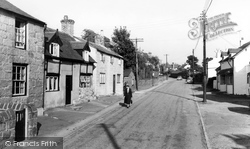
It is virtually impossible to believe that this landlocked village with its many beautiful old cottages was also once a port.
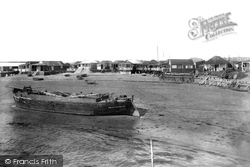
In the mid-19th century, Exmouth gained importance as a shipbuilding centre and fishing port - tons of herring were landed each month.
Places (0)
Photos (0)
Memories (1789)
Books (4)
Maps (670)