Places
Sorry, no places were found that related to your search.
Did you mean: north ness or na h ness or nook ness ?
Photos
12 photos found. Showing results 961 to 12.
Maps
9,582 maps found.
Books
30 books found. Showing results 1,153 to 1,176.
Memories
4,597 memories found. Showing results 481 to 490.
Postwar Childhood In Knypersley
Born in 1940 at Tunstall Rd, I spent hours of my childhood at the edge of Cowlishaw Walker's pool, reached through our neighbour, Mrs Sargent's garden, which sloped steeply up to the railings round the pool. I only ...Read more
A memory of Knypersley in 1940 by
A Wartime Evacuee
During the war I was evacuated with my family to Dunsmore and we lived in Appletree Cottage, opposite The Fox. I attended Wendover School and returned to London in 1946. At the time Robert Donat lived in ...Read more
A memory of Dunsmore in 1940 by
Early Days In Bargoed
I was born, in 1945, in the front room of my parent's rented house in Bristol Terrace, Bargoed. Open the front and you were on the pavement!!. We had no central heating, no double glazing, no indoor bathroom (tin bath hanging ...Read more
A memory of Bargoed in 1952 by
Boynton Hall Yorkshire
Boynton Hall, near Bridlington During the war (1939-1945) the French Convent school, run by Catholic nuns, was evacuated from Hull to Boynton Hall. I remember the day war broke out - my sister was sent to Boynton - she ...Read more
A memory of Boynton in 1940 by
Kenzie Thorpe
While wild-fowling on Frampton Marsh in the winter of 1954, I met McKenzie a well known Poacher. He showed me a curlew he had shot, he had it in a poachers pocket inside his coat, a jovial sort of fellow. He became a well known painter ...Read more
A memory of Boston by
Royal Liverpool Children's Hospital
I spent two years and three months on Florence Gibson ward (1950-1952) and was hoping to visit the hospital when I returned to visit Liverpool. I'm sorry to know that it has closed. The first half of the ward was ...Read more
A memory of Heswall in 1950
Childhood Memory
I recall moving house from the Spike, Blaydon, to a newly built house in Linden Road, Blaydon. The steps leading down from the gateway where not quite finished so my Dad had laid wooden planks down so my mum could get down to the ...Read more
A memory of Blaydon in 1955 by
Station Road
Fond memories of living in Station Road and going to the old Grange Valley Primary School and Haydock Secondary Modern. My grandfather Charlie Blackburn, ran a grocers shop in Station Road and I lived next door. Also remember all the ...Read more
A memory of Haydock by
Craft Cottage
My grandmother Doris Palmer, lived in Craft Cottage which is right next to the pump. We spent all our family holidays there during the 50's and 60's. Granny was a war widow and she worked in Adams tobacconist, which was on the corner ...Read more
A memory of Steyning in 1958 by
My Youth
I was born on the Haworth Road estate and in my childhood roamed all over the district. Chellow Dene was a particular favourite especially in winter when it froze over! Sandy Lane park was another place we visited to go on the swings and ...Read more
A memory of Bradford in 1951 by
Captions
1,673 captions found. Showing results 1,153 to 1,176.

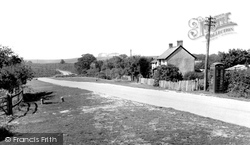
Linwood lies over to the western edge of the New Forest, and is surrounded by woodland, heath and plain - as this picture suggests.
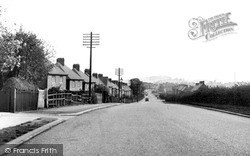
This picture looks down the village of Wales towards Kiveton Park, both pit villages which boomed from 1867 during the heyday of the South Yorkshire coalfield.
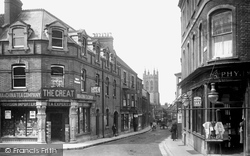
The Great India and China Tea Company, an 1880s building (on the left) is now, aptly, the Mocha Berry Cafe‚ while the haberdashers on the right is now The Grafton Cafe; both establishments reflect the
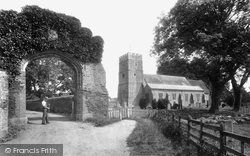
He survived only another two years.
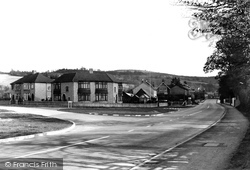
Another change is The New Inn, since renamed The Little Owl after a Gold Cup winning racehorse.
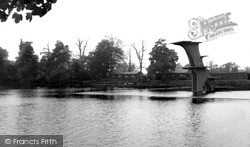
Looking West to the Diving Board Coate Water was originally constructed in 1821-22 as a reservoir, and was designed to overcome water shortages on the canal system around the town when
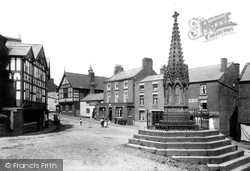
The black and white building at the dar side of the street is the Victoria Jubilee Hall, erected in 1887; today it also has a clock to celebrate another jubilee, that of Queen Elizabeth II in 2002.
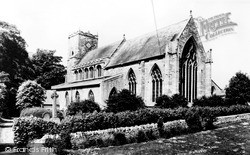
This is another of the Lincolnshire churches built with the local limestone. It overlooks the Trent and Witham valley towards the Nottinghamshire border.
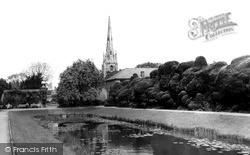
The roofed building has been replaced by the Ayscoughfee Café, and the gardens include an impressive war memorial to Spalding's dead of both wars.
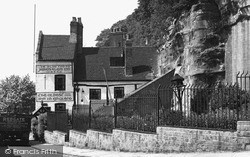
Behind it now is the Brewhouse Yard Museum (of Nottingham life), opened in 1977, and the Angel Row Gallery, both housed in a row of brick houses of about 1680.
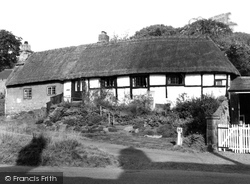
The Bible tells us that we should build our houses on rock and not sand – and all the oldest cottages in Burton sit perched on outcrops of sandstone.
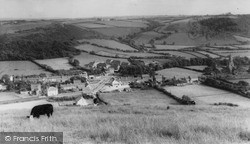
Llanrhystud is overlooked by an Iron Age fort, just out of view on the left, which was later occupied by Welsh and Norman earth and timber castles.
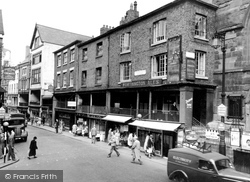
There are Rows on both sides of Watergate Street.
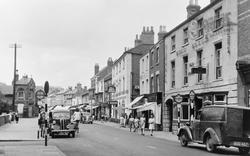
West of Long Sutton and east of Spalding, Holbeach is another of Lincolnshire's numerous small market towns. It received its first market charter in 1252.
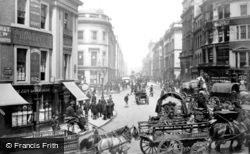
Here we are at the junction of Cannon Street and the approach to the new London Bridge; the street was opened by King William IV in 1831, and named after him.
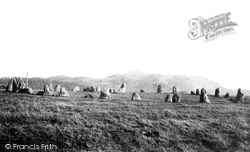
To the east there is an outlying stone, over which the sun rises at the spring and autumn equinoxes.
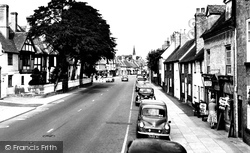
The barons were destroyed, and both Simon de Montfort and his son were among the dead. Shortly afterwards Henley was sacked and burnt.
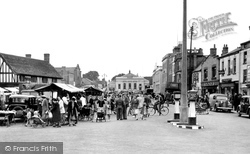
Much of the life of the town revolves around the Saturday influx to the weekly market.
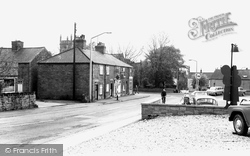
The local garage is in on the Green Shield stamp craze; you were given so many stamps depending on the value of your purchase, which you then stuck in a booklet, each booklet holding a given number of
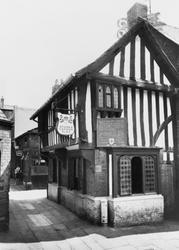
Another old inn, the Peacock, was already scheduled for demolition when it caught fire in February 1974.
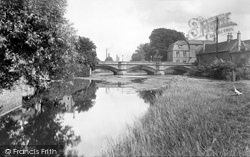
Another view along the Welland towards Town Bridge, over which the old Great North Road crossed into Lincolnshire.
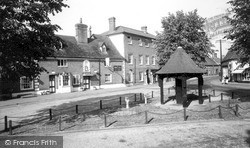
The inn occupied both of these buildings. The one to the left is 16th-century, with a brick façade of 1759. The taller building was erected in 1826.
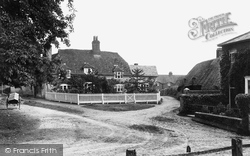
Parker was a young seaman, who having arrived at Southampton, made his way across country with another member of the crew.
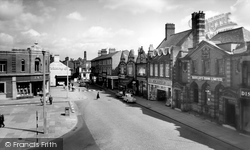
Returning to the Square, we are once again looking at Market Street.
Places (0)
Photos (12)
Memories (4597)
Books (30)
Maps (9582)