Merry Christmas & Happy New Year!
Christmas Deliveries: If you placed an order on or before midday on Friday 19th December for Christmas delivery it was despatched before the Royal Mail or Parcel Force deadline and therefore should be received in time for Christmas. Orders placed after midday on Friday 19th December will be delivered in the New Year.
Please Note: Our offices and factory are now closed until Monday 5th January when we will be pleased to deal with any queries that have arisen during the holiday period.
During the holiday our Gift Cards may still be ordered for any last minute orders and will be sent automatically by email direct to your recipient - see here: Gift Cards
Places
4 places found.
Those places high-lighted have photos. All locations may have maps, books and memories.
Photos
6 photos found. Showing results 581 to 6.
Maps
65 maps found.
Books
1 books found. Showing results 697 to 1.
Memories
4,591 memories found. Showing results 291 to 300.
Evacuation During The Second World War
During the early years of the Second World War my father was posted to the Royal Artillery camp in Almondbury and when we were bombed in our home in Hull he found a small house for my mother, sisiter and I in ...Read more
A memory of Kirkheaton in 1940 by
Boddington School Maureen Simpson.
I attended the school from 1946-1951. The teacher at first was Miss Semper, who I do not remember too well. After her came Mrs. Pat Bishop, who was a lovely lady, she and her husband lived in the school ...Read more
A memory of Upper Boddington in 1946 by
Terrible Place
I lived and went to school in Shotton Colliery, and hated the place. Luckily I realised that living there was not for me, so at the age of 16 I joined the RAF and was posted to Wiltshire, clean air, beautiful rolling downs, a ...Read more
A memory of Shotton Colliery in 1950 by
A Child In Kinghorn
I lived at 54 High Street, Kinghorn, Fife, Scoland, and went to school in Kinghorn and Burntisland. I remember the fish trains at night going to Burtisland and beyond and clanking up the hill as they came out of Kinghorn station. I also remember that it was double summer time.
A memory of Kinghorn in 1953 by
How Good Barking Was In The 1950s
I was born in Shirley Gardens in 1935, right opposite Barking Park where I spent most of my childhood at Barking open air lido. What a magnificent place that was! My father was a policeman in Barking so we always ...Read more
A memory of Barking by
James Joseph Irvine (Autobiography) 1911 1990
Stretching over about a mile on the A68 road to Edinburgh from Darlington, lies the small mining town of Tow Law. Approaching it from Elm Park Road Ends, on a clear day, as you pass the various openings in ...Read more
A memory of Tow Law in 1930 by
My Paper Round
I worked as a paper boy at Newby's in Taunton Lane. I got up at 5 am and went to the shed behind the shop to sort and mark-up the papers. I then did 2 rounds before school for 6/- a week per round and 5/- for the marking up; a ...Read more
A memory of Old Coulsdon in 1959 by
Eastwood Nottinghamshire
I lived with my grandmother (Elizabeth Jones), mother and sister at 72 Church Street Eastwood until I was about 7 years old (1956). My grandmother owned 4 (possibly 5) cottages in a row (ours being number 72) in Church ...Read more
A memory of Eastwood in 1954 by
My Memories
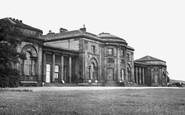
There is a museum inside this building which is only open to the public on certain days. This is one of my early memories of Healton Park, when I was a child my parents took me and my sister for a day out, to the park. Later we moved ...Read more
A memory of Prestwich in 2011
Firwood
Firwood 1958 our family came from the US to settle our Aunt Ethel & Uncle Edmund Smyth's estate Firwood. Edmund had been the 1st Bishop of Lebombo, Africa & Ethel had been a missionary & painter. Firwood had a dairy on the ...Read more
A memory of Brownshill in 1958 by
Captions
925 captions found. Showing results 697 to 720.

It was here they came to escape Danish raiders in 1041, and here too they tried to flee the plague in 1637. As a result, the island was often referred to as The Camp.
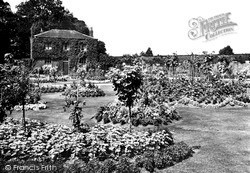
The bricks came from Milnes's works, and timber was imported from Russia, where his cloth exports flourished.
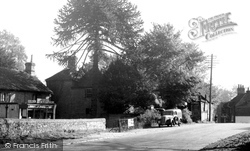
North-west of Godalming, Compton is famed for the Watts Gallery and Chapel, commemorating the Victorian painter George Frederick Watts.
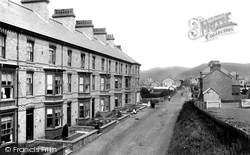
St Cadfan was one of the Three Blessed Visitors who came from Brittany in the 6th century; he was the founder and first abbot of the monastery on Bardsey Island.
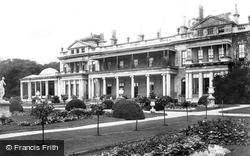
The stone for Grimston came from the Tadcaster quarries of the Vavasour family from nearby Hazlewood Castle.
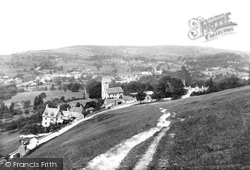
The monument to the left of the church came from the 1851 Great Exhibition.
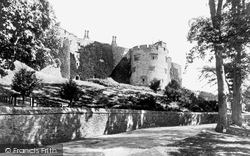
One of Chirk's more unusual claims to fame is that it was once besieged by its owner.
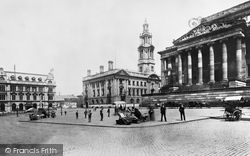
Two years later the Art Gallery opened, and the whole building came into use.
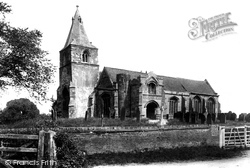
Eventually, having run out of food, she came out. All were dead except for just one man.
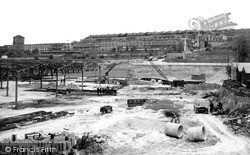
Steel work came from the US; it had been intended for a wartime GMC plant making B29 bombers. New block AA was among the largest steel frame structures of the day.
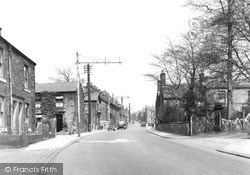
Tottington's unusual claim to fame is that it is one of the most northerly places to have suffered a hit from a German V1 flying bomb, or Doodlebug, during the Second World War.
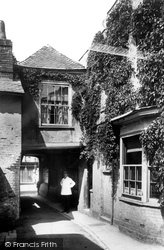
Mayhem ensued when it came to paying the bill, for each party believed itself the guest of the other.
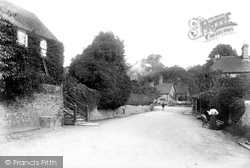
This village near Midhurst was built mainly to house employees of the Cowdray Estate, famed for the landscaped park and polo playing.
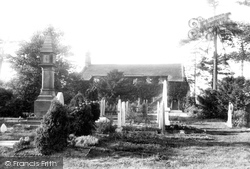
He in his turn was expelled in 1660, and Thomas Wright came back, just for one year, as he died in 1661.
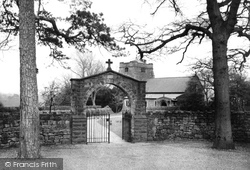
Before the factory came, there was nothing here but farmland, moorland and Fenton Cawthorne's tower.
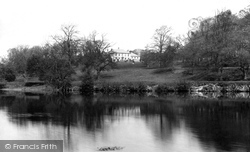
Stone came from local quarries within a short distance from here, and even the clay for bricks was found on his land.
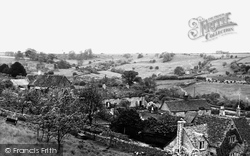
In the hey- day of the woollen industry, shepherds and their families came from Wales to live here and tend sheep in the surrounding countryside.
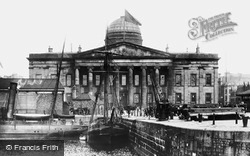
Things came to a head in 1706 when the Excise launched a full investigation of the port over alleged customs avoidance.
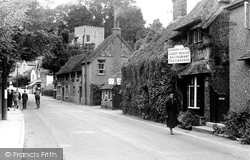
In those days the sea came much closer, and it used to be a fisherman's home.
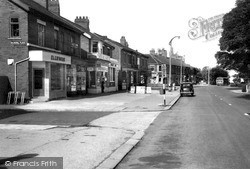
Regular bus services came about rapidly; Victoria Road was the main route. It was once known as Ramper, a high dyke built (along with the draining of Thornton Marsh) to keep back the sea.
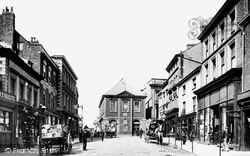
Elihu Yale, founder of Yale University in the USA, came from the Wrexham area (his family was associated with Erddig Hall), and he is buried at St Giles's church.
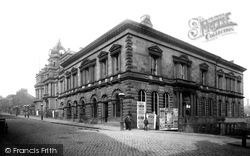
Queen Elizabeth II came and re-opened the restored, re-designed Mechanics Institute on 12 November 1987.
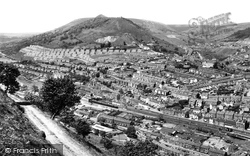
This massive increase came from those seeking work in the town's coal mines, both from other parts of Wales, industrial and rural, and from the west of England, particularly Somerset and the Forest of
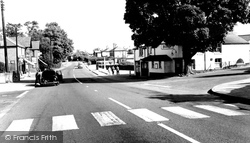
This led to Sir Stafford Cripps demanding the nationalisation of the industry, which ultimately came in 1947. Gresford Colliery closed in 1973.
Places (4)
Photos (6)
Memories (4591)
Books (1)
Maps (65)